Embarking on an African Adventure with the Ebro S900
My inaugural day in Marrakech marked a significant milestone; it was my first experience stepping onto African soil and the second occasion where we at Autonoción directly confronted the Ebro S900. We have traveled to Morocco to undertake the ambitious challenge of the Ebro, embarking on a Grand Tour that spans over 1,000 kilometers across this enchanting country. This expedition not only allows us to explore the landscape but also gives us an in-depth understanding of the flagship model of the brand, which has rapidly become a bestseller, outpacing even more familiar competitors in our market. The impressive sales figures achieved in less than four months are a testament to its success.
Our journey commences in Marrakech, and over the next five days, we will traverse a remarkable distance from the central regions to the eastern parts of Morocco, even encroaching into the desert. Previously, such an undertaking might have simply been labeled as a "test drive." However, due to the complexities involved, the ambitious nature of the route, and the breathtaking scenery, Ebro has aptly named this endeavor the Grand Tour Morocco Ebro S900.
In my opinion, this title encapsulates the essence of adventure more than technical analysis; it suggests an expedition rather than merely a product review. This nuance is essential because few challenges test a vehicle's capabilities more than navigating through a country that is unforgiving in its demands. We will encounter vast avenues, unpredictable traffic, damaged roads, intense heat, and constant climatic contrasts, making this a true test of endurance.
The Ebro S900: A Powerful Contender in the SUV Market
The Ebro S900 is a large SUV that competes in a segment filled with pricier competitors. With dimensions of 4.81 meters in length, 1.92 meters in width, and a height of 1.74 meters, it boasts an impressive wheelbase of 2.8 meters, enhancing legroom in the second and third rows of seats. Noteworthy rivals include the Hyundai Santa Fe, Kia Sorento, and KGM Rexton. Like the Ebro, both the Santa Fe and Sorento feature plug-in hybrid systems, yet they all exceed the 60,000 euro mark with a Zero emissions label. In contrast, a fully equipped Ebro S900 can be acquired for less than 50,000 euros, making it an appealing option for prospective buyers.
On our first day, we limited ourselves to getting acquainted with the vehicle. After landing, we traveled from Marrakech-Menara Airport to the outskirts of the city, spending the entire journey in the spacious back seats of the Ebro S900 PHEV. The premium feel is palpable, largely due to the standard features typically found in vehicles that come at a much higher price point. Even in high-end models, some extras on the Ebro would be considered optional.
Besides the ample headroom and leg space, I can adjust the seating position to my liking—even from the rear seats. Specifically, the Ebro S900 allows for electric adjustment of the seat's backrest and longitudinal position with a simple press of a button on the door. While you can't recline to a full 180 degrees, you can achieve a more comfortable posture than the typical seating angle of about 100 degrees.
The contrast between our European background and North African culture is striking. Marrakech, as the capital, immediately showcases its privileged status through its wide four-lane avenues, relentless traffic flow, and a bustling population filling every square, street, or market we encounter en route to our hotel. A central touchscreen in the console provides access to various options and includes heating and ventilation for the outer seats. Although the airflow isn't particularly strong, it's surprising that many brands have not revived this feature typical of 2000s minivans. The quality of the finishes is also commendable, with plush materials on the upper door panels and a leather-like finish in the mid-section, enhancing the overall aesthetic.
As we navigated the winding roads south of Marrakech, the scenery began to change, revealing a more rugged terrain. The roads here present challenges that could easily lead us to the side of the road, recording a tutorial on "how to change a tire." Among the vehicles on the road, luxury cars worth over half a million euros intermingle with battered compact cars from the late 90s, remnants of an era when emissions regulations did not dictate the automotive landscape.
Continuing our journey, we observed a diverse range of vehicles—French compacts, a steady stream of Dacia Logan models, and an increasing number of Chinese imports. Our driver, Adrián, a long-time resident of Morocco, adeptly maneuvered through the chaotic traffic, sharing insights about the market dynamics, including the decline of once-dominant brands like Mercedes W124, which populated the continent with over a million kilometers on their odometers.
The reliability and elegance of those Mercedes have transitioned into the utilitarianism embodied by Dacia—affordable vehicles ideal for daily use. Chinese brands are beginning to stake their claim in the market, presenting a significant 12% share that reflects a shift in consumer preferences. Those who previously purchased traditional names like Mercedes Benz, Renault, Citroën, or Ford are increasingly opting for these newcomers, which offer competitive pricing and features. However, this transition is not without its challenges, as the softer suspension setups of many Asian vehicles detract from the driving experience sought by European consumers.
We concluded our first day in Tassoultane, having established that the Ebro S900 excels for rear-seat passengers with its comfort, practicality, and technological advancements. The following morning began early to avoid the oppressive heat. Remarkably, throughout our journey, we barely exceeded 40ºC, aside from our brief excursion into the desert, where temperatures often soar close to 50ºC. Maneuvering through the unpredictable behavior of motorcycles, the Ebro frequently alerts me of blind spots in the mirrors.
As we departed from Tassoultane, I was overtaken on all sides. Despite the feeling of commanding a robust SUV, I preferred to avoid any unnecessary scrapes on the matte finish of the Ebro S900. With a fully charged battery, the fuel consumption remains impressively low. I can select between hybrid or fully electric driving modes, allowing me to conserve battery energy for city driving, thereby reducing noise and emissions. On open roads, the Ebro S900 manages to keep fuel consumption below 6 liters per 100 km, even while ascending to altitudes above 2,000 meters.
We soon found ourselves on mountainous roads with smoother traffic, allowing us to put the Ebro S900's handling to the test. While it may not be the firmest family vehicle, it certainly offers a more refined experience than its competitors. In just two weeks, my colleague Luis had the chance to test the Jaecoo 8, built on the same platform as the Ebro S900, and you may wish to consult his experience for comparison. I also had the opportunity to drive the Omoda 9 SHS, which felt significantly softer than the Ebro, highlighting the differences even within shared chassis and PHEV systems.
The steering in the S900 responds naturally, though it is notably assisted to enhance comfort—an aspect that varies according to personal preference. Gradually, we ascended to Tizi n Tichka, one of the highest points on our route at an altitude of 2,260 meters. During the descent, we navigated a winding secondary road that passed through small villages not marked on maps. After a lunch stop, we continued towards Takiit, transitioning from the secondary road to an interminable two-lane highway as night fell. We eventually reached a secluded palace turned hotel beyond Mhamid, our resting place until the next morning.
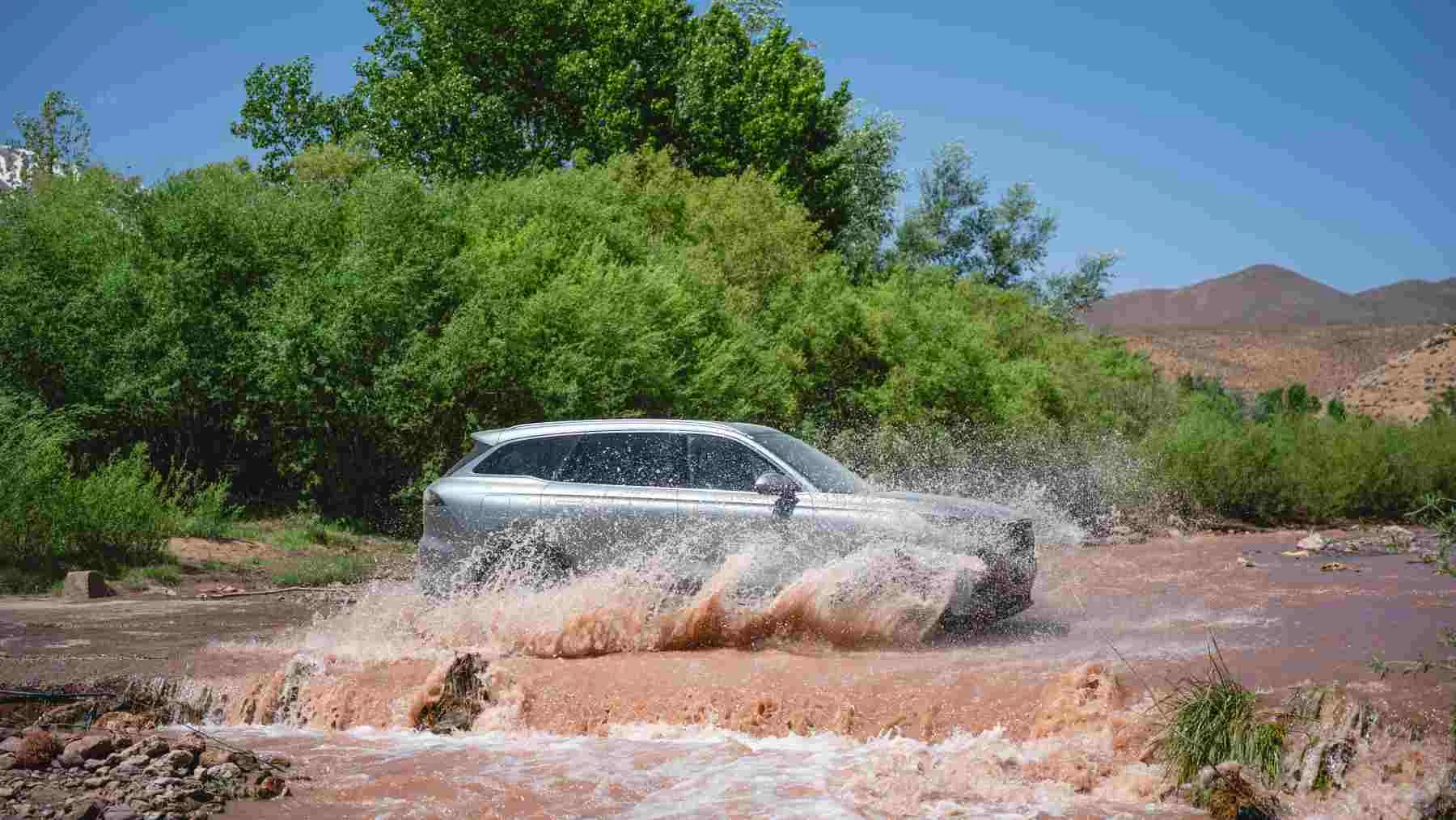
As we head east towards the Algerian border, we approach one of Morocco's most impressive deserts, Erg Lehoudi. Here, a vehicle like the Ebro S900 may face challenges due to its SUV nature. The S900 is equipped with road tires and boasts large 20-inch wheels with Michelin tires that performed remarkably well on fine sand. Throughout our journey, we utilized various driving modes, notably "off-road," "sand," "sport," and "normal," with the latter being the most balanced regarding fuel consumption and handling.
Moreover, the four-wheel-drive capabilities are quite effective, particularly given that the Ebro S900 lacks a low-range gearbox yet operates as a full-time AWD vehicle. The PHEV system incorporates three electric motors and one combustion engine, effectively distributing power to the S900. The two electric motors independently drive the rear wheels, engaging the front axle only when necessary, ensuring stability and fuel efficiency.
During a break, Ebro encouraged us to explore the V2L functions of the S900, allowing us to brew coffee in the desert using an electric coffee maker connected to the charging port. Such features are more common in electric vehicles than in plug-in hybrids, enabling the use of appliances like grills or projectors without sacrificing electric range.
Climbing dunes, navigating elevation changes, and maintaining power even as temperatures soar near 40ºC, we journeyed away from the Jebel Bani mountain range towards Tamegroute. Here, we visited one of the region's significant ceramic factories, where the traditional hand-molding and natural painting processes have remained unchanged for years, baked in outdoor kilns in the already hot Moroccan climate. The accompanying town retains the country’s traditional infrastructure, with adobe houses and narrow, dimly lit passageways that help maintain a comfortable temperature.
As I prepare for our next checkpoint, I take the opportunity to delve deeper into the capabilities of the S900. On the road, it maneuvers with a stability befitting a premium vehicle. The Ebro is an aspirational SUV—one that aims to bridge the gap between mainstream quality and the premium segment without fully crossing into it. However, the distinctions between the more expensive SUVs and this Spanish model can sometimes blur.
With fuel consumption averaging between 4 to 5 liters on flat terrains, it's noteworthy that the electric energy stored in the 34.46 kWh battery has become negligible at this stage of our journey.
As reported by autonocion.com.