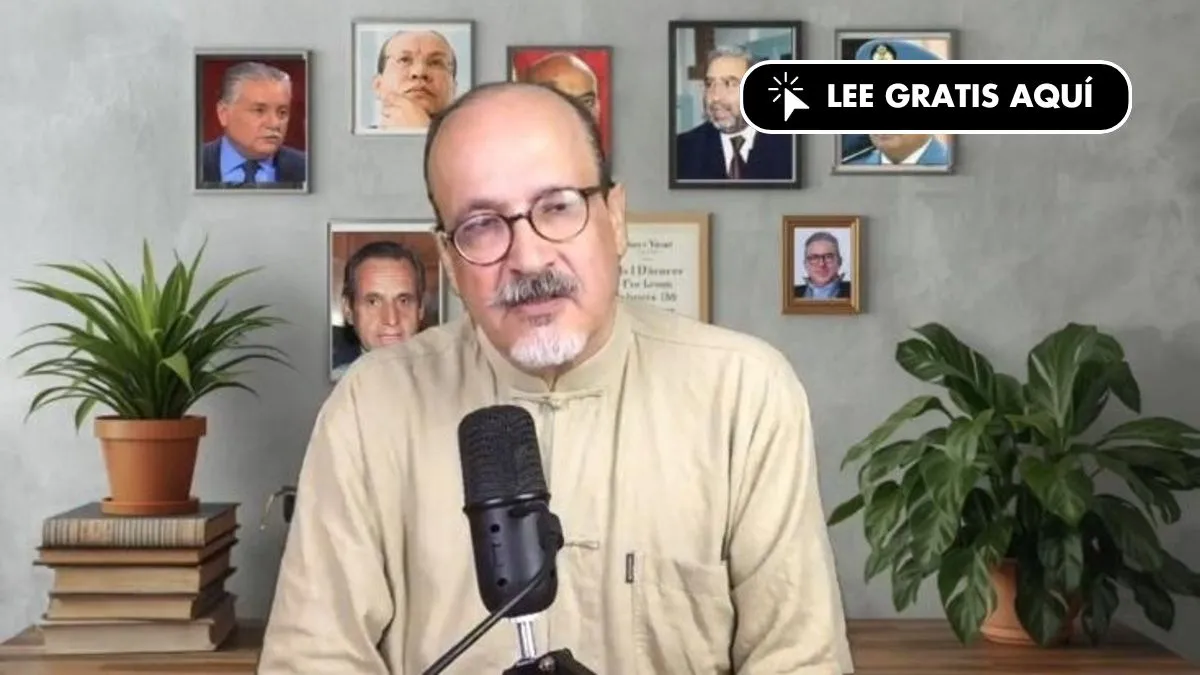

The Life and Challenges of Ali Lmrabet
Ali Lmrabet, born in 1959 in Tétouan, Morocco, is a distinguished journalist and author who has gained international recognition for his critical stance towards the Moroccan government. His journalistic career took a dramatic turn in 2003 when he was sentenced to four years in prison for "insulting the king." However, the monarchy, led by King Mohammed VI, pardoned him in 2004 after Lmrabet went on a hunger strike that necessitated hospitalization. Following his release, the Moroccan government imposed a ten-year ban on his journalistic activities within the country, leading him to relocate to Barcelona, where he continues his work in exile.
In July of this year, Lmrabet was detained at the Tangier airport, an incident he described as a "kidnapping," which only ended after international pressure led to his release. In a recent interview with THE OBJECTIVE, Lmrabet discussed the implications of Morocco's intelligence services in the recent surge of migrants attempting to enter Ceuta, an event that overshadowed the Throne Day celebrations, significant in Moroccan culture. He asserts that Morocco maintains a strong lobbying presence in Spain and has no intention of relinquishing its territorial claims.
Insights on Moroccan Politics and Society
When asked about Morocco's potential involvement in the mass immigration to Ceuta, Lmrabet stated that while the situation could be framed as a "humanitarian invasion," he does not believe the intelligence services orchestrated the event on July 30, the day of the Throne Day celebrations. He elaborated that the operational capabilities of these services are closely tied to the royal advisor Yassine Mansouri, who is effectively at the helm of Morocco's intelligence apparatus. Lmrabet expressed skepticism about the intelligence services launching operations on such a significant national holiday, suggesting that social media played a critical role in inciting the migration, despite being under heavy surveillance by the authorities.
Discussing the future, Lmrabet speculated about the possibility of another assault on Ceuta before the Spanish elections in 2027, emphasizing that the situation remains fluid and unpredictable. He pointed out that the Spanish National Intelligence Center (CNI) likely possesses information that the government is withholding from the public, indicating a shift in the government’s approach following the establishment of a unified command structure. On the topic of a recent leak revealing the identities of 70,000 intelligence agents, he remarked that such exposure signifies a collapse of secrecy within Moroccan intelligence.
Lmrabet also addressed the potential for renewed protests in Morocco, emphasizing that social unrest tends to ebb and flow due to repression, yet it remains a persistent threat as citizens seek better futures. He highlighted that the desire to flee the country is not limited to the impoverished but spans various social strata, including skilled professionals and artists, demonstrating widespread discontent across Moroccan society.
When questioned about the monarchy's stability, Lmrabet noted the powerful political police and the support of foreign allies, such as Israel, in maintaining control over the populace. He acknowledged that while the socio-economic situation in Morocco is dire, the regime remains resilient against challenges, as evidenced by the struggles of other Arab states where leaders have fled.
Concerning the royal family's future, Lmrabet revealed concerns about King Mohammed VI's health, indicating he suffers from an autoimmune disease that gradually depletes his strength. Although little is known about Crown Prince Moulay Hassan, Lmrabet suggested that the real power still resides with the intelligence chiefs and government officials, rather than the prince himself.
As for Morocco's continued ambitions over Ceuta and Melilla, Lmrabet affirmed that the Moroccan government aims to economically suffocate these Spanish enclaves, viewing their reclamation as a legitimate right. He underscored the complexities of identity among the Muslim populations in these cities, who have familial ties across the border. Ultimately, he expressed skepticism that the inhabitants of Ceuta and Melilla desire to cease being part of Spain and Europe, citing the limited support for political movements advocating for such a change.
As reported by theobjective.com.