
Aïcha Mekki: A Voice for the Marginalized
Aïcha Mekki stands out as a pioneering figure in the realm of judicial journalism in Morocco, leaving an indelible mark on an entire generation through her insightful chronicles that shed light on societal margins, human suffering, and dramatic life events. In the early 1970s, during my time as a young journalist at RTM (Moroccan Radio and Television), I had the privilege of working alongside seasoned veterans like Tahar Belarbi, Badia Rayane, Latifa El-Fassi, Tayeb El-Idriss, and Mustapha Alaoui. My career path led me to request a transfer to the regional station in Aïn Chock, Casablanca, where I had the honor of collaborating with the late Mohammed Majdouli, the regional director. Due to a pressing shortage of journalistic staff, I was often assigned to external reporting duties.
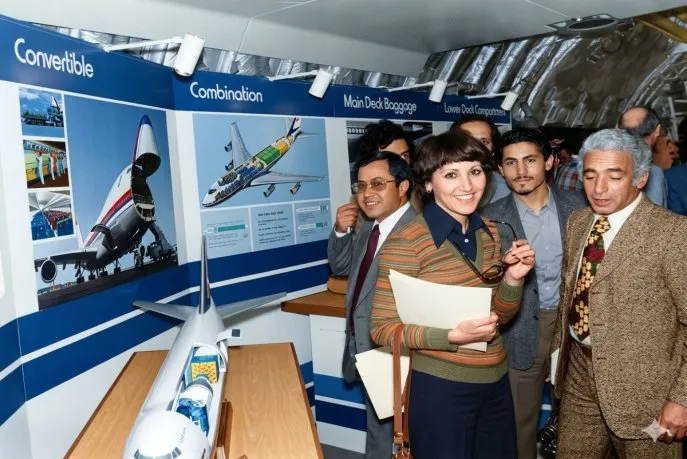
It was during one of these assignments that I first crossed paths with the illustrious Aïcha Mekki, who garnered national fame for her judicial columns. We met at Mohammed V Airport during a press visit to cover a presentation by Boeing, showcasing the iconic Boeing 747. Aïcha, noticing my newcomer status among a group of familiar journalists, approached me with kindness, sharing her own beginnings at RTM in Rabat and her connections to the older generation of journalists.
At just 25 years old, Aïcha Mekki was already a journalist with an impressive breadth of knowledge. It's worth noting that she had not yet launched her renowned column in _L'Opinion_, which would debut in October 1977. Known for her curiosity and deep humanity, she is captured in a nostalgic photograph alongside myself and the late RTM cameraman, Mohamed Sadki Mekouar. In the picture, Abbès Cherradi, a journalist from _Le Matin_, and Henri Zimel, also from the same publication, join us among other notable colleagues. However, beneath the surface of our professional camaraderie, few were aware of the precarious living conditions Aïcha faced, particularly during the late 1980s. Until her tragic and solitary death in May 1992, she lived in total destitution, in an apartment devoid of water and electricity, relentlessly fighting against inequality and human distress.
A Life Dedicated to Social Justice
Born Rokia Fetha in Taza in the early 1950s, Aïcha Mekki's upbringing was marked by modesty and hardship, particularly during her childhood in the Central Quarries of Casablanca. She pursued her studies in French at Mohammed V University before starting her career at RTM in Rabat. By the mid-1970s, she was hired by the French-language daily _L'Opinion_ and was based in Casablanca.
It was in October 1977 that she began publishing her celebrated column "Au ban de la société," later followed by “Société et Justice.” Written during the oppressive Years of Lead, her chronicles quickly became essential reading for discerning audiences, including historian Abdallah Laroui and politician Michel Jobert, who sought to grasp the raw pulse of Morocco, far removed from elaborate rhetoric and scholarly discourse.
Journalist Mustapha Abouibadallah, who worked at _Matin_, often spoke highly of Aïcha Mekki, having collaborated with her in the courts of Casablanca where both of them covered trials for their respective publications. Aïcha attended these sessions with diligence, but her narratives transcended the confines of the courtroom. She ventured into the heart of impoverished neighborhoods and urban communities.
As an absolute trailblazer in crime reporting and judicial coverage in Morocco, Aïcha was one of the few women to carve a niche in a predominantly male field. Her writings did not merely recount police investigations; they dissected social contexts, exposing the plight of the impoverished, sex workers, and drug addicts, while also highlighting the tragedies of femicides and crimes of passion. Aïcha Mekki’s legacy, which received a heartfelt posthumous tribute from Abdeljlil Lahjomri in 2001 through his work _« Pleure Aïcha, tes chroniques égarées »_, is firmly rooted in the rich tradition of Moroccan testimonial journalism.
As reported by quid.ma.