
An Overview of Agadir-Taghazout's Tourism Revival
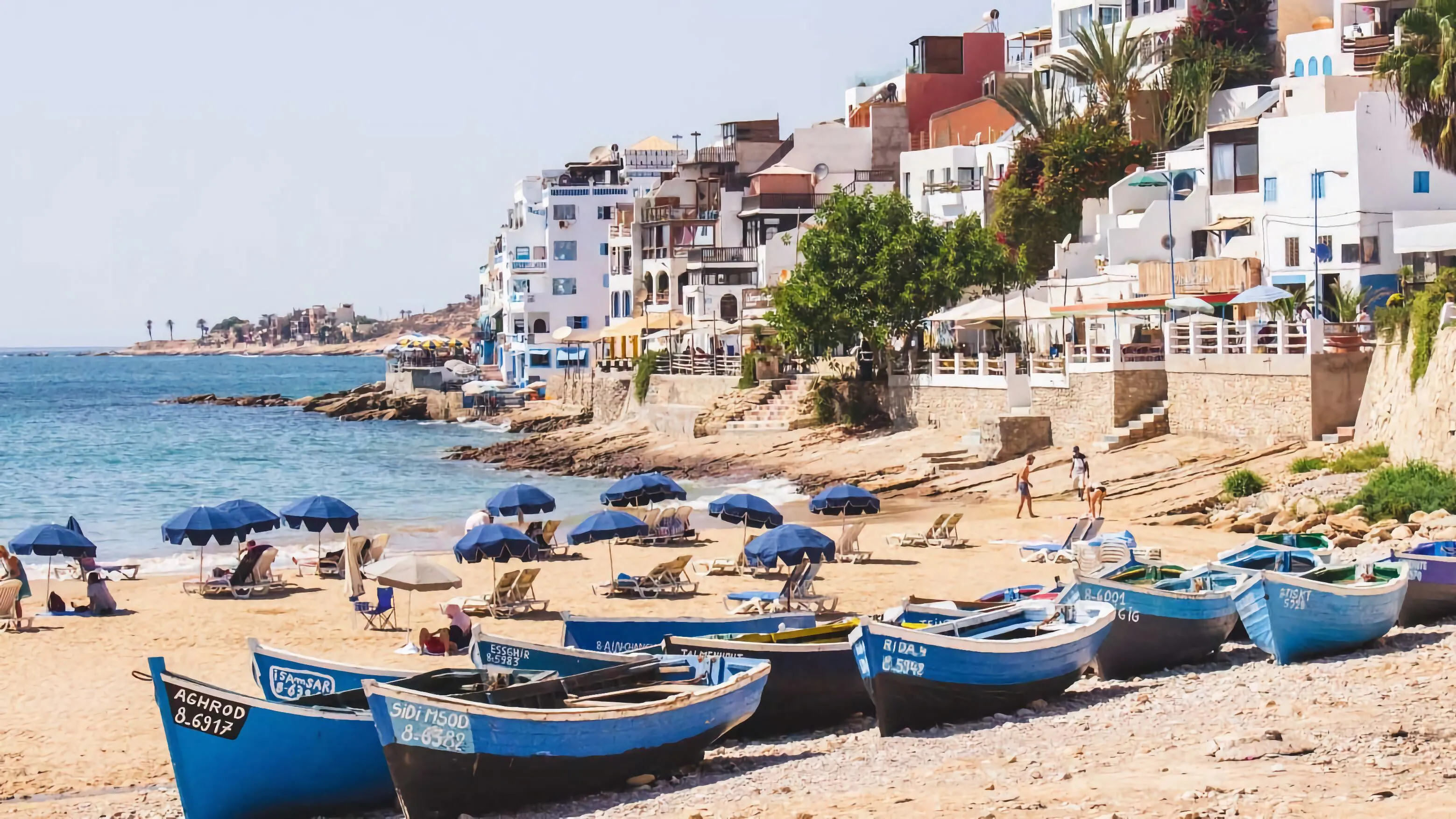
The picturesque Taghazout beach, located in the eponymous village just north of Agadir, is witnessing a remarkable resurgence in its tourism sector. Following a significant increase in visitor numbers and a robust recovery in hotel activity, the Agadir-Taghazout destination is reclaiming its prominent position within Morocco's tourism landscape. With a focus on modernizing urban offerings, enhancing its Amazigh hinterland, and addressing critical challenges related to air connectivity and water management, the Souss-Massa region aims to transform this influx of tourists into a sustainable and qualitative economic dynamic. This article draws insights from Finances News.
Tourism Statistics and Future Prospects
Agadir-Taghazout is once again establishing itself as a cornerstone of Moroccan tourism. In 2025, the region welcomed over 1.5 million tourist arrivals, marking an impressive 9% increase compared to the previous year. Concurrently, overnight stays surpassed 6.3 million, bolstered by a hotel occupancy rate exceeding 66%. These positive indicators highlight the strength of a recovery initiated after a strategic repositioning phase, during which the destination redefined its image and modernized its infrastructure to meet evolving global expectations, as noted by Finances News Hebdo.
The success of Agadir-Taghazout can largely be attributed to its unwavering fundamentals. The region's year-round favorable climate, expansive bay, and well-established hotel infrastructure continue to attract a loyal clientele that includes families, retirees, European visitors, and a strong contingent of domestic tourists. However, today’s traveler has evolved. They seek more than the traditional relaxation by the pool; the contemporary tourist prioritizes immersive experiences, local gastronomy, vibrant urban life, and exploration circuits that foster authentic connections with the destination.
In this respect, the greater Agadir area benefits from exceptional geographical and cultural diversity. The synergy between its coastline and hinterland offers a rare competitive advantage. While Taghazout injects a youthful, sporty, and international vibe focused on surfing and wellness, Imi Ouaddar expands the beach offerings to the north. Just a few kilometers inland, Taroudant, the verdant Atlas valleys, charming villages, and a network of artisanal and agricultural cooperatives pave the way for high-value excursion tourism. Thus, Agadir is evolving from a mere holiday resort into the gateway of a region rich in cultural heritage and experiences, as highlighted by Finances News.
Despite this positive momentum, several structural challenges must be addressed to sustain growth. Urban animation remains a key area for improvement, as some visitors still perceive the city as too quiet once the beach day concludes. Revitalizing the Kasbah of Agadir Oufella, developing cultural circuits, increasing artistic events, and modernizing public spaces are essential steps to transform this perception, provided these initiatives are sustained over time. Additionally, air connectivity remains a critical issue; Agadir Al Massira Airport must enhance its direct links to major European markets to reduce reliance on indirect flows, with plans for airport capacity expansion by 2030 aimed at providing a long-term solution to this connectivity challenge.
As reported by fr.le360.ma.