
In a significant strategic shift, Madaëf has entrusted the management of the Lunja Village resort in Imi Ouaddar to the Accor group, marking the conclusion of the Biladi agreement. This transition comes alongside the ambitious establishment of a recreational park, with an investment amounting to 33 million dirhams over a sprawling area of five hectares, as endorsed by the Regional Unified Investment Commission (CRUI) in July 2026.
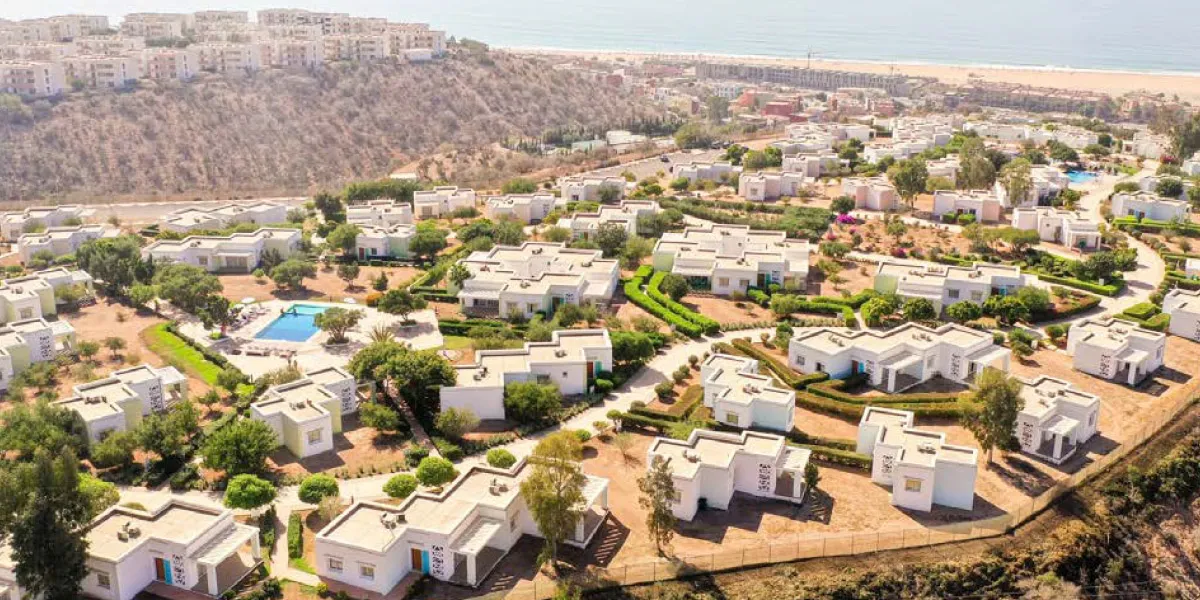
This pivotal development may have gone largely unnoticed, but it heralds a new era for Lunja Village, which has been under the management of Continental Bay (the Moroccan representative of the Best Western brand) since June 2014, as part of the agreement signed with the CGI. Now, Lunja Village, an asset owned by Madaëf—part of the CDG Group's tourism branch—joins the extensive distribution and management network of Accor starting from the summer season of 2026. The resort comprises a total of 284 apartments, including 104 chalets and 180 serviced apartments, along with 210 hotel suites located in the Tamri commune, part of the Agadir Ida-Outanane prefecture. As the Biladi agreement reaches its conclusion, Lunja Village is undergoing a repositioning initiative, particularly concerning its pricing policies.
This shift is rooted in the Azur Plan, specifically the Biladi initiative aimed at boosting domestic tourism, which was launched by the Ministry of Tourism. CGI was selected to spearhead the development of this new tourist resort in Imi Ouaddar, which spans over 38.5 hectares. A development agreement was signed between CGI and the government in 2008, leading to the creation of SAMEVIO, a company responsible for the planning, enhancement, promotion, and management of the tourist resort in Imi Ouaddar, situated north of Agadir. The project required a substantial tourism investment nearing 700 million dirhams, with operations managed by Continental Bay under the aforementioned Biladi tourism program.
33 Million Dirhams for Lunja Village Leisure Park
As part of this repositioning, the CRUI has provided favorable feedback regarding the Lunja Village leisure park project, which is set to be submitted to the steering committee for validation following a thorough technical review. This initiative is part of the redevelopment of the New Tourist Resort of Imi Ouaddar (NSTIO) and represents a significant evolution from the initial project design. It is particularly noteworthy that the budget initially allocated for a cable car component has been redirected towards developing new entertainment infrastructure. Situated on a five-hectare forested land, this new component will involve a total investment of 33 million dirhams, with an expected completion timeframe of 18 months, creating approximately fifty direct and indirect jobs.
The recreational offering has been meticulously designed around three major zones to cater to families and tourists alike. The first zone features an outdoor karting track, technical paddock, spectator stands, a skate park, a gaming area, and ancillary services including a convenience store, snack bar, and restrooms. The second zone, known as the fair area, is designed for live performances, complete with ticketing facilities, a circus tent, rides, recreational areas, and a restaurant. The third zone comprises an aquapark, offering a flow-surf simulator, slide pools, an adult-only pool, relaxation and yoga areas, as well as changing rooms, kiosks, and dining points. Furthermore, the master plan includes a direct connection linking this new park to the existing aquapark on-site.
National Market: A Cornerstone of Hotel Activity
It is essential to note that the national market plays a crucial role in the hospitality activity of the Agadir destination, ranking first in terms of arrival flows. However, in 2025, domestic tourism experienced a slight decline compared to the previous year's performance. Classified hotels in Souss's capital recorded 446,449 arrivals from nationals, down from 456,399 in 2024, representing a moderate decrease of 2.18%, equating to a loss of 9,950 tourists. Similarly, the volume of overnight stays followed a downward trend, standing at 1,224,017 units against 1,242,311 the previous year, reflecting a decrease of 1.47% (18,294 fewer nights).
Despite this slowdown, the national market retained its significance in volume, capturing 29.71% of total tourist arrivals in Agadir in 2025, although this was a decline from 33.13% in 2024, amid a notable influx of European clientele, particularly from the UK. In terms of overnight stays, nationals accounted for 19.22% of the overall share, ranking second behind the English market. The average length of stay for Moroccan vacationers remained characteristic of short visits, averaging 2.74 days in 2025 compared to 2.72 days in 2024. However, 2026 marked a recovery, with national tourism rebounding in the first eight months of the year (cumulative from January to August 2026), registering 332,183 arrivals compared to 317,758 during the same period in 2025, indicating a notable increase of 4.54% (+14,425 tourists).
This resurgence positively influenced overnight stays, which exceeded 945,263 units compared to 913,255 at the end of August 2025, translating to an increase of 3.50% (+32,008 nights). In these first eight months of 2026, the national market remained dominant and stable at 31.36% of total arrivals, significantly surpassing the UK (23.26%) and France (17.06%). The national market alone accounted for more than one in five overnight stays at the resort (20.56% market share), exceeding the French contingent (19.58%). Lastly, the average length of stay remained stable at 2.85 days (compared to 2.87 days in 2025).
As reported by leseco.ma.