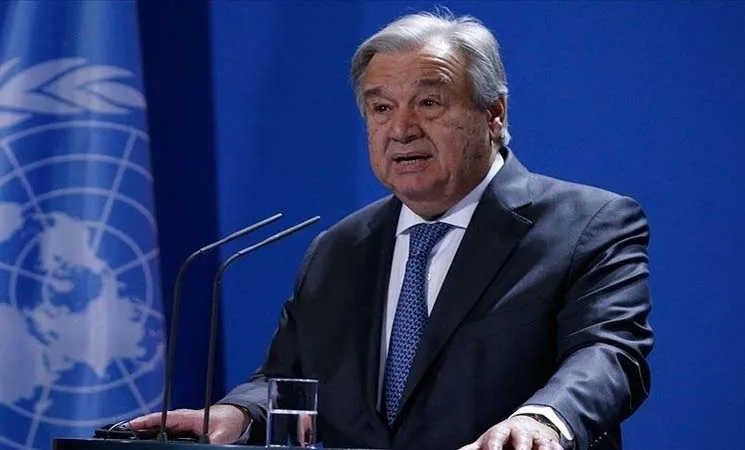
On May 5, 2026, during the opening session of the second International Migration Review Forum held in New York, United Nations Secretary-General António Guterres emphasized the significance of the Global Compact for Safe, Orderly and Regular Migration, commonly referred to as the "Marrakech Pact." He stated that this pact represents a "key step" towards enhancing multilateral cooperation in addressing migration issues.
Guterres pointed out that since the adoption of the pact in 2018, member states have undertaken tangible measures to expand regular migration pathways and strengthen initiatives related to labor mobility. He highlighted that these commitments also encompass improving search and rescue operations, developing data systems, and promoting safer return and reintegration processes for migrants.
According to the UN chief, this forum, which convenes every four years, provides an opportunity to assess the progress made in implementing these commitments, candidly address challenges, and set future priorities. He acknowledged that no country can manage migration issues in isolation, stressing the necessity for coordinated cooperation that spans borders, governments, and societies.
In addressing the multifaceted challenges posed by migration, Guterres underscored the importance of prioritizing human rights within any migration policy. He urged governments to increase their efforts to eliminate discriminatory practices and ensure that migrants have genuine access to education, housing, healthcare, and social protection. Furthermore, he called for a more robust approach to protect women and girls from human trafficking and gender-based violence.
Guterres advocated for making migration "safer" through early warning systems, enhanced data provision, and increased collaboration to identify and assist vulnerable migrants. He also emphasized the need for decisive action against traffickers and smugglers through strong cooperation mechanisms. In conclusion, he called for providing safe, orderly, and practical migration pathways for students, workers at various skill levels, families, and those seeking safety and protection.
In a related note, IOM Director General Amy Pope remarked that when migration is managed effectively, it can create opportunities for development and growth. She explained that migration helps fill labor shortages, responds to demographic changes, stimulates growth, and fosters development through remittances and skill transfer, emphasizing the need for enhanced international cooperation to build organized and equitable systems.
Pope acknowledged that the challenge is indeed significant and complex, especially in a geopolitical context marked by uncertainty and division, but noted that progress can be made through cooperation and mutual trust. She concluded by stating that "trust is at the heart of this challenge," both among nations and in the belief that migration can be managed in an organized, humane, and beneficial manner.
As reported by alittihad.info.