
High Death Toll Amid Unprecedented Migrant Influx
At least 72 migrants have tragically lost their lives, according to reports from Madrid, while attempting to forcibly cross into Ceuta from Morocco. This incident marks an unprecedented influx of tens of thousands of individuals into the Spanish enclave located in North Africa. The Moroccan authorities have reported 11 fatalities, highlighting the dire situation surrounding this migration crisis.
The Spanish government asserts that the 'vast majority' of approximately 60,000 individuals who illegally crossed the border—predominantly young Moroccans—have since been returned to Morocco. The regional government of Ceuta characterized this as the worst migrant crisis ever faced by the enclave, with the human toll continually worsening. Miguel Angel Perez Triano, the local government delegate of Ceuta, confirmed to journalists that the latest death toll stands at 72, with many victims reportedly drowning in the treacherous waters.
The Moroccan Ministry of the Interior finally issued an initial assessment on Sunday evening, estimating that 11 people had died in their attempt to reach Ceuta. However, the Moroccan Association for Human Rights (AMDH) reported nearly 130 victims and dozens of missing individuals, urging for an independent investigation into the causes of this unprecedented influx of migrants between the Moroccan city of Fnideq and the Spanish enclave. The AMDH criticized the 'alarming silence' from officials and institutions in Morocco, suggesting that this lack of communication has contributed to the crisis.
Underlying Causes and Diplomatic Tensions
A source close to civil society remarked to AFP that the manner in which these events unfolded suggests that such a massive surge at the border could not have occurred without the 'agreement of the Moroccan authorities.' Rabat attributes this migration crisis to the 'malicious exploitation' of social media, the spread of misleading information, and 'misinterpretations of legal provisions.' This is in reference to a recent ruling from the Spanish Supreme Court, which stated that the immediate return of migrants does not apply to those who arrive by sea.
Additionally, the Moroccan Ministry reported 40,000 'attempts' to illegally cross the border into Ceuta, while noting that 1,135 individuals attempted to reach another Spanish enclave, Melilla, located 400 kilometers to the east. All individuals arriving in Melilla were promptly returned to Moroccan territory.
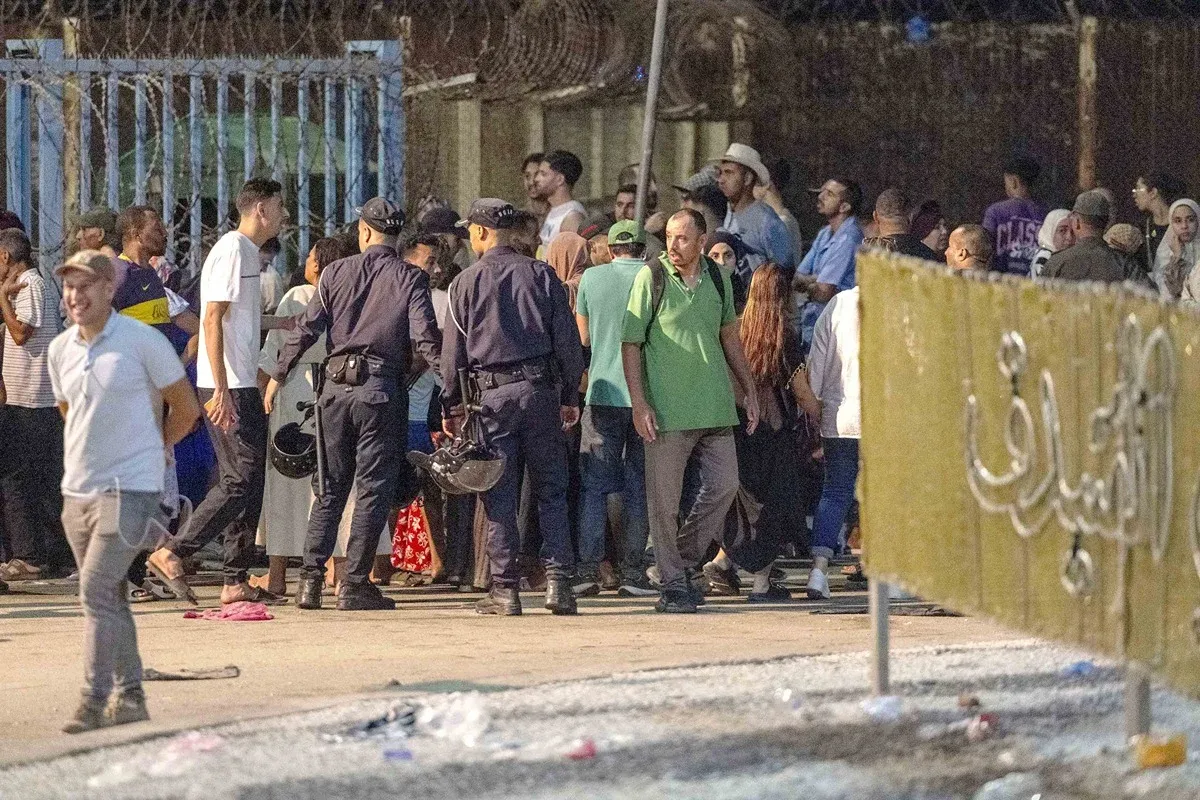
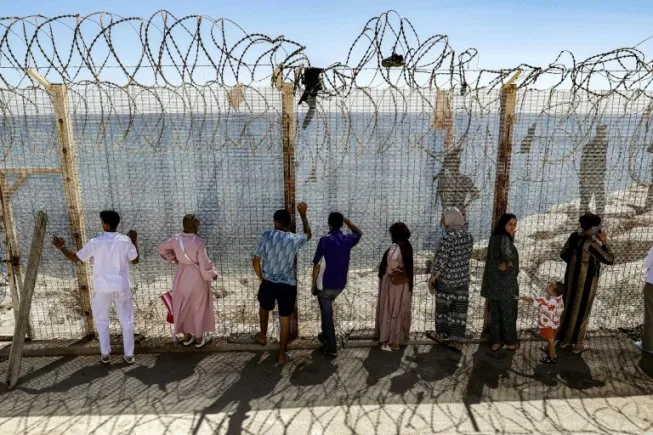
On Sunday, police and military personnel were seen patrolling the streets of Ceuta, where calm has returned. Only a small number of migrants remained in the area. Spanish soldiers apprehended a group of migrants near the port of Ceuta, where they appeared weary and were monitored by military personnel, supported by an armored vehicle. Rescue teams navigated inflatable boats nearby, maintaining vigilance along the 500 meters of new floating line marking the water border.
Spanish Civil Guard members escorted migrants from a bus to the border post for their return to Morocco, ensuring a peaceful repatriation as staff members cleaned up debris and clothing left behind during the chaotic scenes of Thursday and Friday. On Saturday, AFP encountered hundreds of unaccompanied minors sleeping outdoors in a derelict industrial area of Ceuta, all hoping to make their way to mainland Europe. One of the few adults present among the crowd, Aziz Dabch, expressed, 'All the minors here came to go to Spain.'
Some who managed to cross the border claimed they had heard rumors that it was open, a story that quickly gained traction on social media. Spain has attributed the situation to 'human trafficking mafias.' In a show of concern, Pope Leo XIV mentioned the situation in Ceuta during his daily prayers, expressing his hope for a resolution that brings 'peace, stability, and justice.'
This mass arrival of migrants has ignited a diplomatic crisis between Spain and its European partners, who have been increasingly critical of Spain's migration policies. EU interior ministers will address the events in Ceuta during a video conference scheduled for Tuesday.
As reported by actu.orange.fr.