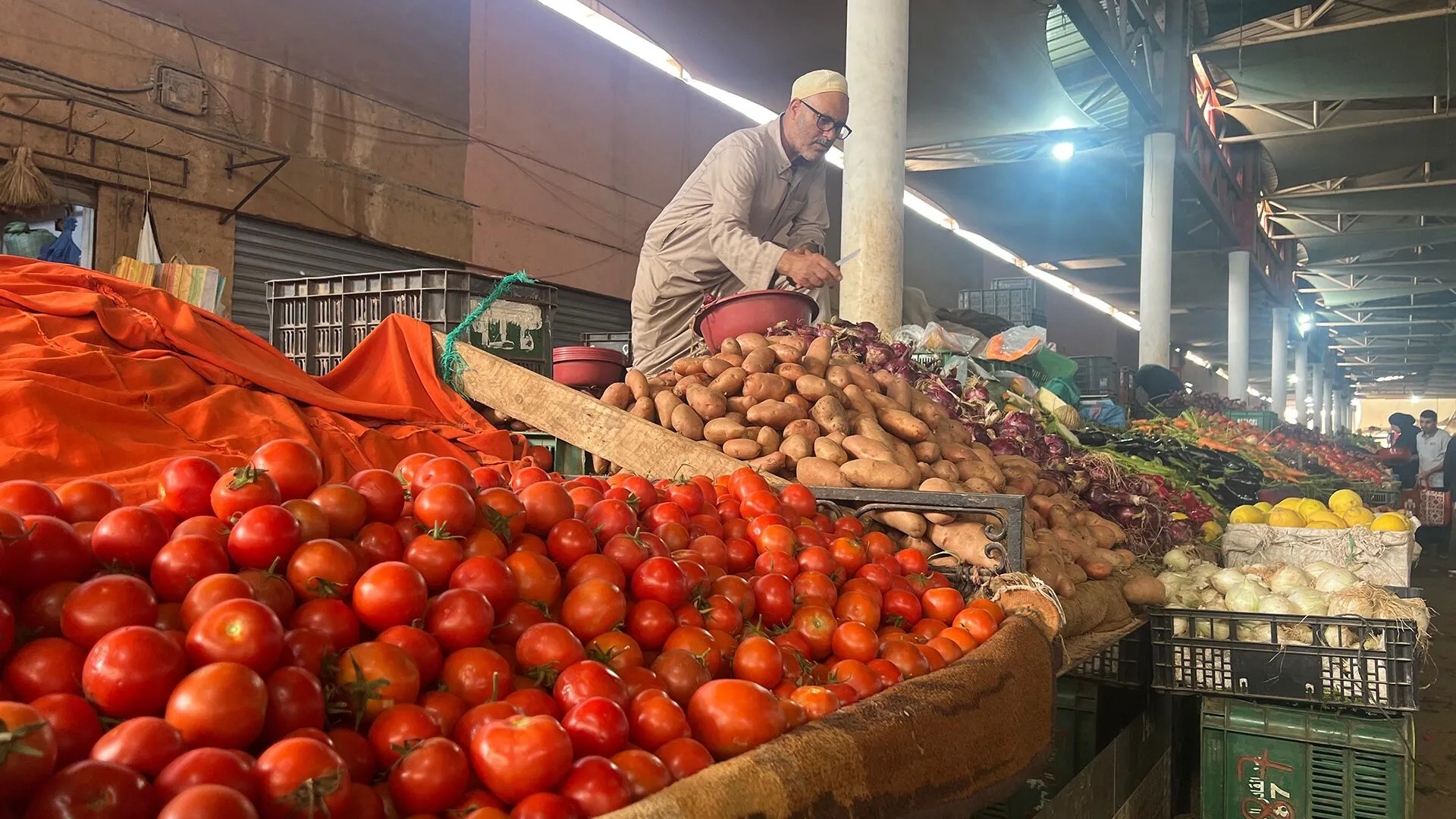
Soaring Tomato Prices Cause Consumer Outrage and Industry Strain
In Agadir, Morocco's primary hub for fruit and vegetable supply, the dramatic surge in tomato prices has triggered significant unrest among consumers and heightened tensions within the agricultural sector. Recently, the price of tomatoes has surged to 12 dirhams per kilogram, a stark contrast to the approximately 5 dirhams recorded during the month of Ramadan. This steep escalation in costs has led to a growing sense of frustration as essential goods become increasingly unaffordable for the average consumer. In response, authorities have decided to temporarily suspend exports of fresh tomatoes to certain African markets, a controversial measure that has sparked strong reactions from industry professionals.
Omar Kardaâ, Vice President of the Souk El Had Fruit and Vegetable Association in Agadir, attributes this price increase primarily to a mismatch between supply and demand. The Souss-Massa region, which is the nation's leading production area for tomatoes, is struggling to meet the rising demand, exacerbated by increased transportation costs due to soaring fuel prices. Consequently, this imbalance has placed additional pressure on producers, translating directly into higher consumer prices.
Moreover, other situational factors are compounding the crisis. Mohamed Raiss, a trader at Souk El Had, points out that severe wind gusts in the Chtouka Aït Baha province have caused significant damage to greenhouse crops. These losses have reduced the available supply on the market, pushing the price of a crate of tomatoes to over 300 dirhams, thus forcing retailers to raise their prices. This situation has resulted in a noticeable decline in consumer activity, as shoppers are deterred by what they perceive as exorbitant pricing.
On the export front, the suspension decision made by the Autonomous Establishment for Export Control and Coordination (EACCE) has not been well received by operators in the sector. Mohamed Zmerani, President of the Moroccan Association of Producers and Exporters to Africa and International Markets, criticizes the unilateral and verbal nature of this decision, which was implemented without prior consultation with industry stakeholders. He emphasizes that this abrupt action has disrupted logistical channels, especially since several shipments were already en route to importing countries, leading to substantial financial losses and contractual tensions.
In light of these developments, industry professionals are calling for urgent dialogue with authorities and have not ruled out taking protest actions to make their voices heard. They specifically urge the Ministry of Agriculture and local authorities to intervene, seeking balanced solutions that reconcile domestic market needs with export commitments. This ongoing situation underscores the intricate challenges facing Morocco's agricultural sector and the pressing need for effective communication and strategic planning among all stakeholders involved.
As reported by fr.le360.ma.