
In recent reports, the perilous journey of Moroccan migrants who braved treacherous waters to reach the Spanish enclave of Ceuta has captured headlines, yet the underlying social conditions that compelled them to undertake such dangerous risks have received scant attention. Tragically, at least a hundred individuals have lost their lives during these desperate attempts to escape their homeland. While discussions of economic hardship often surface, they tend to be overshadowed by the allure of prosperity in Europe. However, for many of these migrants, the primary motivation was not the elusive European dream but rather an urgent need to flee the dire circumstances prevalent in Morocco—a nation that is often marketed as a picturesque tourist destination.
The socio-economic landscape in Morocco is marked by rampant youth unemployment, widespread rural poverty, informal employment, and stark income inequality. For a significant number of young Moroccans, emigration appears to be the only viable route toward a better future. Official statistics, while informative, do not fully capture the debilitating social and economic realities faced by nearly 40 million citizens governed by King Mohammed VI and a limited financial elite. Official unemployment rates hover around 13 percent, but the situation is far more dire for the youth, with unemployment rates soaring to nearly 40 percent. Alarmingly, about one-quarter of Moroccans under 30 years of age—approximately 2.9 million individuals—find themselves neither engaged in education, employment, nor training (NEET).
For those fortunate enough to secure employment, the reality is often a meager paycheck that barely covers basic living expenses. The statutory monthly minimum wage outside of agriculture stands at about €320, while agricultural workers earn a mere €9 per day. Even newly qualified graduates, including entry-level public-school teachers, earn little more than the minimum wage, approximately €300-350 monthly. Over the last decade, nominal wages have seen minimal increases; however, the steep rise in global food and energy prices in 2022 has drastically eroded the purchasing power of low-income workers, as the costs of essential goods and services have skyrocketed.
Approximately 40 percent of Morocco's population still resides in rural areas, yet agriculture only accounts for about 10 percent of the nation's GDP. The agricultural sector is predominantly informal, with over 90 percent of agricultural workers lacking written contracts, social security, or legal protections. Seasonal work, primarily in olive harvesting, citrus production, and livestock, has been further destabilized by climate change, manifesting in more frequent droughts and heatwaves, resulting in crop failures and declining rural incomes.
Many rural communities continue to endure harsh living conditions. Villages are often cut off from paved roads, with inadequate housing that lacks proper roofing, insulation, and sanitation facilities. Numerous households depend on wells and pit latrines, and several remote areas remain only partially connected to electricity and essential infrastructure. Secondary education is typically distant from rural residents, forcing students to board away from home—a financial burden that many families simply cannot afford.
As agriculture has declined, many rural families have turned to a combination of subsistence farming, informal work, remittances from family members, seasonal migration to major Moroccan cities, and irregular migration routes to Spain. The migration from rural areas to urban centers has contributed to the expansion of informal economies and slums, leading to heightened competition for unstable jobs, further suppressing wages while enriching a narrow economic elite. The Gini coefficient, a measure of income inequality, stands at approximately 0.40, while wealth inequality, though not officially quantified, is believed to be much worse.
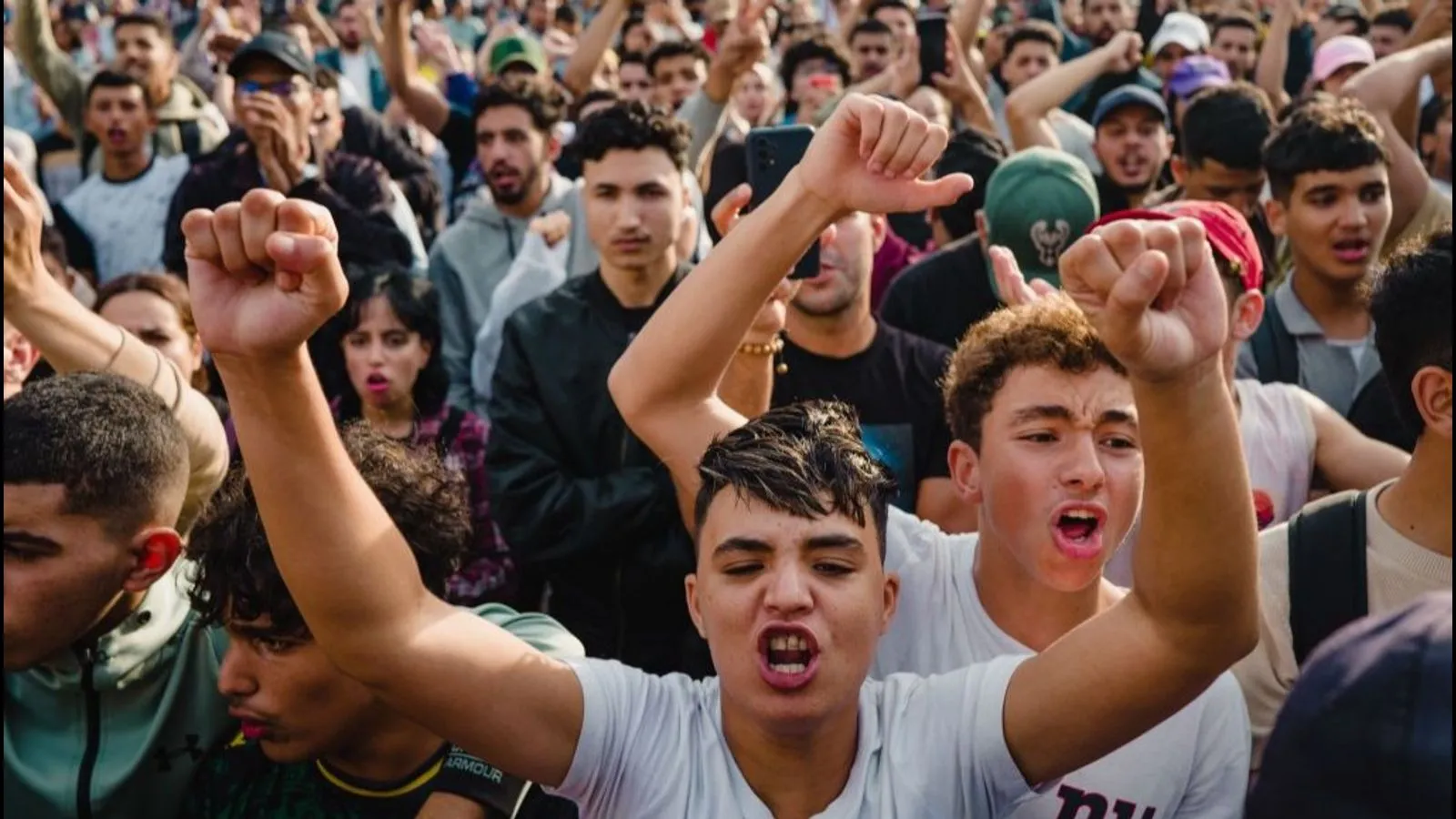
The Moroccan economy is heavily influenced by King Mohammed VI, one of Africa's wealthiest individuals, who controls significant portions of the economy through his conglomerate, Al Mada. This conglomerate oversees a wide range of sectors, including banking, mining, retail, and construction, creating substantial wealth with comparatively few job opportunities. The dire social conditions have sparked numerous protests across the country, including significant youth-led demonstrations last autumn, which were ignited by rising costs of living, inflation, and stagnant wages.
Teachers, among the most active groups in these protests, have organized strikes against their low salaries and poor working conditions. In regions like the impoverished Rif province, citizens have demonstrated against water shortages, agricultural decline, and the neglect of public infrastructure. According to the UN World Population Prospects, Morocco sees a net emigration of around 61,000 people annually, making it one of the leading countries in global emigration. The diaspora, estimated at roughly five to six million individuals, represents one of the largest in Africa relative to the national population.
The recent surge of 72,000 migrants attempting to reach Ceuta underscores a long-standing structural issue. Most of these individuals were young men from northern Morocco, particularly from rural areas and nearby towns. Faced with soaring youth unemployment and diminishing opportunities, many deemed the treacherous 3-mile swim across the ocean a risk worth taking. The Moroccan government's role as a gatekeeper for Europe has also served its political and economic interests, as it leverages its position to secure financial aid and support from European nations.
In conclusion, the plight of Moroccan migrants is a reflection of the broader socio-economic challenges faced by the country. The working class must stand in solidarity with refugees and migrants, recognizing that divisions along national or ethnic lines only serve to undermine collective strength. True progress can only be achieved through unity in the fight for global equality and justice.
As reported by wsws.org.