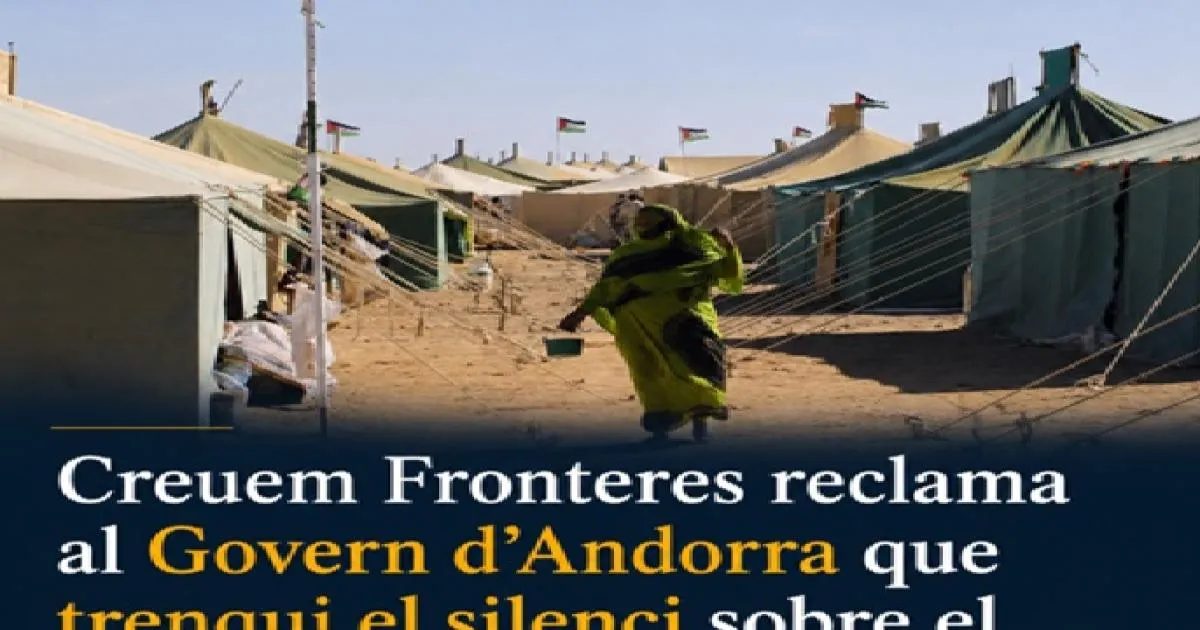

POLISARIO Front's Strong Opposition to Misrepresentation
In a significant statement made from Madrid, Spain, on August 25, 2026, Abdulah Arabi, the Representative of the POLISARIO Front in Spain, vehemently condemned the telecommunications company Orange (MasOrange) for erecting an advertising billboard along the AP-7 motorway, specifically on the Elche-Valencia route. This billboard has been criticized for illegitimately portraying Western Sahara as part of Moroccan territory, a move that Arabi asserts violates international law. He pointed out that the billboard promotes telephone services in Morocco while displaying a map that inaccurately includes Western Sahara as an integral part of the Moroccan state, an assertion that he labeled as an obvious breach of legal norms.
Arabi highlighted the importance of the legal distinctions between Western Sahara and Morocco, emphasizing that these distinctions were pivotal in the October 2024 rulings from the Court of Justice of the European Union (CJEU). These rulings annulled trade agreements between the European Union and Morocco concerning the Sahrawi territory, reinforcing the notion that Western Sahara is a distinct entity. He further clarified that any economic endeavors in this territory must be sanctioned by the Sahrawi people, represented by the POLISARIO Front, underscoring the necessity of consent in accordance with international law and European legal standards.
The Impact of Misleading Cartography
Moreover, Arabi expressed grave concern regarding the implications of using such cartographic representations in advertising campaigns. He argued that these representations not only mislead potential consumers but also reach a vast audience, particularly given the billboard's strategic placement on a busy thoroughfare during the peak summer travel season. In light of these developments, the POLISARIO Front has formally lodged a protest with Orange, demanding the immediate removal of the billboard or its replacement with one that does not inaccurately depict Western Sahara as part of Morocco.
Arabi warned that the normalization of such misleading narratives is increasingly prevalent and detrimental, as it attempts to legitimize a territorial situation that lacks international legal recognition. He firmly stated, "Western Sahara is not Morocco; Morocco has illegally occupied Western Sahara since 1975." He denounced the Moroccan authorities for their attempts to assimilate Sahrawi territory into their national identity, asserting that the sovereignty of Western Sahara unequivocally resides with its people. He reiterated that any efforts to alter the legal status of the territory through political maneuvers, economic activities, or marketing campaigns cannot replace the Sahrawi people's inalienable right to self-determination.
In a broader context, Arabi connected this incident to a systemic strategy aimed at normalizing the occupation of Western Sahara while referencing recent tensions in Ceuta. He indicated that the events of recent weeks should clarify that Morocco’s expansionist ambitions extend beyond the southern territories. The POLISARIO Front views the portrayal of Western Sahara as part of Morocco not merely as a commercial issue but as an act that perpetuates a territorial reality that contradicts international law. Consequently, the organization has called for an immediate rectification of this misrepresentation by the company.
As reported by spsrasd.info.