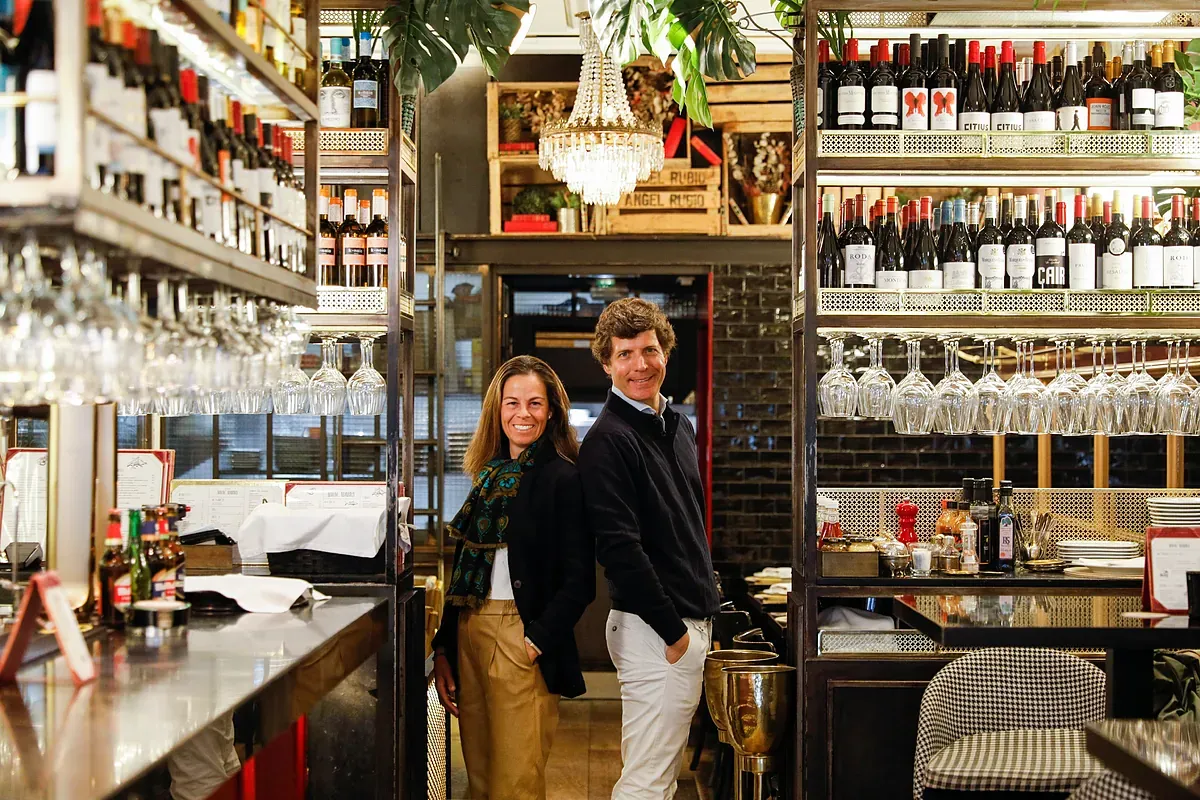
**Inés Bultó Mata** and **Bruno Oliver Bultó** are cousin partners who operate as a finely tuned machine, blending Inés's methodical approach with Bruno's impulsive spirit. Although Inés pursued a degree in Environmental Sciences and Bruno studied Business Administration, neither ended up working in their respective fields. Instead, they discovered a shared passion for creating experiences that seamlessly combine **hospitality, aesthetics, and culinary arts**. Bruno fondly recalls, "I always knew I would do something with Inés."
Their journey began in **Marrakech**, sparked by a trip in the early 2000s when Inés booked a riad almost on a whim. Their arrival was unexpected; a nondescript door in the medina opened to reveal an oasis of tranquility. "We fell in love with the concept," they reminisce. This initial enchantment led to the establishment of **Riad Abracadabra**, which they purchased in 2007 and opened to the public in 2009, ahead of the city's tourist boom. Following this venture, they launched **Abracadabra Store**, featuring leather goods crafted in Morocco and Ubrique, and later took on **Casa Abracadabra**, a larger project located on the outskirts of Marrakech. They acquired this property in March 2020, just before the global lockdown. "We signed the papers and then the world shut down," they say. Rather than retreating, they moved in with their families for three years to oversee the hotel's development from the ground up, including renovations, management, and their children's schooling. Now, Casa Abracadabra boasts 24 rooms, a spa, a restaurant, and event hosting capabilities, operating with a solid structure and a large team as they juggle frequent trips between Spain and Morocco. "This was a life project as much as a business one," they summarize.
Back in Madrid yet maintaining their connection to the Moroccan city, their latest initiative has been the transformation of Toque de Sal—the restaurant they opened in 2015 in the vibrant Ponzano street—into [**Toque Abracadabra**](https://toqueabracadabra.com/). This change goes beyond a mere rebranding; it aims to integrate the restaurant into the broader universe they have cultivated in Marrakech. "We want it to be our embassy here," they explain, creating a space where guests who have stayed at their hotels can recognize the spirit of their brand.
An Extension in the Capital
The concept for Toque Abracadabra emerged from an unorthodox origin. After a trade fair in Paris where they sold absolutely nothing—"zero euros, literally"—they decided to channel their frustration into something tangible. They found a location near their office, and despite Inés's initial reservations about its unappealing appearance, Bruno saw its potential from the very start. Today, over a decade later, the restaurant continues to operate under the same successful formula: **small, cozy, and with a timeless aesthetic**. The redesign was once again a family affair, with Álvaro, Bruno's brother and an architect, overseeing the project, while **Mercedes Bóhorquez**, Bruno's wife, took charge of the décor. The result is a warm environment, featuring quality materials and a lived-in feel that avoids fleeting design trends. "The beauty is in how well it ages," they state, and indeed, it has.
In the kitchen, the philosophy is straightforward: **quality ingredients, balance, and recognizable recipes**. There are no flashy presentations or overly complicated dishes here; instead, the execution is robust and reliable. Menu highlights include gazpacho La Peñuela, duck rolls—of which dozens are prepared daily—foie, steak tartare, and partridge salad, all designed to entice repeat visits. The burger, made from carefully selected and freshly ground meat, is another staple. Additionally, the Abracadabra pasta, originating from Marrakech and making its way to Madrid, serves as a subtle connection between the two locations. With the rebranding, they have also introduced discreet **Moroccan touches**: a slow-cooked tajine, breauts, and the classic mint tea, all without pretense. "We do not aim to be a Moroccan restaurant; we simply want to add some hints of Morocco," they clarify.
That same coherence extends to their wine list, which is one of their major strengths: recognizable labels, a solid selection, and reasonable prices. "I prefer that customers order another bottle because they find it reasonably priced," Bruno summarizes. The team is another cornerstone of their success. In an industry often characterized by high turnover, they pride themselves on having a stable workforce: managers who have been with them for years, a solid kitchen crew, and an **almost familial atmosphere**. "We take care of our people, and that shows," they affirm. This warmth is also felt in the dining area, where diners can still enjoy the spontaneity of eating at the bar or extending their meal without the pressure of a ticking clock.
Looking ahead, they are already considering **a hotel in Spain**, possibly near Madrid, though the location is yet to be determined, but the concept is clear. What they have demonstrated thus far is their ability to make swift decisions. Combining Bruno's intuition with Inés's organizational skills, they have built something truly unique: a coherent, recognizable brand with soul.
As reported by elmundo.es.