
The Surge of Migrants and the Political Fallout
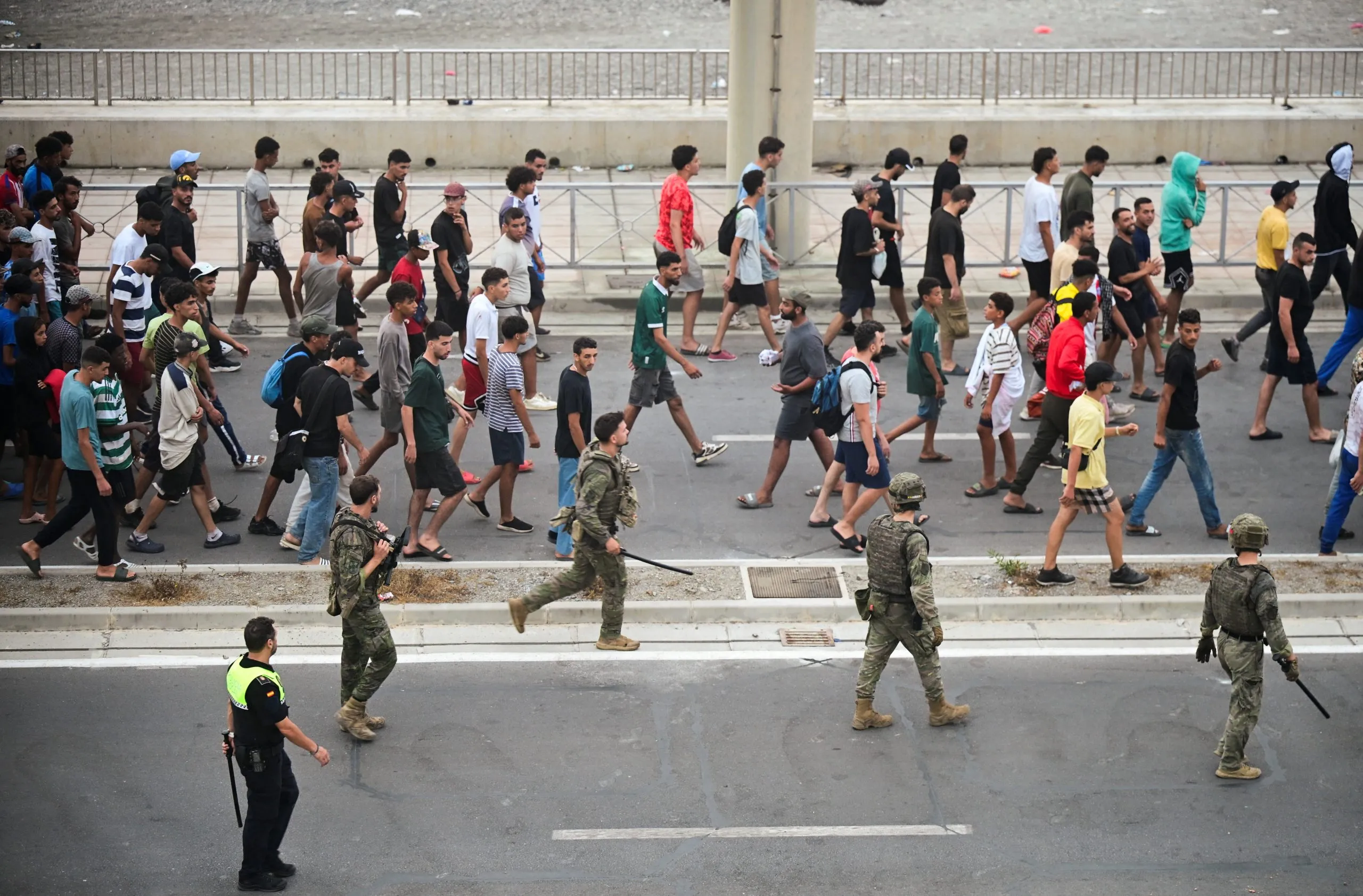
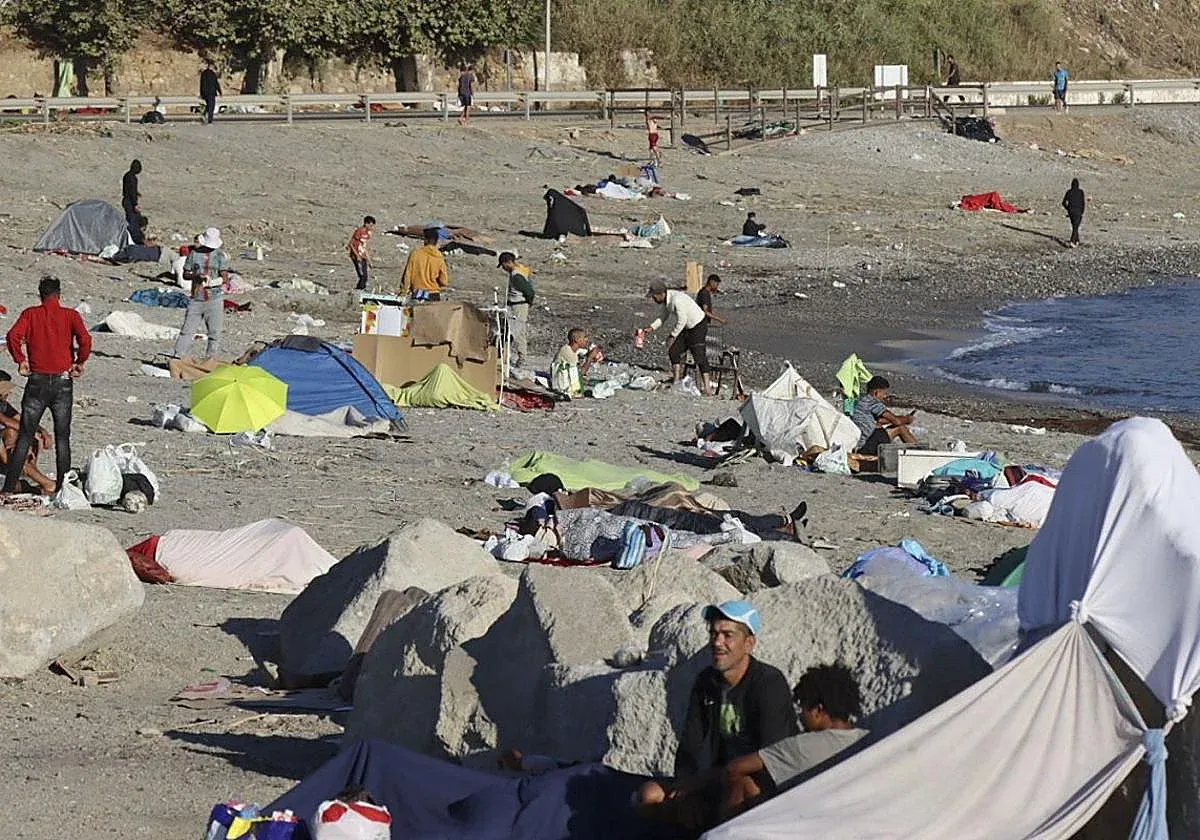
The southern shore of the Strait of Gibraltar is a place where the sea does not recognize international treaties, but politics certainly does. In a dramatic turn of events, tens of thousands of individuals, predominantly Moroccan citizens, amassed at Ceuta, entering Spanish territory en masse. In the days that followed, approximately 70,000 were returned under cross-border cooperation mechanisms, while images of the crisis circulated throughout Europe and the United States. What began as a bilateral crisis between Spain and Morocco swiftly escalated into an international political battleground concerning immigration, borders, and the decline of Europe.
Before delving deeper into this narrative, it is vital to ask a more straightforward question: how did so many people manage to arrive at the same border point at almost the same time? The overwhelming majority were Moroccans, indicating that this was not a mass influx from the Sahel due to drought, nor could it be solely attributed to climate change. The root cause lies much closer to home: in the intricate relationships between Morocco and Spain and the strategic use of migratory pressure as a geopolitical tool.
The precedent is too recent to overlook. In May 2021, during a diplomatic crisis triggered by the hospitalization of Brahim Ghali, the leader of the Polisario Front, in Spain, Morocco loosened its border controls, allowing around 8,000 individuals to enter Ceuta in mere hours. This incident demonstrated Morocco's ability to translate diplomatic tensions into immediate pressure at the European border. Moreover, Morocco did not invent this strategy; Turkey has long leveraged its capacity to contain refugees as a bargaining tool with the European Union, while Belarus explicitly facilitated the arrival of Middle Eastern citizens in 2021, directing them towards the borders of Poland, Lithuania, and Latvia. As immigration becomes one of the foremost electoral concerns in Europe, controlling its entry points offers significant leverage.
Underlying Causes and the Role of the Sahara
The pressing question is what triggered this crisis this time. Inevitably, the focus returns to Western Sahara. Spain approaches this episode from a non-neutral position. In March 2022, Pedro Sánchez made a historic pivot in Spanish policy by endorsing the Moroccan proposal for autonomy in Western Sahara as the “most serious, realistic, and credible” basis for resolving the conflict. This shift disrupted a long-standing Spanish stance that was formally tied to the decolonization process and sought a solution within the United Nations framework, representing a significant diplomatic victory for Rabat.
Since then, the Spanish government has not reversed this course. Sánchez and his Minister of Foreign Affairs, José Manuel Albares, have solidified a policy towards Morocco founded on maintaining a strategic relationship encompassing migration, security, and economic interests. The rationale is well-known: it is crucial to keep open channels and good neighborly relations with Morocco. However, Sánchez’s strategy has proven ineffective; there is a stark difference between pragmatic cooperation among neighboring countries and a diplomatic submission that attempts to shift our policy outside the protections of International Law and the United Nations processes. It is evident that substantial concessions do not fortify borders or ensure the promised stability; they merely validate Rabat's success in employing blackmail.
This shift had repercussions. Algeria, the primary regional supporter of the Polisario Front and a strategic adversary of Morocco, reacted harshly by suspending the Treaty of Friendship with Spain. Since then, Madrid has been striving to mend a relationship that is especially important for energy and geopolitical reasons. The recent political and economic rapprochement with Algeria is significant precisely for this reason. Arthur Snell, a former British diplomat and geopolitical analyst, has suggested that Spain's outreach to Algeria may partially explain the current situation in Ceuta. While we may not know if it was the catalyst, and it will likely take time to understand all the factors involved, it would be unwise to analyze this crisis without considering the triangle of Madrid, Rabat, and Algiers.
Moreover, there exists a paradox that Spain should take seriously. If Sánchez's pivot on Western Sahara aimed to ensure a more stable relationship with Morocco and reduce Rabat's leverage to use migration as a pressure tactic, the recent events compel us to question what has truly been achieved. Spain made a significant political concession to Morocco. If, four years later, the border can once again be used as leverage when disagreements arise, the issue is not only what Rabat desires but whether our strategy towards Rabat is functioning effectively.
The international context has shifted as well. The far-right in the United States provided Morocco with a significant victory during Donald Trump's presidency by recognizing Moroccan sovereignty over Western Sahara. Rabat is now aware that it enjoys substantial support in Washington. At the same time, the ultraconservative American sector maintains a difficult relationship with Spain and views much of the European political project with open hostility. This makes it particularly notable that the events in Ceuta were immediately utilized to criticize the European model.
The Russian factor adds another layer of complexity. During the crisis, messages circulated suggesting that the Spanish border was open, accompanied by practical information on how to cross it, while misinformation networks later exploited the images to portray Europe as overwhelmed. Russia has a long history of exploiting such social and political fractures.
While there is insufficient evidence to assert that Moscow orchestrated this operation or collaborated with Rabat, it is also unwise to dismiss the hypothesis without investigation. Russia stands to benefit from any crisis that divides Europe, strengthens anti-European integration parties, or undermines a country that has supported Ukraine. Additionally, Moscow, historically close to Algeria, has shown signs of rapprochement with Morocco regarding Western Sahara as both countries strengthen certain economic and energy relations.
Thus, we are faced with a possibility that warrants attention rather than a proven fact: that Moroccan, American, and Russian interests may have incidentally converged around a crisis that harms Spain and weakens Europe. In contemporary hybrid warfare, it is not even necessary for all parties to convene at a table; often, it suffices for each to exploit the opportunities created by others.
There is also a pressing issue that we must discuss, particularly in the Canary Islands. The true struggle today revolves around the delineation of exclusive economic zones, territorial waters, and underwater mineral deposits off the island coasts. Morocco's influence in these and other matters is bolstered when it finds interlocutors on the other side who are progressively willing to adopt its geopolitical frameworks. In the Canaries, we see this in various sectors: among political and academic circles, as well as in business associations and companies interested in commercial opportunities in the region.
Maintaining neighborly relations does not equate to acting as a mouthpiece for the neighbor. The issue of Western Sahara remains framed within the United Nations and refers to a decolonization process that is yet to be resolved. Supporting reasonable diplomatic avenues is one thing; accepting that faits accomplis replace International Law is quite another. A dangerous custom has taken root in the Canaries of referring to 'realism' when it is merely a policy of acknowledging faits accomplis. We cannot relinquish our historical position on the Sahrawi people or respect for legality for a bowl of lentils: be it for trade agreements, institutional photographs, or the false illusion that complacency will guarantee us peace.
However, limiting our focus to Morocco would be another mistake. Behind this specific crisis lies a much larger transformation of our geographical environment. To the south of Morocco and the Sahara lies one of the most unstable regions on the planet. The Sahel is plagued by coups, wars, jihadist expansion, poverty, food insecurity, displacement, and an increasing presence of foreign powers.
And here, climate change plays a crucial role. The World Meteorological Organization has been warning of increased water stress and extreme phenomena in Africa. Analyses from the Council on Foreign Relations regarding climate and conflict in the Sahel point to a reality that is far more complex than the stereotype of the 'climate refugee': droughts, soil degradation, and alterations in rainfall patterns erode livelihoods, exacerbate competition for water and grazing, and impact existing political, ethnic, and territorial conflicts.
Climate change rarely explains alone why someone leaves their home; instead, it compounds existing risks. A drought reduces a harvest; the loss of that harvest destroys income; the loss of income heightens competition for resources; this competition unfolds within societies characterized by weak institutions, pre-existing conflicts, and the presence of armed groups. At the end of this chain can lie displacement, violence, or migration. Most of those who migrate do not even reach Europe; they move within their own country or to neighboring countries.
Yet, if a small proportion continues northward, the political consequences in Europe can be enormous. This is one of the most intriguing ideas presented by Snell in his book 'Elemental': climate change does not need to provoke migrations of hundreds of millions of people towards Europe to alter our politics. It may suffice to increase pressure on certain routes to fuel societies where immigration has already become one of the primary electoral fuels.
Here lies an extraordinary contradiction. Vox builds much of its discourse around the migration threat while simultaneously opposing climate policies and questioning cooperation with African countries. However, if future migratory pressure is a real concern, few strategies are more short-sighted than abandoning precisely the policies that help mitigate some of its causes: water security, resilient agriculture, access to energy, job creation, climate adaptation, education, and institutional strengthening.
We cannot demand that people remain in their countries while simultaneously considering it a waste to contribute to building a future there. We can discuss how much to invest, how to do so, and demand results from cooperation. What is incoherent is to denounce the consequences while ridiculing the policies aimed at reducing some of their causes.
The American populism provides the most extreme example of how far this fear-based politics can reach. During the 2024 presidential debate, Donald Trump made false claims about Haitian immigrants in Springfield, alleging they were "eating dogs" and "eating cats." This was untrue. Yet the accuracy of the statement was almost secondary to the political efficacy of the message: he had crafted a perfect image in mere seconds to transform immigrants into an irrational and terrifying threat. A ten-second falsehood possesses far greater mobilization power than an explanation concerning poverty, wars, labor markets, demographics, droughts, or political instability.
This mechanism of simplification—transforming complex phenomena into panic-inducing images capable of provoking outrage and votes—crosses the Atlantic with absolute ease. The protagonists may change, but the recipe remains identical. This is especially dangerous for the Canaries because we are not observing these transformations from thousands of kilometers away; they are unfolding close to our shores.
For this reason, the Canary Islands benefit from promoting avenues of collaboration and dialogue in their African surroundings. Fostering shared projects in water, renewable energies, adaptive agriculture, academic development, and productive investment is not an act of charity but rather a practical vision of the map. Strengthening the socioeconomic fabric in countries of origin and transit helps to structure the region and prevent future tensions.
Ultimately, it comes down to maintaining a fluid and realistic relationship between neighbors: cooperating on matters of mutual interest without renouncing our own criteria when discrepancies arise. Rejecting the use of migratory flows as leverage, acting coherently within the framework of the United Nations regarding Western Sahara, and maintaining an appropriate balance with Algeria are all part of this same vision.
In conclusion, the border begins much earlier than Ceuta. It starts in the Sahel when a family loses its harvest; in the relations between Algiers and Rabat; in the still-pending future of Western Sahara; in the misinformation campaigns that turn a crisis into a political weapon; in Washington when the images from Ceuta are used to stoke panic about Europe; and also in the Canaries when we decide whether to approach our environment from a perspective of calm cooperation or from the fear of discomfort.
Because a foreign policy focused solely on avoiding friction ultimately hands the other party an excessive advantage: the ability to condition our decisions simply by threatening disagreement.
Ceuta has just reminded us of this lesson. The Canary Islands should take note.
As reported by canarias7.es.