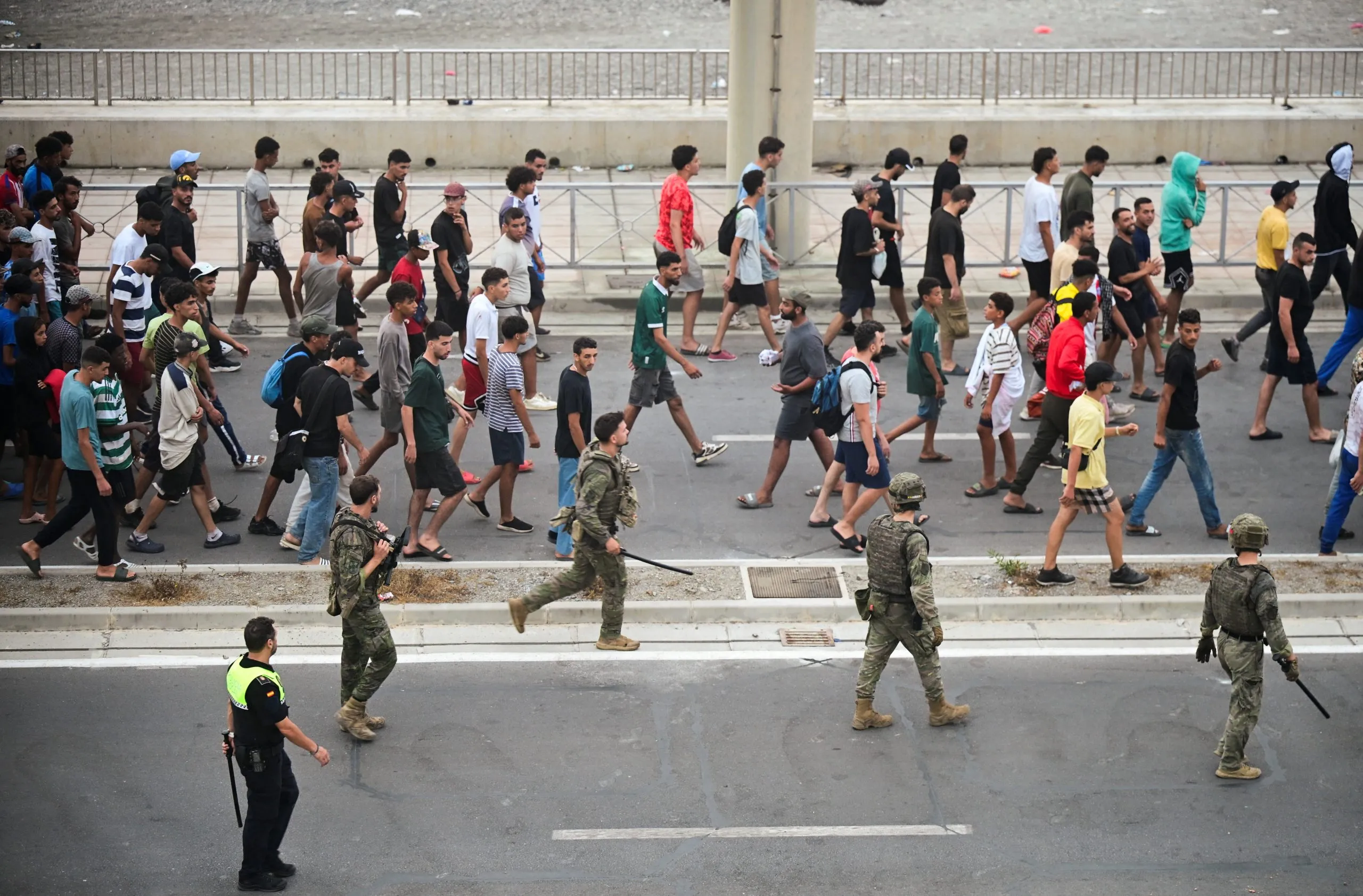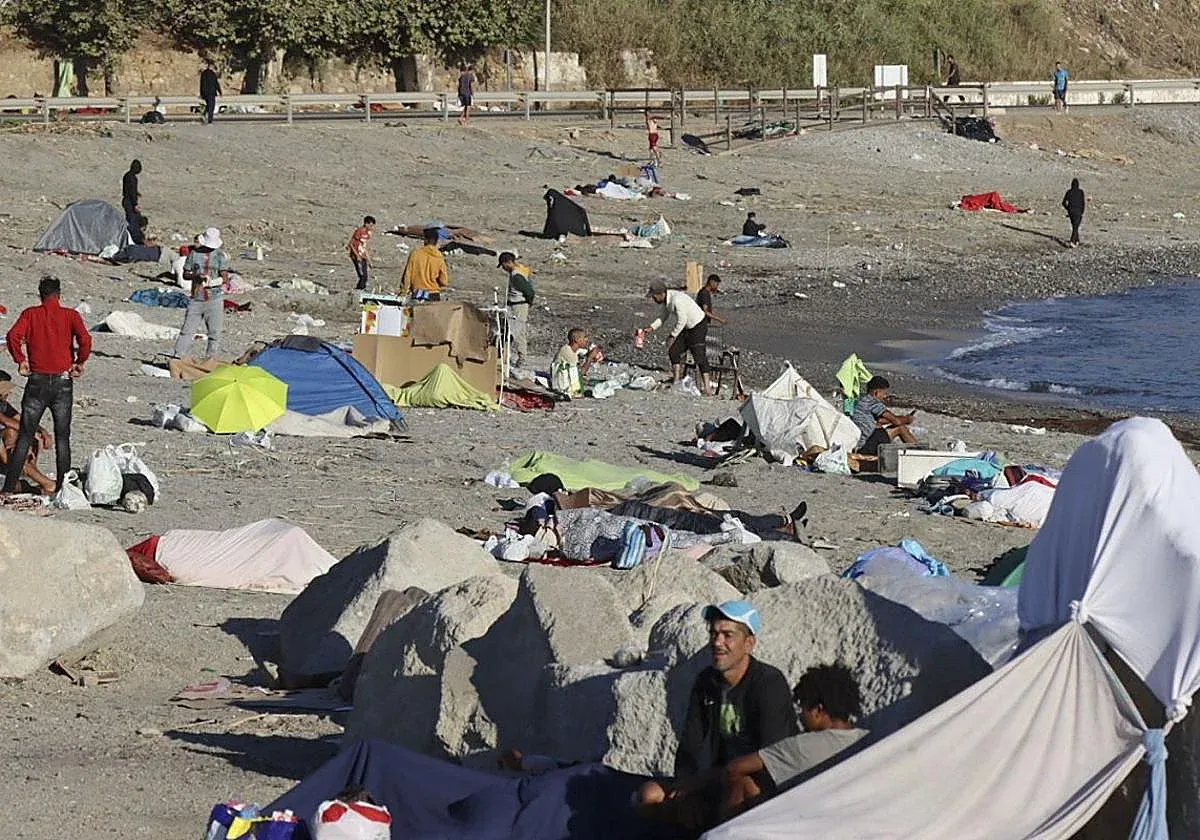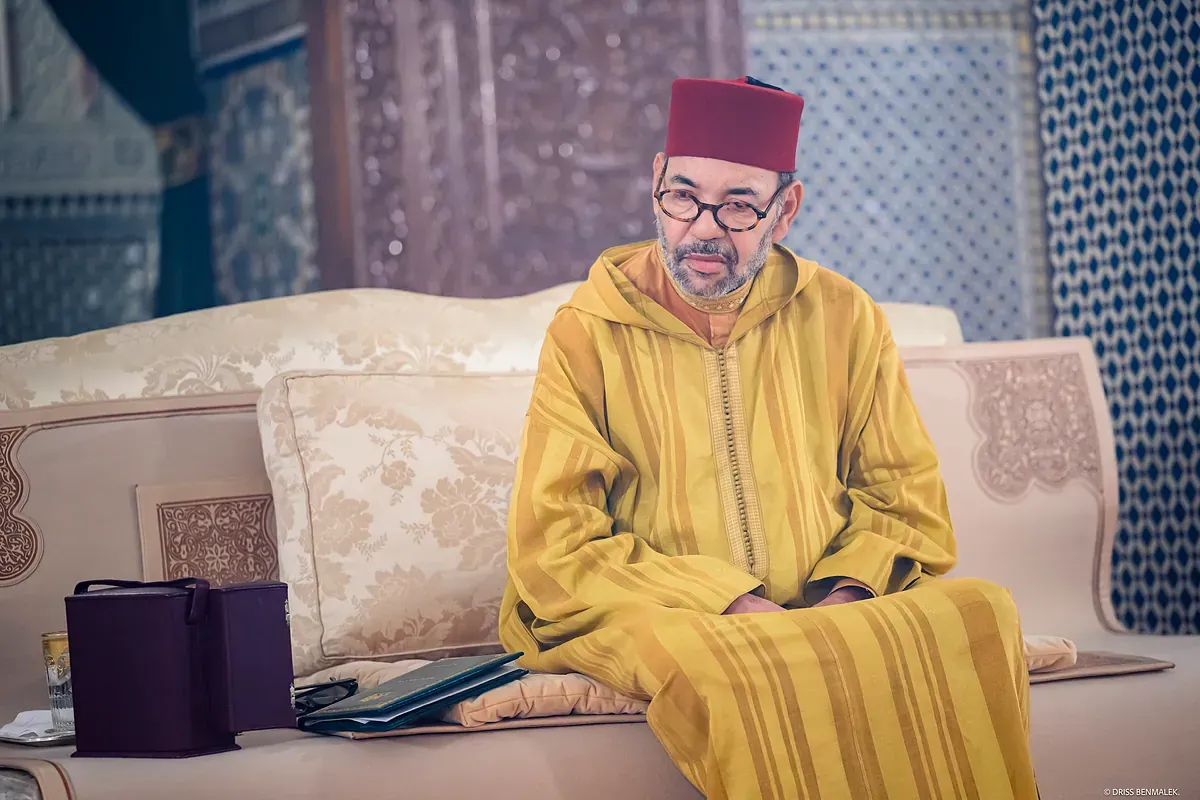

On August 26, 2026, Morocco once again emphasized its claims over the Spanish enclaves of Ceuta and Melilla, doing so in a formal setting at the Royal Palace in Rabat in front of King Mohammed VI. This revelation comes shortly after an incident involving the crossing of 80,000 individuals into Ceuta, which has further strained relations between the two nations. During a religious ceremony commemorating the anniversary of the birth of the Prophet Muhammad, Ahmed Toufiq, the Moroccan Minister of Religious and Islamic Affairs, referenced the 'sacred struggle' of Moroccans to 'liberate the occupied cities' along the Atlantic coast, while also linking Ceuta to the spiritual heritage of the Alawite kingdom.
In his remarks, Toufiq recalled various historical figures associated with Ceuta, including Imam Al-Jazouli, the author of 'Dalail Al-Khayrat,' a significant piece of Moroccan religious literature. He noted that this work had historically motivated Moroccans in their quest to 'liberate the occupied cities in the Atlantic Ocean' during the early modern period. Although he refrained from explicitly mentioning Ceuta and Melilla or directly connecting his historical references to the recent migration crisis, the context of his speech, particularly in the presence of the monarch following the events of July 30, has once again placed Morocco's claims at the forefront of discussions regarding Spanish-Moroccan relations.
The Spanish response came swiftly from Defense Minister Margarita Robles, who reiterated during a Senate Defense Committee meeting that there is no room for debate regarding Spanish sovereignty over these autonomous cities. 'You have heard me say that they are not just Spanish; they are profoundly Spanish,' declared Robles, echoing sentiments she expressed during her visit to Ceuta on August 12, while emphasizing that both cities are 'untouchable.'
Morocco's stance on Ceuta and Melilla is not a new development; it is a part of a long-standing discourse maintained by various Moroccan authorities over decades. The intensity of these claims has varied, but both cities have consistently been viewed by Rabat as territories that are still pending reclamation. In December 2020, former Moroccan Prime Minister Saadeddine Al Othmani declared that 'Ceuta and Melilla are Moroccan, as Moroccan as the Sahara,' prompting an immediate diplomatic response from Spain, which summoned the Moroccan ambassador to assert its sovereignty and territorial integrity. Following this year's migration crisis, Al Othmani reaffirmed his position, stating that both cities are 'occupied' by Spain.
In 2022, King Mohammed VI also stated that Morocco has 'not ceased since its independence' to demand an end to Spanish occupation of Ceuta and Melilla and the 'plundered neighboring islands in the north.' Nevertheless, the king moderated his statements by asserting that Morocco seeks to achieve this goal through 'the path of lucid reason' and a 'peaceful and civilized' approach.
Despite this, in September of the same year, Morocco submitted a written communication to the United Nations addressed to the Office of the High Commissioner for Human Rights. This document claimed that there are no land borders between Morocco and Spain, referring to Melilla as a 'occupied prison.' This communication followed a tragic incident at the Melilla border on June 24, 2022, which resulted in 37 fatalities and many missing persons.
In April 2023, Moroccan Chamber of Councillors President Enaam Mayara adopted even more direct language, stating, 'They are cities occupied by Spain' and predicting that both territories would be recovered 'in the future,' while promoting negotiation as the means to achieve this objective without resorting to arms.
The issue has resurfaced with renewed vigor. On August 22, Moroccan Justice Minister Abdellatif Ouahbi reiterated that both territories are a 'historical and geographical right' of Morocco, calling for negotiations to discuss their future. His goal, as he explained, is to find a solution that would allow for the 'return to the homeland' of Ceuta and Melilla, to which the Spanish government responded with a firm rejection of any proposals concerning this matter.
Thus, Morocco persistently insists that the reclamation of both cities is part of its plans, while Spain maintains that there are no territorial issues pending. The Spanish government firmly asserts that Ceuta and Melilla are integral parts of its sovereignty and territorial integrity, with Robles stating unequivocally, 'Ceuta and Melilla are Spain,' and that 'any aggression or attempt of aggression towards these autonomous cities is an aggression against all of Spain.'
As reported by elmundo.es.