
Spain's Response to Border Crises: A New Strategic Approach
The Spanish government's approach to the recurrent border crises in North Africa can no longer rely on mere improvisation or emergency patchwork solutions. This fundamental premise underpins the new report released on September 21 by the **Atenea Center for Studies**, an institution led by former political leader **Iván Espinosa de los Monteros**. Titled 'Spanishness of Ceuta: Geopolitics and Future Scenarios', the document outlines a comprehensive roadmap encapsulated in a robust **ten-point action plan** designed to equip the autonomous city with an **unbreakable political, legal, and logistical shield**.
Authored by **Eugenio Ribón Seisdedos**, a lawyer from the Illustrious College of Lawyers of Madrid (ICAM) and a member of the center, along with fellow members **Francisco Contreras** and **Gustavo Fernández Mazarambroz**, the text dispels any lingering doubts regarding Spain's territorial legitimacy. It emphasizes that Spain's sovereign presence in North Africa is **far from being a geographical or colonial anomaly**. The 'Spanishness' of Ceuta is built on solid historical foundations, including its roots in the Portuguese conquest of 1415, its loyalty to the Hispanic Monarchy during the dynastic crisis of 1640, formal recognition in the Lisbon Treaty of 1668, the Peace Treaty of 1860, and its absolute constitutional integration under the 1978 Constitution and the Statute of Autonomy. As the authors assert in their declaration of intent, **Ceuta is not the end of Spain**, but rather one of the pivotal locations from which the nation extends.
Atenea's Think Tank: Advocating for Sovereign Sufficiency
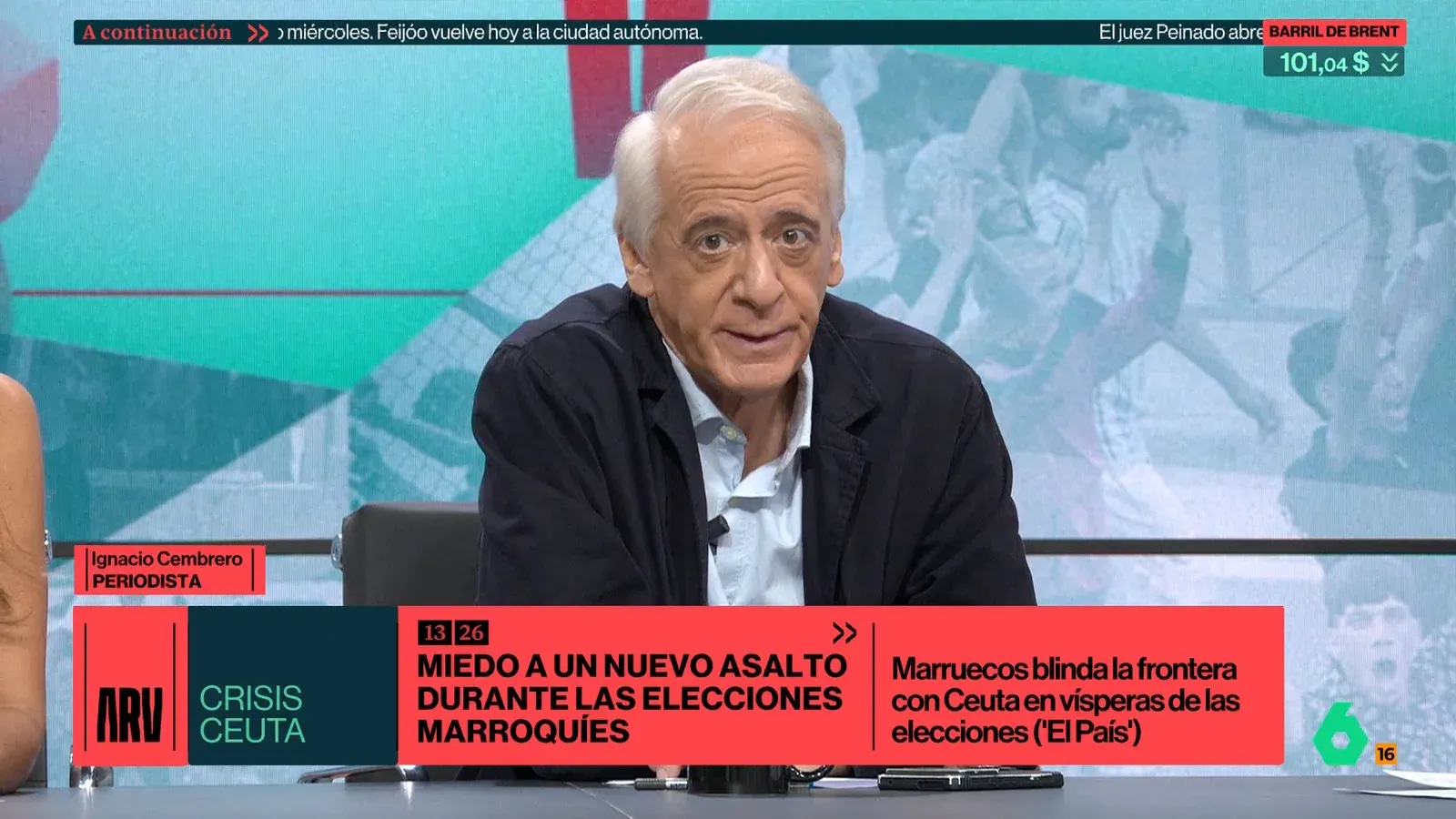
The report emerges from a stark diagnosis of the **serious crisis experienced on July 30 and 31, 2026**. This episode subjected the city to unprecedented pressure, compelling the government to enact successive royal decrees declaring the situation a matter of National Security. It highlighted the **deep fissures in the current institutional management model**. In the face of the instrumentalization of civilians to force borders—a strategy internationally recognized as coercive migration—Spain cannot afford to be at the mercy of diplomatic fluctuations with Rabat.
The central concept of the **think tank's proposal** is **sovereign sufficiency**. The association does not advocate for isolating Ceuta or severing ties with Morocco. Rather, it strongly supports a **good neighborly relationship and collaboration on security**, **organized crime control**, and **trade**, while establishing a crucial strategic red line: such cooperation must always be exercised from a stance of **self-capacity and reciprocity**, never from **structural dependency**. It is imperative for Ceuta to maintain continuous operational infrastructures, logistical reserves, health contingency plans, and supply alternatives (energy, water, and telecommunications) that enable it to **withstand and function normally** even if the neighboring country unilaterally ceases its cooperation.
The report also delves into **prospective analysis**, outlining six future scenarios that institutions must anticipate. These range from the desirable **normalization of cooperation**, through a perilous and exhausting chronic friction hovering on the brink of traditional warfare, to **diplomatic internationalization campaigns** aimed at transforming Ceuta into a disputed territory in the eyes of the international community.
To counter these hybrid threats, the text proposes, within its ten-point action plan, the establishment of a **National Attribution File** led by the National Security Department. Its goal is to gather military and police intelligence to document any harassment with maximum legal rigor and verifiable evidence, avoiding mere political speculation while ensuring a permanent system that demands accountability. Additionally, the association categorically rejects any future **negotiation of "co-sovereignty" with Morocco**, reminding that territorial integrity concerns the entire Spanish people, and any alteration would require aggravated constitutional reform pathways that are **non-negotiable** under coercion.
On the international stage, the proposal from the Atenea Association calls for **clarifying NATO's role and demanding greater strength from Europe**. The report emphasizes the urgent need to dispel the geographical ambiguity of Article 6 of the North Atlantic Treaty, advocating for an allied declaration to consolidate the protection of North African cities. Concurrently, it insists that the European dimension must cease to be cosmetic: **Ceuta is the external border of the EU**, and thus requires structural deployment—not just in emergency phases—of the European Border and Coast Guard Agency (Frontex), Europol, and the EU Asylum Agency.
In conclusion, the ten-point plan aims to establish a **State Pact** that integrates the entire parliamentary spectrum to **ensure multiannual funding** and establish **permanent identification and return teams composed of lawyers, prosecutors, and healthcare professionals** to guarantee border fluidity without reducing legal safeguards. Furthermore, it advocates for a "future sovereignty" capable of anchoring the population through progress by transforming risk into opportunity, attracting quality talent and investment, such as the proposed establishment of a University Institute of Excellence in Nursing and Emergencies, and a Critical Systems Engineering School focused on the resilience of logistical and energy facilities.
As reported by vozpopuli.com.