SIEL 2026: A Cultural Convergence in Rabat
The 31st edition of the International Salon of Publishing and Book (SIEL), taking place in Rabat from May 1 to May 10 under the High Patronage of His Majesty King Mohammed VI, continues to foster discussions surrounding the cultural, linguistic, and intellectual transformations that permeate contemporary societies. With a focus on multilingual poetry, Amazigh translation, African literature, historical memory, ethical reflection, and children's literature, the Salon reaffirms its role as a dialogue platform between languages, disciplines, and generations.
Exploring Linguistic Plurality and New Poetic Expressions
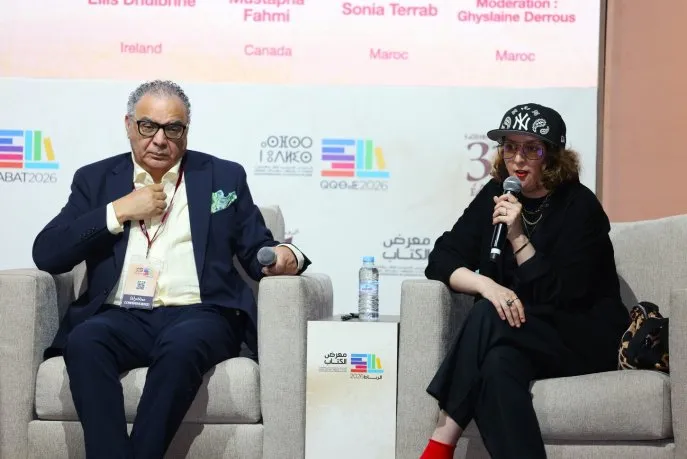
The evolution of contemporary Moroccan poetry has played a significant role in the discussions organized at SIEL, especially during a conference dedicated to the relationship between multilingualism and poetic creation. Poets, academics, and translators engaged in discussions about the transformations in poetic writing amid the coexistence of several languages, including Arabic, Amazigh, French, English, and Spanish. Poet and academic Hassan Mekouar, primarily writing in English, advocated for the preservation of this linguistic plurality, which he considers an essential richness of Moroccan culture. He noted that new digital practices are reshaping traditional poetic forms, with slam, rap, social media, and artificial intelligence redefining the contours of poetry creation and reception.
Similarly, poet and academic Aziz Amahjour emphasized the enduring significance of one's mother tongue in the creative process, even when writing in a foreign language. He argued that linguistic memory continues to permeate texts through images, cultural references, and thought structures that inhabit the poet's imagination.
The discussions also touched upon the challenges of gaining international recognition for contemporary Moroccan poetry, the difficulties of literary translation, and the emergence of new forms of expression embraced by younger generations. Another conference focused on linguistic diversity within poetic practices, led by Mohamed El Annaz, a professor of literary and artistic criticism at the Faculty of Letters and Human Sciences in Tetouan. He highlighted that language in Moroccan poetry transcends its function as a mere tool of expression, serving as a symbolic and historical reservoir that shapes world perceptions and nourishes collective imaginaries.
In this context, the history of Morocco has never been dominated by a single language but has been characterized by cultural plurality, allowing for the emergence of an open and multifaceted poetic imagination, far removed from identity closure.
Amazigh literary translation challenges and the transmission of knowledge were also central to the discussions during a session dedicated to Amazigh translation dynamics. Researchers and academics spotlighted the critical role of translation in developing a written Amazigh culture and bridging cultural divides. Suleiman El Baghdadi, president of the Amusigh Translation Center, noted that translation facilitates the transition from oral tradition to a structured and scholarly language. This process, he argued, fosters the emergence of a rich Amazigh literary corpus filled with references, genres, and narrative forms.
El Baghdadi also emphasized the complexity of translation work within a cultural universe marked by polysemy and implicit references. An Amazigh literary translator must act as a linguistic interpreter, semiotic analyst, and anthropological observer to faithfully convey the cultural dimensions of the original text.
These reflections resonate with broader discussions on linguistic diversity and the necessity of preserving intangible heritage amid the cultural globalization and rapid circulation of content.
Beyond academic debates, SIEL 2026 also confirms its growing openness to African literatures. This edition features a significant presence of writers, publishers, and thinkers from the continent, gathered around an African pavilion that has become a central space for intellectual and editorial exchanges. African literature emerges as a plural production driven by the desire to narrate Africa from within, distancing itself from often-dominant external representations. The aisles of the Salon showcase a mosaic of voices, languages, and narratives, reflecting the continent's editorial vitality.
The African Publishers Network (APNET), based in Accra and representing 42 African countries, contributes to this dynamic with a multilingual editorial offering that includes works in French, English, Arabic, and Swahili. Its leaders expressed their commitment to enhancing commercial exchanges and literary bridges between African countries. The significant attendance at the African pavilion also illustrates the increasing interest of Moroccan audiences in Sub-Saharan literatures, contributing to the book's role as a tool for cultural convergence and the consolidation of intellectual ties on a continental scale.
This year's SIEL welcomes 891 exhibitors, including 321 direct and 570 indirect, representing 60 countries from the Arab world, Africa, Europe, Asia, and the Americas.
Among the various events organized, the connections between literature, memory, and scientific knowledge were explored. The Marsam Editions booth hosted a book-signing session for "The Particle: An Odyssey Through Time" by Mohammed Bousfiha. Published in French, this work provides an original journey through human history from the perspective of a particle observing the evolution of the cosmos, civilizations, and beliefs, intertwining cosmology, psychology, memory, and spirituality without adopting a dogmatic stance.
Another session focused on the relationship between William Shakespeare and Morocco, revisiting representations of the Kingdom in early 17th-century English literature. Scholars discussed the diplomatic and cultural relations between Morocco and England during the Elizabethan era and their influence on English literary imagination. Egyptian journalist and poet Mohamed Hamida presented his works "Cairo-Marrakech" and "The Dictionary of Paradise," narrating his journey through Marrakech and surrounding areas, highlighting cultural discoveries, Atlas landscapes, and immersion in traditional markets.
The Salon also featured a meeting organized by the Court of Auditors discussing ethical issues in financial jurisdictions, emphasizing the importance of transparency, ethics, and confidentiality in jurisdictional and oversight practices. Additionally, the dedicated spaces for children's literature continue to attract a large family audience, with illustrated albums, comics, tales, and educational books among the most sought-after by children. Present publishers noted the growing demand for printed children's books in Morocco, primarily due to their more accessible pricing compared to foreign publications.
Through this diverse array of encounters, SIEL 2026 reinforces its role as a cultural platform open to contemporary debates, African dynamics, and the transformations of reading and creative practices.
As reported by quid.ma.