
Addressing Political Migration in Moroccan Politics
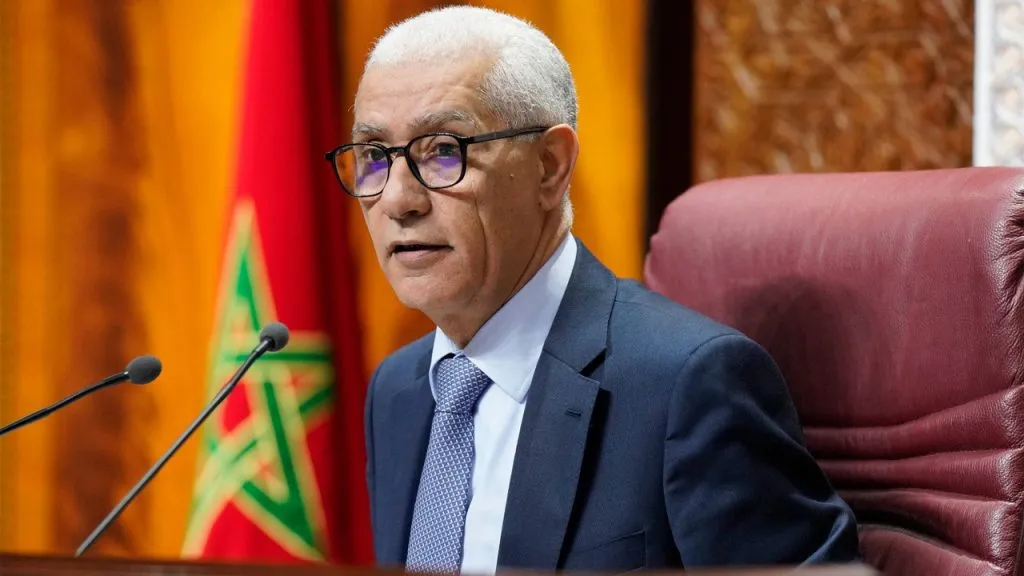
Rachid Talbi Alami, the President of the House of Representatives and a member of the political bureau of the National Rally of Independents (RNI), recently shed light on the 2007 meeting he had with King Mohammed VI, where they discussed the contentious issue of "political migration" within the House of Representatives. He emphasized that tackling such practices is crucial for enhancing the integrity of political life and establishing a democratic model founded on clear party principles. During a recorded speech at a meeting of the RNI's political bureau held on August 25, 2026, Talbi Alami provided context for the party's upcoming stance regarding the troubling trend of party-switching, particularly as they prepare for the legislative elections scheduled for September 23, 2026. His remarks particularly referenced the migration of several party members to the Authenticity and Modernity Party (PAM).
Talbi Alami asserted that "well-organized party work yields a political output with noble goals," while cautioning that "chaos within party operations leads to political disorder." He insisted that discussions within the party should not be confined to electoral calculations or fears regarding the potential impact of upcoming decisions on the number of seats, framing it instead as a "historical responsibility" for the party leadership. Reflecting on his views regarding political migration, he recalled the 2007 meeting where they recorded 167 instances of political switching within the House of Representatives. During that meeting, the council president and his bureau were received by the King, who inquired about the phenomenon of political migration.
Historical Context and Legal Framework
According to Talbi Alami's recounting, during their discussions, international experiences that prohibit political migration between parties were presented, with Germany cited as a notable example. He noted that the political history of Germany since World War II has witnessed only one case of this nature, which subsequently influenced the legal framework in Morocco. He stated that efforts to combat political migration were integrated into the laws governing the House of Representatives, and later into the constitution and regulatory laws, aligning with the King’s calls for enhancing the integrity of political life, as conveyed in his speeches.
In a direct critique of practices that he perceives as attempts to circumvent established party norms, Talbi Alami posed a provocative question: "Can our conscience allow us to accept legal practices in FIFA while ignoring the rules and regulations that govern party operations?" He argued that the progressive construction of Morocco's democratic model is contingent upon respecting party rules and institutional frameworks, asserting that such adherence is fundamental to this journey. He humorously dismissed the notion of applying football transfer rules to political life, suggesting that Morocco might be on the verge of creating a new democratic model on the global stage. In a sarcastic tone, he remarked that a 'Mahdi' has descended from the heavens, bringing forth innovations in political and party work.
Discussing the implications of the party's stance, Talbi Alami asserted that political actors face two choices: "Either I can leave if I am dissatisfied, which is easy, or I can embrace a 'historical responsibility' within the party and contribute to defending its principles." He recalled past instances where leaders of the National Rally of Independents stood united during pivotal moments, urging that the current situation should be approached with the same solidarity rather than succumbing to personal or electoral calculations. He concluded by stating that the decision made by the political bureau, along with any subsequent statements condemning the conduct of certain political actors, will be historic regardless of the outcomes.
Talbi Alami underscored that the role of the party is to clearly express its position on these practices without fear, even if the potential political cost includes losing some seats or affecting the party's ranking. He remarked, "Our role is to state clearly and without fear, even at the expense of seats and first place." He emphasized that these practices must be curtailed and expressed optimism that the anticipated statement from the political bureau will signify a transformation within the political and party landscape. This discourse arises amid an increasingly dynamic Moroccan political arena as the legislative elections approach, reigniting discussions about the transitions of elected officials and leaders between parties, and the fine line between the right to change political allegiance and what is deemed as "political migration."
As reported by thevoice.ma.