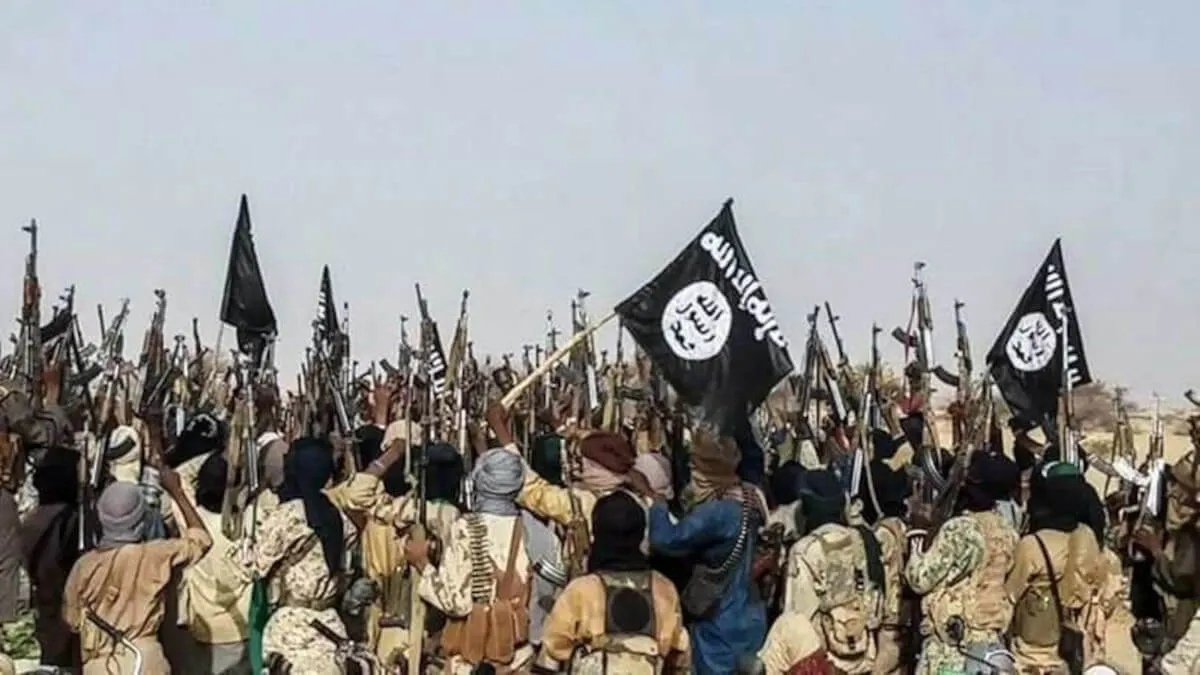
The ongoing instability in the African Sahel region continues to raise significant concerns among global powers, particularly as Morocco endeavors to mitigate the crisis affecting countries such as Mali. However, these efforts are being severely hampered by jihadist attacks targeting the critical supply lines that transport essential goods to the Malian capital, Bamako. Reports indicate that armed jihadist factions, particularly those affiliated with the Macina Liberation Movement (Katiba Macina) and the Group for the Support of Islam and Muslims (JNIM), have escalated their operations to disrupt logistics aimed at delivering food and supplies to the vulnerable populations in Mali.
On May 6, a convoy of Moroccan trucks en route to Bamako was intercepted and set ablaze by jihadist militants, although fortunately, the drivers escaped without injury. This assault occurred on a road linking Gogui Zammal, located near the Mauritanian border, to the village of Gogui in Mali, an area notorious for terrorist activity. According to Moroccan media outlet Le360, the attack impacted six trucks that had embarked from Morocco, highlighting the persistent threat against transporters operating in this volatile region. These trucks were part of a larger supply convoy originating from various Maghreb nations, reflecting Mali's reliance on external imports to sustain its economy.
The jihadists’ strategy appears to be a calculated effort to isolate Bamako from essential supplies, with implications that extend beyond mere logistics. This recent incident is not isolated; in January 2025, a Moroccan convoy faced a similar fate near the Mali border, resulting in the kidnapping of four Moroccan drivers in the perilous area known as 'the three borders,' where Mali, Niger, and Burkina Faso converge. Such attacks are emblematic of a broader trend of violence targeting transporters in the Sahel, underscoring the precarious security situation in the region.
Adding to the complexity of the Sahel crisis, recent weeks have witnessed a surge in jihadist offensives across various towns in northern Mali. Notably, on April 25, the JNIM, in collaboration with Tuareg separatist rebels, executed a significant attack aimed at high-ranking officials, resulting in the death of the defense minister. This incident illustrates the ongoing power struggle within Mali and the challenges faced by the military junta, led by President Assimi Goita, who has acknowledged the reorganization of jihadist forces despite claims of having neutralized hundreds of terrorists.
In addition to Mali, Burkina Faso, also under military rule, has seen an uptick in violence, with recent jihadist attacks claiming numerous civilian and military lives. Discontent among local youth, fueled by grievances against military conduct and the presence of foreign mercenaries, has created fertile ground for jihadist recruitment in both Mali and Burkina Faso. A recent report by the International Crisis Group underscores the extensive reach of JNIM, which operates in various regions across Mali, Burkina Faso, and Niger, with ambitions that extend beyond the Sahel to potentially establish a new Caliphate across North Africa and into Europe.
In light of these challenges, Morocco’s proactive approach to stabilize the Sahel region is increasingly critical. The country is championing the Atlantic Initiative, a strategy launched by King Mohammed VI aimed at creating a logistical corridor that would provide Sahel nations with access to the sea via Moroccan ports. This initiative is designed to bolster economic development, generate employment opportunities, and strengthen local institutions, ultimately addressing the root causes of discontent that lead young people to align with jihadist groups. However, the escalating attacks on Moroccan supply convoys signify a direct challenge to this initiative, necessitating a collective response from all Maghreb nations, including Algeria, to effectively counter the jihadist threat and prevent its spread into North Africa and beyond.
As reported by atalayar.com.