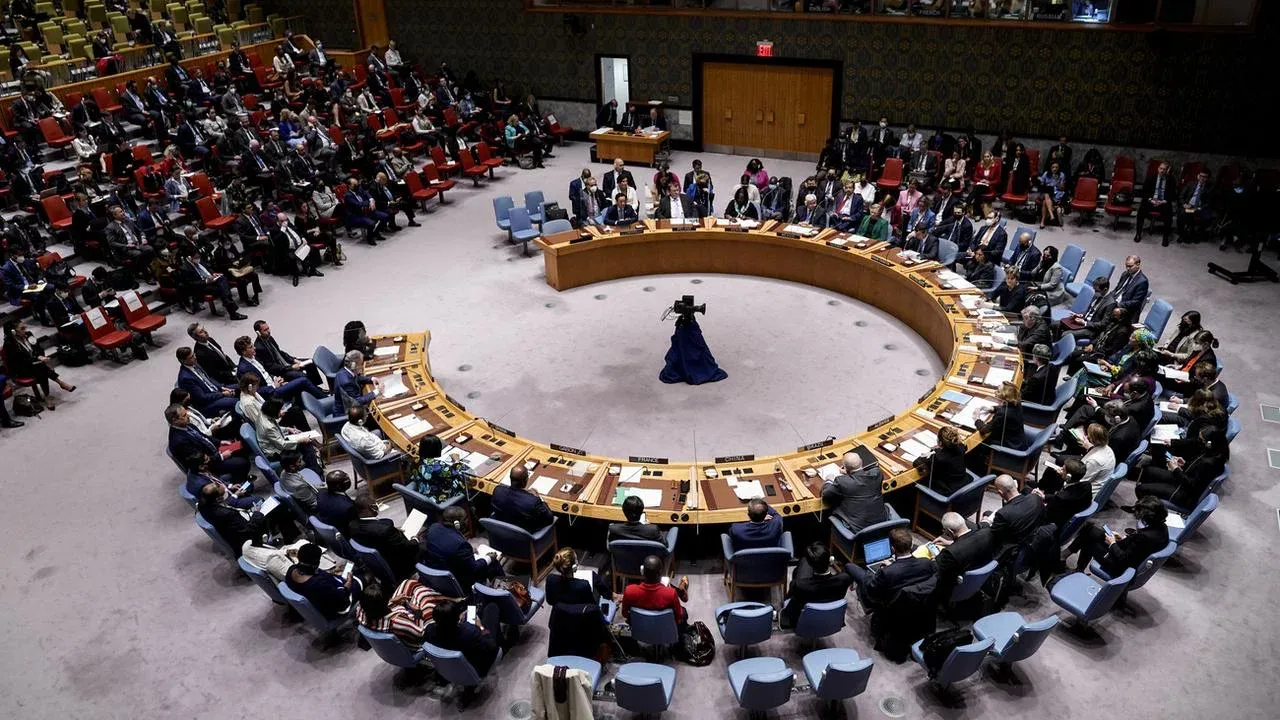

As the United Nations Security Council prepares to assess the renewal of the MINURSO mandate for Western Sahara this October, Morocco is demonstrating a notable sense of confidence. A joint statement released on September 16 by Morocco, the United States, and Israel has significantly bolstered Rabat’s assurance regarding the positions of its two allies concerning this contentious issue. This statement explicitly reaffirms that both the United States and Israel recognize Morocco's sovereignty over the entire territory of Western Sahara, alongside their endorsement of Morocco's autonomy proposal, which they deem as serious, credible, and realistic. They regard this proposal as the sole basis for achieving a just and lasting resolution to the ongoing dispute over the territory.
The joint statement further articulates that any alternative approach would merely serve to prolong the current status quo, which is deemed unacceptable. The urgency of this solution is underscored, as it promises not only to foster peace in the region but also to enhance prosperity and facilitate greater integration across Africa.
Support from Allies and Strategic Positioning
The enhanced backing from Washington and Tel Aviv for Moroccan sovereignty over Western Sahara follows a series of pivotal diplomatic visits. Notably, on September 4 and 7, Morocco's Foreign Minister Nasser Bourita visited Denmark and Greece, both of which hold non-permanent seats on the Security Council. These visits solidified firm support for Morocco's autonomy plan regarding Western Sahara.
The current composition of the UN Security Council is favorable for Morocco, especially considering that Colombia, which previously advocated for the Polisario Front during former President Gustavo Petro's tenure, has distanced itself from Brahim Ghali's movement. Furthermore, nations such as Bahrain, Liberia, the Democratic Republic of Congo, Panama, and Somalia have recognized Moroccan sovereignty over Western Sahara. Meanwhile, Pakistan abstained from voting alongside Russia and China on Resolution 2797 on October 31, 2025, which backed Morocco's autonomy initiative. This abstention has not hindered the development of relations between Rabat and Islamabad, with Bourita engaging in a phone conversation with Pakistan’s Deputy Prime Minister and Foreign Minister, Mohammad Ishaq Dar, on April 8.
Looking ahead to the October review at the Security Council, it is anticipated to be a crucial opportunity for consolidating the efforts made by Morocco and its allies over the past year. A source close to the situation indicated that Rabat, with support from its partners, should advocate for the implementation of a strategic review of MINURSO's mandate in accordance with Resolution 2797. The initial steps for this review were initiated during two meetings held in April by the fifteen-member body. There is a collective push to continue advancing this agenda, especially given the currently favorable international context.
In light of the upcoming discussions, it is important to note that UN Secretary-General Antonio Guterres has raised concerns regarding the future of MINURSO in an August report, highlighting the lack of a ceasefire as a significant issue. He stated, "Peacekeeping operations should only be deployed where there is a peace agreement or at least a solid ceasefire. We cannot maintain peace when there is no peace to maintain." In terms of relations with Russia and China, strategic dialogues with these permanent members of the Security Council are reportedly progressing well. Recently, Moscow hosted the inaugural session of the Morocco-Russia diplomatic committee, and it’s expected that the anticipated abstentions from both Moscow and Beijing will align with Rabat’s interests.
As October approaches, Morocco is also expected to continue to rely on the support of France and the United Kingdom, two permanent members of the Security Council with veto power. France formally recognized Moroccan sovereignty over Western Sahara in July 2024, while the UK has endorsed Morocco’s autonomy plan since June 2025. This solidifies Morocco's diplomatic position as it navigates the complexities of international relations surrounding the Western Sahara issue.
As reported by en.yabiladi.com.