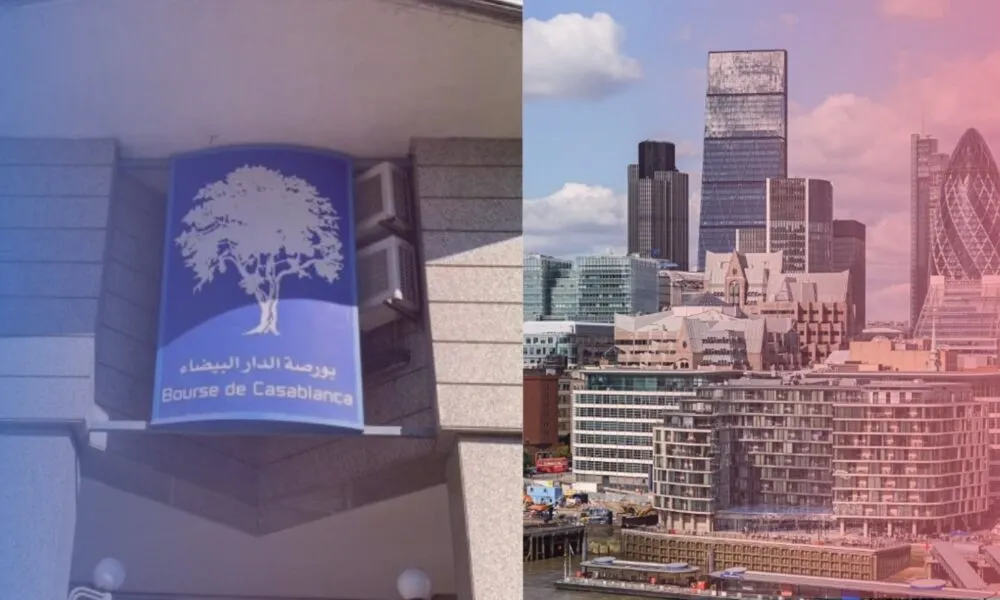
On April 6, 2026, Morocco officially launched its futures market and clearing house, marking a significant milestone in the country’s financial evolution after more than a decade of meticulous preparation. This initiative was supported by pivotal stakeholders including the Ministry of Economy and Finance, Bank Al-Maghrib, the Moroccan Capital Market Authority (AMMC), the Casablanca Stock Exchange (Bourse de Casablanca), and various market participants. This new venture aims to align Morocco’s financial infrastructure with international standards, thereby enhancing its attractiveness as a regional financial hub.
The Casablanca Stock Exchange operates both the futures market, known as Marché à Terme MAT, and the Central Counterparty Clearing House (CCP). The exchange, which is structured as a 100% subsidiary for the futures market, is partially owned by credit institutions, with a 51% stake held by the Bourse de Casablanca and 49% by these institutions. The newly launched futures market offers real-time pricing for forward trades due in July, September, and December 2026, as well as March 2027. The establishment of the Futures Market Coordination Body (l’Instance de coordination du marché à terme ICMAT) was also announced through a joint press release by the central bank and the AMMC. The ICMAT, created under the Futures Market Act (Law 42-12), is responsible for ensuring the coordination of activities between the bank and the regulator, a process that began operationally in 2019 after the necessary regulations were finalized.
The inaugural trading instrument on the MAT is a cash-settled futures contract based on the MASI.20 index, which represents the top 20 publicly listed companies in Morocco. As the market develops, additional contracts, including those tied to interest rates, are expected to be introduced. Nasser Seddiqi, the CEO of Bourse de Casablanca, described this launch as a historic moment for Morocco, emphasizing that it is not just about introducing new trading instruments, but rather establishing an entirely new market equipped with state-of-the-art infrastructure that will enhance the resilience and competitiveness of the Moroccan economy. The futures market is anticipated to provide crucial hedging tools for a diverse range of investors, from fund managers and institutional players to retail participants, thereby positioning Casablanca as a leading financial center in the region.
In addition to boosting risk management and liquidity, the futures market is expected to be primarily utilized by institutional investors such as banks and insurance companies during its initial phase. This new market facility is designed to support the development of financial products that could eventually become more accessible to general investors, thereby broadening the scope of available investment instruments. The Derivative Market Management Company (Société Gestionnaire du Marché à Terme, SGMAT) has already issued notices for the admission of trading members, including prominent institutions like Attijariwafa Bank and Bank of Africa.
The introduction of the futures market may follow an earlier, misguided announcement in May 2025, when the AMMC stated that derivatives trading had commenced. However, the current launch represents a well-planned and coordinated effort to develop Morocco’s financial landscape following the directives of the Futures Market Act, which classifies derivatives into futures, options, and swaps. All financial institutions wishing to engage in derivatives trading must obtain approval from the Ministry of Finance, ensuring a robust regulatory framework that promotes market integrity.
Originally established in 1929 and restructured as a private entity in 1993, the Bourse de Casablanca has undergone significant transformations, including its demutualization in November 2015. It is now transitioning into an integrated entity that encompasses three core pillars: the spot market, futures market, and clearing operations. This strategic move is set to enhance Casablanca’s appeal as a prominent financial center.
As reported by africancapitalmarketsnews.com.