Morocco's Journey Towards Social Transition
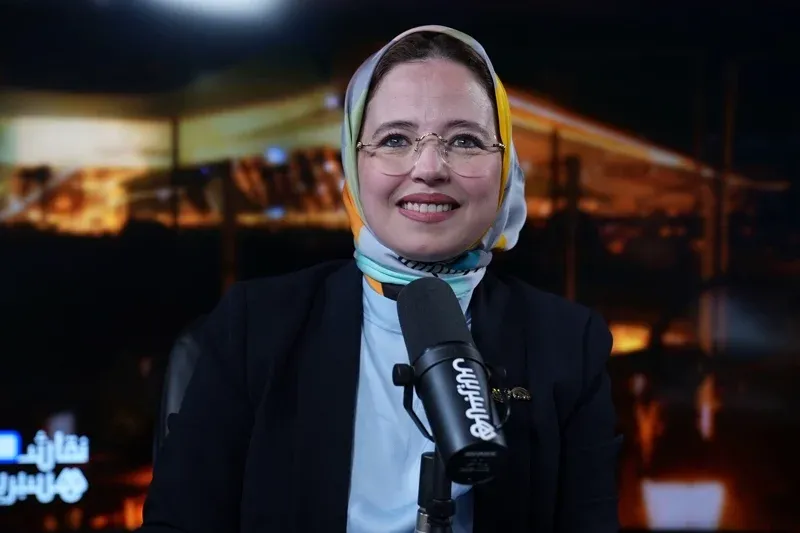
In a compelling argument supporting the government's interim achievements during a participation in the "Hespress Discussion" program, I'timad Zahidi, a member of the National Council of the National Rally of Independents Party, praised the Moroccan political model for effectively implementing the principle of accountability rather than treating it as mere rhetoric. She highlighted the initiative by the Prime Minister to voluntarily present his report before the end of the term, which she regarded as a display of political courage and a desire to foster public debate. Zahidi firmly rejected the label of the current administration as a "caretaker government," asserting that efforts are ongoing to progress with significant projects and laws.
Zahidi went so far as to compare this phase to a "second alternation government"; while the first alternation government, led by the late Abdel Rahman Youssoufi, laid the groundwork for democratic transition, the current administration is focused on establishing a "social transition."
Achievements of Social State Initiatives
Delving into the accomplishments of the "social state," Zahidi elaborated that this social transition necessitated the establishment of a robust economy capable of providing financial resources, as Morocco does not rely on rentier resources. She emphasized that the government succeeded in offering direct financial support ranging from 500 to 1300 dirhams monthly, which benefits 4 million families, equating to approximately 12 million Moroccans. In response to critics of these figures, Zahidi dismissed the notion that this support perpetuates poverty, stressing that these groups were previously "destitute" and had no income whatsoever, and that government intervention has lifted them from absolute poverty, providing them with a financial threshold for living.
Moreover, she noted that the support extended to over 300,000 widows, including those without children, marking an unprecedented achievement.
Regarding the health sector, Zahidi confirmed that access to health coverage represented the "ultimate dream" for Moroccan citizens for decades. She pointed out that the number of beneficiaries surged from 3 million to over 15 million additional Moroccans thanks to the comprehensive coverage system. Zahidi mentioned that the state bears a hefty financial burden amounting to 9 billion dirhams to cover the subscriptions for the "AMO-Solidarity" system on behalf of vulnerable groups. She provided real-life examples showing that beneficiaries of this system now access hospitals and undergo complex surgeries and dialysis sessions without incurring any fees, contrasting sharply with the old "RAMED" system, which she deemed ineffective for covering expensive medical interventions.
In light of criticisms surrounding the rising cost of living, Zahidi acknowledged that inflation and skyrocketing prices have become structural phenomena and an international crisis that affects everyone. Nonetheless, she referenced data from the High Commission for Planning to clarify that inflation, which peaked at 6% at the beginning of the term, has gradually decreased to 1.9%, with expectations of further reduction to 1.3% in 2026. Regarding economic growth, Zahidi explained that it has risen from 1.8% in 2022 to 3.7% in 2023, with projections of reaching 5% by 2026.
Zahidi strongly criticized the opposition's method of calculating growth rates by summing percentages over the years and dividing them, labeling it as "grocery accounting" that contradicts internationally accepted economic principles.
To bolster her viewpoint on the positive impact of government policies, Zahidi revealed a significant leap in the Gross Domestic Product (GDP), which increased from 1,200 billion dirhams to 1,500 billion dirhams, marking a rise of 300 billion dirhams in five years, compared to a mere 200 billion dirhams increase over ten years of previous government efforts.
She pointed to the resilience of the purchasing power among the middle class, evidenced by the purchase of 220,000 new cars, underscoring that this reflects citizens' ability to meet banking commitments and sustainable expenses. Additionally, she noted the commercial dynamism observed in large supermarkets across various neighborhoods as another indicator of economic activity.
Zahidi concluded her argument in the "Hespress Discussion" by addressing the issue of employment, acknowledging that the harsh repercussions of years of drought have led to job losses in rural areas and the agricultural sector. However, she highlighted the creation of 136,000 urban jobs in 2022. She also defended the government's efforts in the public sector, which provided 152,000 job positions through successive financial laws during this term, adding that 132,000 companies applied for trademarks, further confirming the attractiveness of the business climate and its future potential to absorb unemployment and support the country’s economic stability.
As reported by hespress.com.