
Morocco's Warning to Spain Regarding Migration Threats
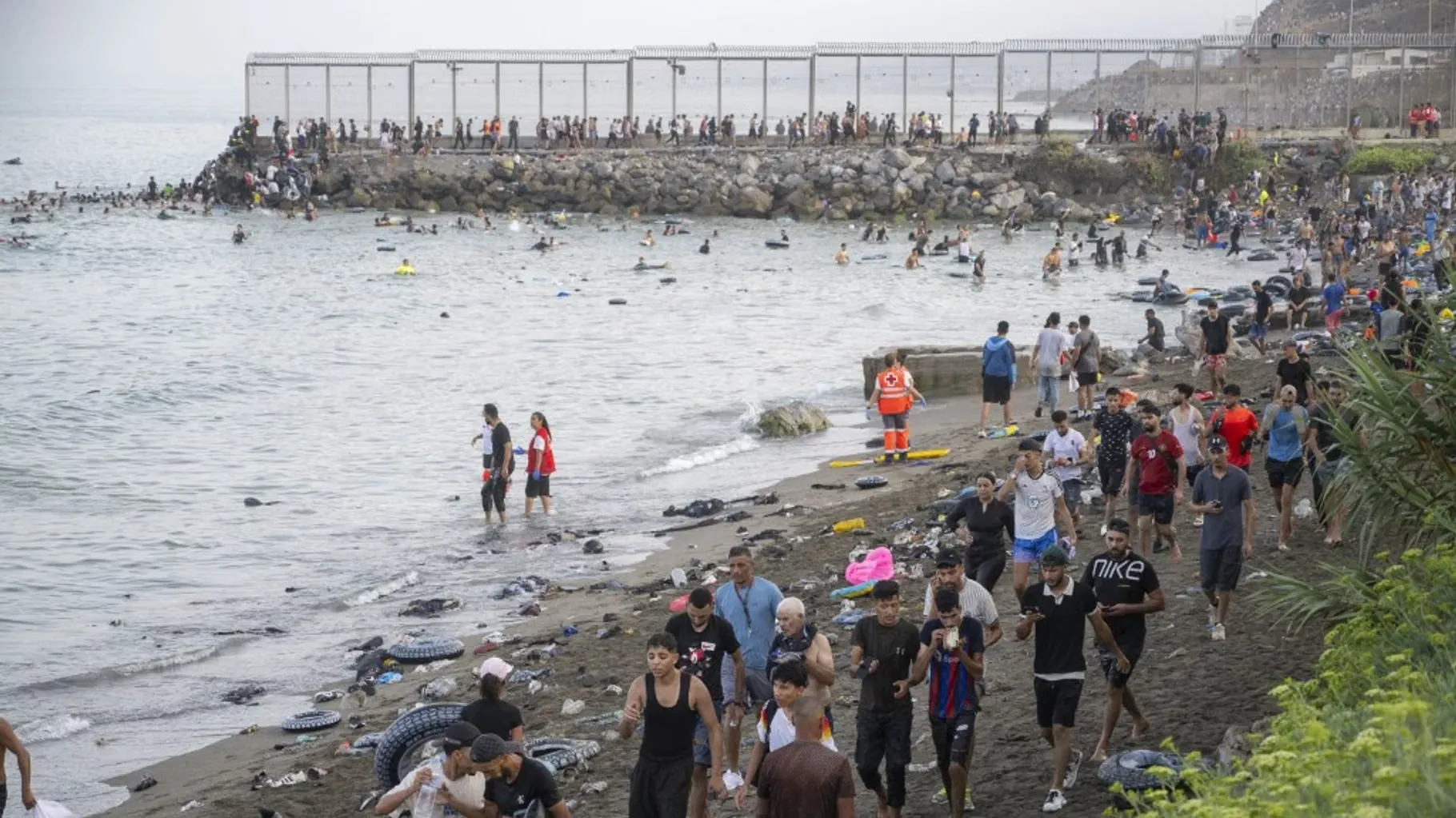
A high-ranking Moroccan official has confirmed to AFP that Morocco had previously warned Spain about potential migratory risks associated with a recent Spanish court ruling, dismissing any notion of failure in Morocco's security measures. In recent days, nearly 60,000 individuals, primarily Moroccans, have either attempted or successfully crossed into the Spanish enclave of Ceuta, either by foot or swimming from the neighboring city of Fnideq. This unprecedented influx has quickly overwhelmed the Spanish enclave, leading to thousands of returns back to Morocco.
According to this senior official, who spoke on condition of anonymity on Monday evening to AFP and other media outlets, Moroccan authorities had alerted Madrid about the risks posed by a recent ruling from the Spanish Supreme Court, which stated that the immediate expulsion of migrants would not apply to individuals arriving by sea. "We explained that this ruling would create a problem for us. And it has created a problem," he stated.
Spanish Prime Minister Pedro Sánchez had remarked on Friday that the ongoing migratory crisis in Ceuta was linked to rumors propagated by human trafficking mafias, along with a dishonest interpretation of the court ruling. The Moroccan official noted that discussions with the Spanish side began around July 22-23, when networks started to circulate information about this new decision.
He insisted that there has been no failure in Morocco's security apparatus, arguing, "It is reductive to say that Morocco should have just used force to stop them. This does not grasp the complexity of the phenomenon." He emphasized that law enforcement cannot confront such a large number of people effectively. "It is not solely Morocco's responsibility to manage this phenomenon," he insisted, stating that the cost of managing migration for the kingdom amounts to approximately 500 million euros annually.
However, he assured that Rabat and Madrid have acted as "reliable partners" and continue to work in "perfect coordination" on migration issues. "Today, it is up to Spain to find answers to the challenges posed by this ruling," he concluded.
As reported by icibeyrouth.com.