Moroccans Make Significant Strides in EU Naturalizations
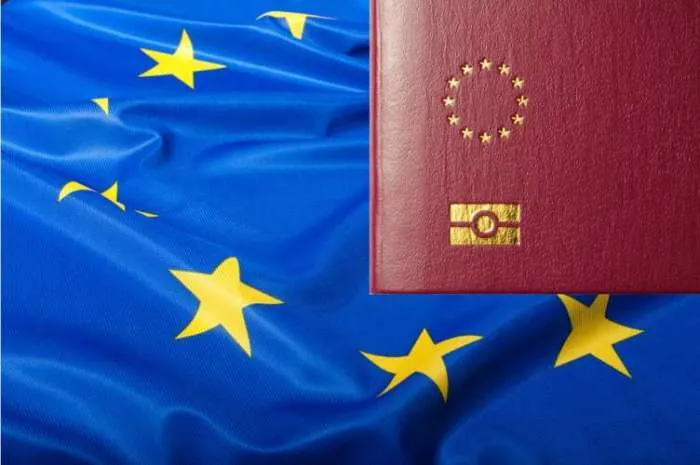
In a notable development for 2024, Moroccans accounted for 8% of the total 1,177,232 citizenships granted across European Union nations, positioning them as the second largest group of new citizens, following Syrians, according to data from Eurostat. This statistic reflects a broader trend in migration patterns, with Moroccans consistently ranking high in naturalization statistics over recent years.
The latest report from the EU statistics office, presented in the 2026 edition of Demography of Europe, indicates that Syrians topped the list of naturalizations, with 110,083 individuals (equivalent to 9% of the total). Moroccans followed closely, outpacing Albanians, who comprised 4% of the new citizens with 48,042 individuals. This ranking underscores a persistent trend wherein both Syrians and Moroccans have surpassed Albanians in the naturalization process during the years 2023 and 2024.
Examining the years from 2020 to 2022, it is evident that Moroccans and Syrians maintained their positions as the top two nationalities for naturalizations. In contrast, the years preceding this period saw Moroccans and Albanians leading the statistics, with Turks and Britons also featuring prominently in 2018 and 2019, respectively. This historical context emphasizes the dynamic nature of migration patterns within the EU.
Trends and Future Implications for Migration in Europe
The overall increase in naturalizations across the EU rose by 12% in 2024 compared to the previous year, surpassing the 1.17 million mark. Germany significantly contributed to this rise, with 88,900 more citizenships granted than in 2023. Spain and France followed, recording increases of 12,300 and 6,400 naturalizations, respectively. These figures reflect ongoing migration-linked demographic changes within the bloc, as EU nations continue to address naturalization applications amid shifting migration patterns.
However, the political landscape presents challenges for migrants, particularly with the rise of anti-immigrant sentiments, exemplified by the success of the far-right Dutch party PVV, led by Geert Wilders, in recent parliamentary elections. This outcome raises concerns for many migrants in the country, especially those of Moroccan descent, as they brace for potential shifts in immigration policy that may arise from the growing influence of far-right politics across Europe.
In a broader global context marked by geopolitical tensions, armed conflicts, and economic uncertainties, Morocco remains a beacon for foreign investors, highlighting its status as one of the safest and most appealing destinations. As the war in Ukraine continues to disrupt international markets, and rising tensions in the Gulf raise serious concerns over global energy and trade stability, Morocco's attractiveness as a stable investment destination is increasingly recognized.
As reported by northafricapost.com.