Significant Counterterrorism Operation in Morocco
On July 6, 2026, Moroccan security services carried out a substantial counterterrorism operation, successfully dismantling a cell affiliated with the Sahel branch of ISIS. The Bureau Central d'Investigations Judiciaires (BCIJ), in collaboration with the Direction Générale de la Surveillance du Territoire (DGST), apprehended ten suspects across seven cities, illustrating the extensive reach of this terrorist network. Among those arrested was a minor and a previously convicted individual under anti-terrorism legislation. In a notable seizure, authorities also confiscated a modified vehicle in Inezgane, designed for use as a ram-raid vehicle or in potential suicide attacks.
Strategically Coordinated Arrests Across Multiple Locations
The arrests took place in a well-coordinated manner across various locations, including Agadir, Taroudant, Casablanca, Hajeb, Tétouan, Fqih Ben Salah, and Safi, as reported by the BCIJ. This geographical dispersion—from Casablanca in the west to Tétouan in the north—highlights the widespread nature of the targeted network, which was not confined to a single city but rather spread throughout multiple regions of the country. According to the BCIJ, the members of this group had pledged allegiance to the leader of ISIS and received direct instructions from the organization's active Sahel branch, which had directed them to execute attacks within Morocco rather than travel abroad to combat zones.
This strategic shift in operational focus, from overseas combat to local attacks, underscores the urgency of the BCIJ's operation. Reports indicate that the thwarted plans were categorized as "extremely dangerous," with the group's leader responsible for assigning tasks related to target selection, field reconnaissance, and logistical support.
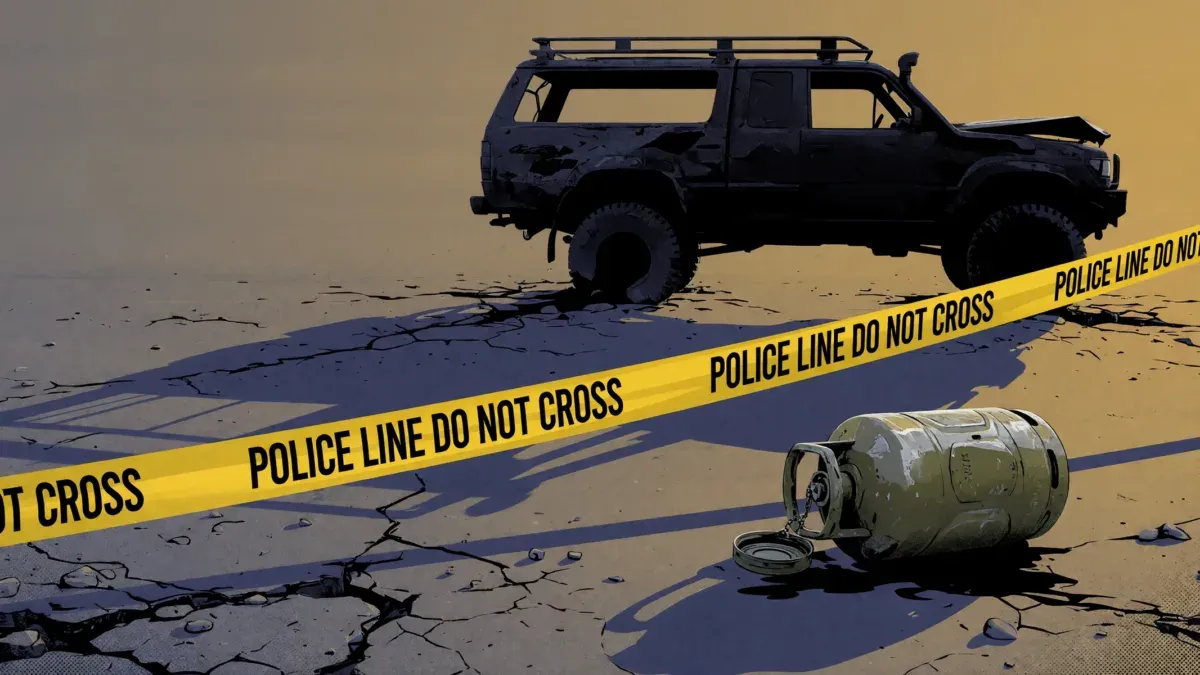
In Inezgane, investigators uncovered the most significant elements of the threat, seizing a modified 4x4 vehicle intended for use in a ram-raid or suicide attack. Local residents were evacuated as bomb disposal teams employed remote-controlled robots to inspect the vehicle. Additionally, further searches resulted in the recovery of gas canisters, pressure cookers prepped for explosives, welding equipment, and various chemicals suitable for bomb-making.
Among the detained individuals was a 16-year-old minor, raising concerns about the recruitment of young individuals by such networks, while another suspect was an ex-convict with prior anti-terrorism convictions. However, the BCIJ has yet to disclose the specific roles of each suspect in the planned attacks or outline the precise targets intended by the cell.
This operation underscores the critical role of the BCIJ, which has emerged as Morocco's primary agency in combating jihadist networks. The operation received commendations from Western intelligence services, particularly from France, for its effective counterterrorism measures in the face of growing threats from the Sahel region, where ISIS has been attempting to extend its influence into North Africa. The cities involved in the arrests, particularly Agadir, Inezgane, and Taroudant, belong to the Souss-Massa region, an economically significant area known for agriculture and tourism, where an attack could have had devastating consequences.
The announcement of this operation has drawn international support, with countries such as the United Arab Emirates, Qatar, Jordan, Kuwait, and the Arab Parliament expressing solidarity with Morocco and praising the effectiveness of its security services. As the investigation continues, the ten suspects remain in the custody of Moroccan authorities.
As reported by info.fr.