
Allegations of Moroccan Involvement in Migrant Crisis
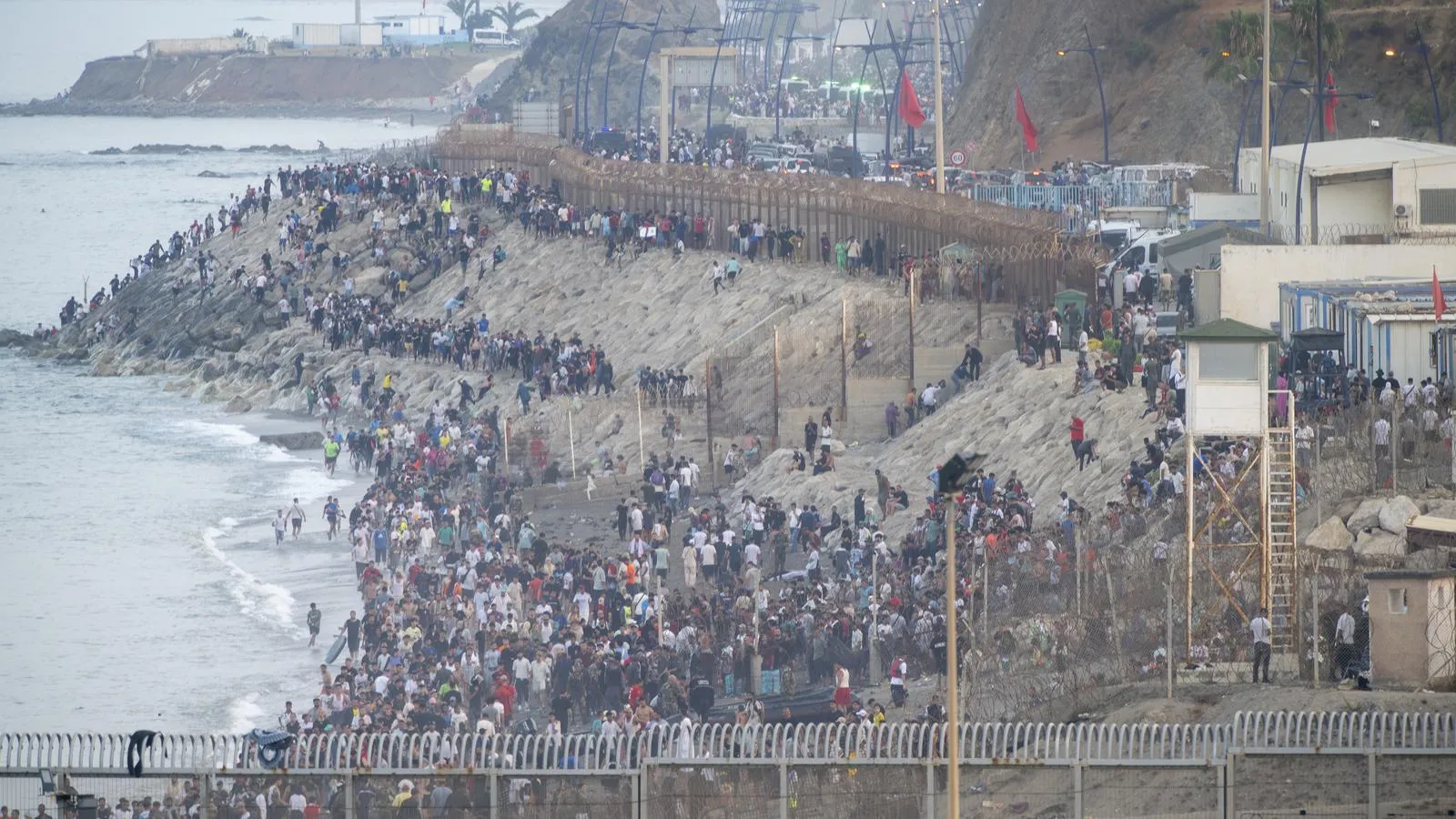
A significant report from the National Center for Immigration and Borders (Cenif) has surfaced, indicating that Moroccan security forces may have played a crucial role in guiding nearly 80,000 migrants into Ceuta at the end of July. This assertion comes from a 55-page document submitted to the National Court, which ARA has accessed. The report suggests that the migratory influx was not a spontaneous act but rather a well-planned operation aimed at achieving objectives beyond mere migration. It states that Moroccan security forces actively facilitated the mass movement towards the crossing points, which contrasts sharply with the Spanish government's previous claims that downplayed Morocco's involvement in the crisis.
The report outlines that the migrant entry operation was strategically designed, with a structure comprising at least five levels of responsibility. The findings specify that Moroccan security personnel provided direct instructions to migrants on how to overcome barriers, while other agents, described as 'dynamizing agents,' orchestrated the flow on the ground. These individuals exhibited distinctive behaviors, such as moving against the crowd and maintaining communication as if they were overseeing the movement, all while blending in with the migrant groups.
Spanish Government's Response and Ongoing Controversy
The Spanish government's response has been tepid, with Minister of the Interior, Fernando Grande-Marlaska, seeking clarifications from the Director General of the Spanish Police regarding the authenticity of the report. Despite this, the ministry later indicated that there was no police report attributing planning or execution of the events to Moroccan forces. This stance directly contradicts the findings of the Cenif document, which emphasizes a lack of serious attempts from Spanish officers to control the situation, suggesting a degree of complicity or at least a passive response to the crisis.
The report also underscores that the dynamics of the migrant entries, characterized by a swift return of around 90% of those who crossed, imply that the true intent was not to settle in Spain but rather to create a diversionary tactic, complicating the identification of responsible parties. The involvement of Moroccan authorities, whether through direct action or passive tolerance, raises pressing questions about international cooperation and border security protocols in the region.
As reported by en.ara.cat.