Tragedy Strikes a Family Due to Medical Negligence
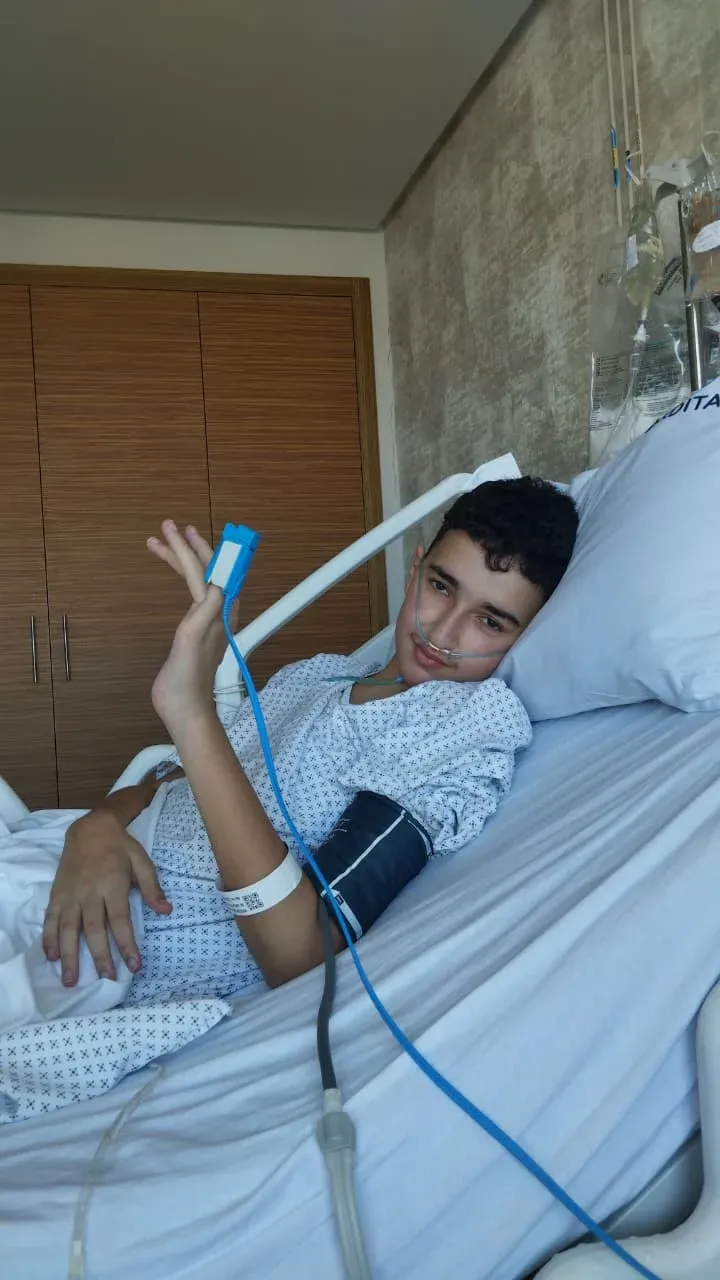
A Moroccan family is calling for accountability following a grave medical error that they believe has severely jeopardized their son’s health. Mohamed Saber, a 15-year-old boy, was mistakenly treated for leukemia rather than lymphoma, causing his condition to deteriorate and leading to severe complications. The family is now urging an investigation into the matter and seeking public assistance to manage the mounting medical expenses associated with his treatment.
The ordeal for Mohamed Saber began on June 10 when his family, hailing from Tetouan, noticed alarming weight loss as he was preparing for his middle school exams. Initially, the family consulted a general practitioner who suspected anemia or a minor health issue. However, further tests revealed a diagnosis of lymphoma, prompting an urgent referral to the university hospital in Tangier, where a biopsy confirmed the diagnosis. Subsequently, he commenced a chemotherapy regimen comprising five treatment sessions.
Despite this initial treatment, Mohamed’s health began to decline dramatically. His mother, Bouchra, recounted how he lost the ability to stand, leading her to demand further tests to evaluate his treatment response. Unfortunately, these tests indicated no improvement; instead, the disease escalated to stage four. Although he was prescribed additional medication for four weeks, his condition worsened significantly by the third week. Upon returning to the hospital, Bouchra received devastating news that her son’s condition had become hopeless, and she was advised to take him home.
Determined to explore every possibility, the family sought a second opinion from an oncologist based in Rabat. Upon reviewing Mohamed’s medical records, the specialist discovered that he had been treated under a leukemia protocol instead of the appropriate one for lymphoma. This revelation prompted an immediate transfer to a clinic in Salé. The Rabat doctor reported the alarming situation to the Tangier hospital, but the response was disheartening—hospital staff insisted that Mohamed’s case was beyond hope, stating he had only a few days left to live. Nevertheless, the specialist pressed on, recommending the correct treatment protocol in an urgent letter.
However, Bouchra lamented that upon their return to the Tangier hospital, the correct treatment was not initiated, resulting in Mohamed remaining in critical condition for three additional days before the family chose to transfer him once more, this time to the clinic in Salé. There, he was immediately placed in the intensive care unit, having developed venous thrombosis and accumulating nearly three liters of fluid in his lungs. He required artificial ventilation for eight days and subsequently faced complications such as sepsis and elevated blood sugar levels.
Once stabilized, doctors began administering the appropriate LMB treatment protocol, which Bouchra believes should have been the initial course of action. Remarkably, Mohamed’s condition improved, with tumor size reducing by 47%. However, complications continued to arise, as it became evident that the delay in receiving proper treatment had rendered the disease resistant to chemotherapy.
After four sessions of the LMB protocol, doctors switched to another treatment plan called R-POLA-ICE, with each session costing approximately 90,000 dirhams, culminating in a staggering total of over 270,000 dirhams that remains unreimbursed by social security. A subsequent PET scan revealed only a partial response to the treatment, leading doctors to recommend CAR-T cell therapy, a specialized treatment currently available only in Europe. The family reached out to a hospital in Paris, receiving an estimated treatment cost of around 500,000 dirhams, but soon discovered that this treatment is restricted to patients over 18.
In a final effort, the family contacted a hospital in Barcelona, which required Mohamed’s complete medical file. While they managed to obtain necessary documentation from the Rabat doctor, Bouchra reported that the Tangier hospital refused to release any records pertaining to Mohamed’s initial treatment phase. Given the gravity of their situation, Bouchra is advocating for an urgent investigation to identify those responsible for this medical negligence and is prepared to pursue legal action. Her primary concern, however, remains the urgent need to save her son’s life as he continues to fight against this illness under perilous conditions. In her appeal, she has also reached out to the public for financial support to help cover the costs of his ongoing treatment, describing their plight as a desperate race against time.
As reported by en.yabiladi.com.