The Moroccan Community's Integral Role in Belgium
A recent report from Belgium's Federal Migration Center, Myria, underscores the significance of the Moroccan community within the nation's migration narrative. This report, titled "Migration in Figures and Rights," transcends mere statistical analysis, offering a rich portrayal of a community that has deepened its roots in Belgian society over generations. It details how Moroccan families, careers, and identities have woven themselves into the very fabric of Belgium, contributing to its cultural and demographic diversity.
As of early 2025, Belgium's population stands at nearly 11.8 million, with one in four individuals holding a foreign nationality, highlighting the country's multicultural landscape. Among these foreign nationals, Moroccans emerge as one of the most prominent and established non-European groups, indicating their significant presence and integration into Belgian society.
Demographic Trends and Community Dynamics
The report reveals a distinct trend: individuals from outside the European Union constitute the majority of those with foreign backgrounds in Belgium, and they tend to be younger than their European counterparts. This youthful demographic is crucial in shaping Belgium's future societal landscape. Moroccan families have settled across various regions, with the largest concentration in Flanders, followed by Wallonia and Brussels. Each region's Moroccan community reflects a narrative of long-term presence rather than a transient influx.
Citizenship trends further illustrate this integration, with Moroccans ranking first in acquiring Belgian nationality in both Flanders and Brussels, and second in Wallonia. These statistics are rooted in the lived experiences of thousands of individuals who have dedicated years to work, study, and raise families, ultimately choosing to become a part of Belgian society.
Notably, the Moroccan community exhibits a balance in gender representation, with men and women present in nearly equal numbers across all regions. This balance, combined with a younger average age among those obtaining Belgian citizenship, indicates a community that is dynamic and continually evolving. This demographic shift is evident in the influx of young professionals joining the workforce and families actively shaping their neighborhoods, fostering a generation adept at navigating multiple cultures.
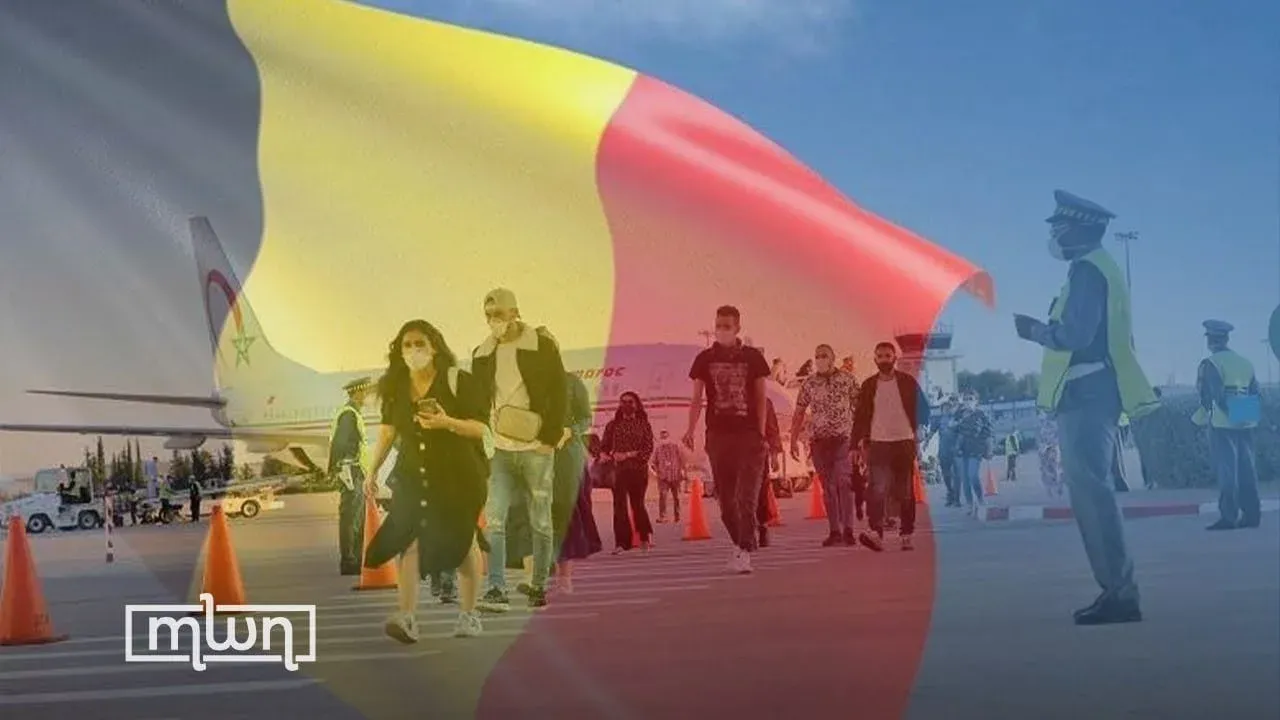
In 2024, Belgium welcomed over 7,400 new arrivals from Morocco, a figure that, while not dominating overall migration statistics, signifies a consistent trend. This steady flow, marked by gradual increases rather than abrupt surges, highlights the Moroccan community's enduring presence. Interestingly, recent data indicates that women slightly outnumber men among these new arrivals, reinforcing the notion of family-centric migration patterns.
Additionally, Moroccan nationals are the second-largest recipients of residence permits in Belgium, following Ukrainians. The majority of these permits are granted through family reunification, which remains the primary legal avenue for many migrants. While overall migration to Belgium has slowed, particularly following a decrease in arrivals from Ukraine, the Moroccan presence continues to thrive, demonstrating a steady and resilient community that is less swayed by geopolitical changes.
In conclusion, the Myria report presents a comprehensive view of a community that has transitioned from a phase of migration to one of permanence, illustrating the Moroccan community's vital role in shaping the social and cultural landscape of Belgium.
As reported by moroccoworldnews.com.