Preliminary Findings Point to Asphyxiation in Arrest-Related Death
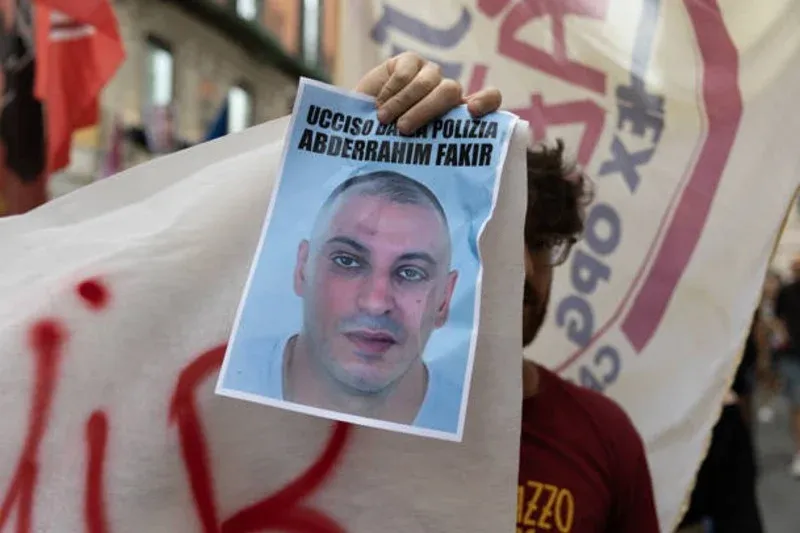
Recent autopsy results have indicated that asphyxiation may have played a significant role in the death of Abderrahim Fakir, a 42-year-old Moroccan man who tragically lost his life during a police intervention in Bologna, Italy, on July 19. According to reports from Italy's ANSA news agency, the forensic examination revealed alarming findings, including the presence of blood in Fakir's lungs, alongside pathological evidence suggesting that he endured prolonged chest compression. These revelations have reignited public outrage and scrutiny regarding the circumstances of his demise, particularly after distressing videos depicting the arrest surfaced on social media platforms.
The footage reportedly captures a distressing scene in which Fakir is seen face down, restrained by two police officers who appear to apply significant pressure to his torso. Forensic experts are highlighting that the accumulation of blood in the lungs may point to acute respiratory distress just prior to his passing, raising serious concerns about the methods employed during his apprehension. Nevertheless, prosecutors in Bologna have yet to determine a conclusive cause of death, prompting the ordering of further histological and toxicological examinations. These additional tests aim to assess whether other medical conditions, such as pulmonary edema or potential drug overdose, might have contributed to this tragic outcome.
In light of these developments, the family's attorney, Fabio Anselmo, who is recognized for his advocacy in numerous high-profile cases of police violence in Italy, has asserted that the injuries sustained by Fakir align with the characteristics of compression asphyxia. Conversely, the legal representatives for the involved police officers have disputed this interpretation, arguing that no significant fractures or skeletal injuries were identified during the examination. They maintain that any chest compression experienced by Fakir was a byproduct of cardiopulmonary resuscitation efforts conducted by emergency personnel following the incident.
Further investigations are delving into various aspects of the arrest, including the deployment of pepper spray by the officers, the actions of a civilian who allegedly assisted in restraining Fakir, and the response time of emergency teams from the Red Cross during the critical moments following the arrest.
As reported by en.hespress.com.