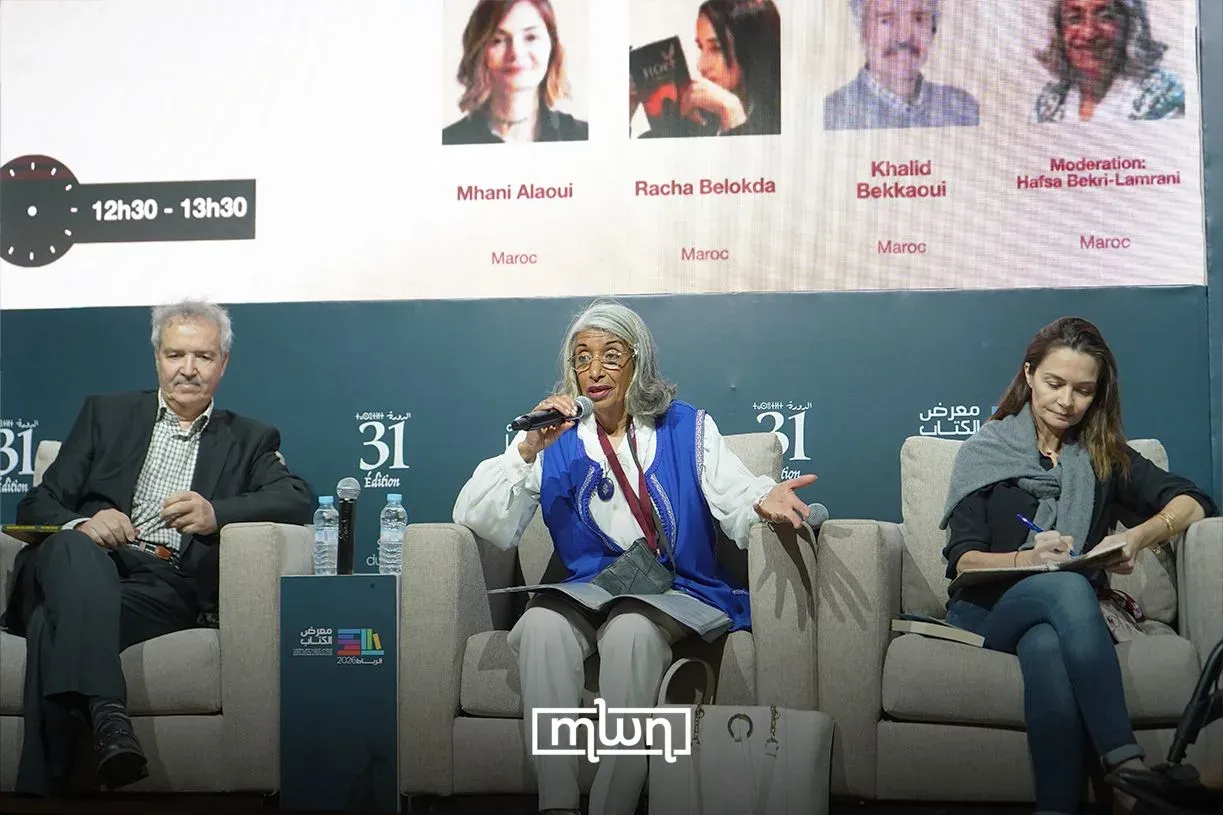
Reevaluating Language and Identity in Moroccan Literary Landscape
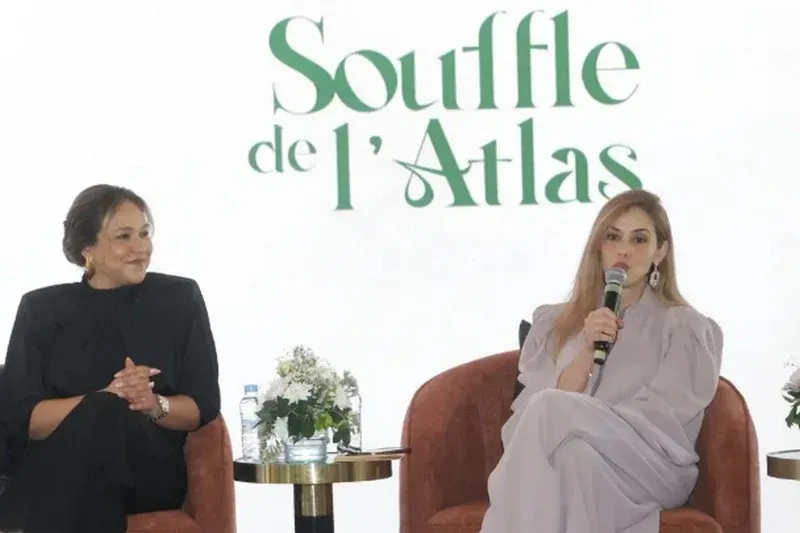
This year's International Publishing and Book Fair (SIEL) in Rabat featured a compelling panel discussion titled “African Anglophone Literature: The New Moroccan Trend,” which delved into the intricate relationships between language, visibility, and cultural authority in contemporary Moroccan writing. Moderated by Hafsa Bekri-Lamrani, the session brought together notable figures such as Moroccan authors Mhani Alaoui and Khalid Bekkaoui, alongside poet Racha Belkoda, as part of an ongoing dialogue that has examined the increasing significance of English within Moroccan literary production over the last three editions of SIEL.
The panel discussion opened with a powerful observation regarding the global literary landscape: of all the African Nobel Prize laureates in literature, a stark contrast exists as only one has written in Arabic, while the majority have chosen English. This observation served as a catalyst for a broader inquiry into the languages that are permitted to achieve the highest levels of symbolic legitimacy in the literary world, hinting at the underlying dynamics of linguistic geopolitics that influence literary value.
Multilingualism as a Cornerstone of Moroccan Culture
Khalid Bekkaoui framed the discourse within a historical context, linking language to power dynamics throughout intellectual history. Drawing on themes of Orientalism and colonial discourse, he emphasized that linguistic systems are not mere mediums of expression but rather structures of cultural authority that reflect a hierarchy mirroring cultural dominance. He asserted that English, while recognized as a global lingua franca, is embedded within a broader context of symbolic power.
However, Bekkaoui’s perspective was not one of cultural despair. He highlighted Morocco's rich multilingual heritage, where Arabic, Amazigh, French, Spanish, and other languages have coexisted for centuries. This multilingualism is not a recent phenomenon but an essential feature of Moroccan identity and intellectual heritage. He distinguished between academic research, which often adheres to strict conceptual boundaries, and literary creation, which allows for a more exploratory use of language. In this literary domain, English is not simply an external force but a medium through which Moroccan writers can challenge traditional modes of representation.
Similarly, Mhani Alaoui provided a personal narrative that illustrated her complex relationship with the English language. Reflecting on her experiences as an Arab student in the United States, she conveyed a blend of intellectual growth and social challenges. She expressed her deep affection for English, describing it as more than just a communication tool; for her, it represents a literary environment that fosters unique connections between the writer and reader. Alaoui also contrasted Anglophone and Francophone literary landscapes, suggesting that while French literature often adheres to rigid cultural codes, English literature appears more fluid and accessible, allowing for broader participation from non-traditional centers of literary authority.
Racha Belkoda’s input further blurred disciplinary lines, as she combined her background in engineering with her passion for poetry. Belkoda rejected the notion that her dual identity represented a conflict between technical rationality and artistic expression. Instead, she portrayed her literary journey as a continuum, where mathematics and structural thinking coexist harmoniously with her poetic voice. Her embrace of English emerged naturally within this continuum, reflecting a linguistic environment where younger Moroccan writers increasingly perceive English as a viable medium of expression.
The recurrent question of “why English now?” resonated throughout the panel, inviting numerous interpretations rather than a singular conclusion. The dialogue highlighted the global circulation of texts, the accessibility of diverse readerships, and the evolving linguistic practices among younger generations. Bekkaoui offered a philosophical lens, suggesting that language transcends mere utility and enters the realm of the sacred within certain intellectual traditions. Thus, multilingualism becomes a mechanism for expanding interpretive possibilities rather than fragmenting them.
The insights gathered from the panel did not imply a rejection of French or Arabic but rather a recalibration of the literary space. English emerges not as a replacement but as an additional layer through which Moroccan writers navigate themes of visibility, readership, and intellectual belonging in an increasingly globalized literary field. Ultimately, SIEL illuminated a dynamic literary landscape where language choice is not merely inherited but actively negotiated, as Moroccan literature continues to evolve across multiple linguistic vectors.
As reported by moroccoworldnews.com.