
Manfred Weber's Visit to Ceuta: A Call for Urgent Political Action
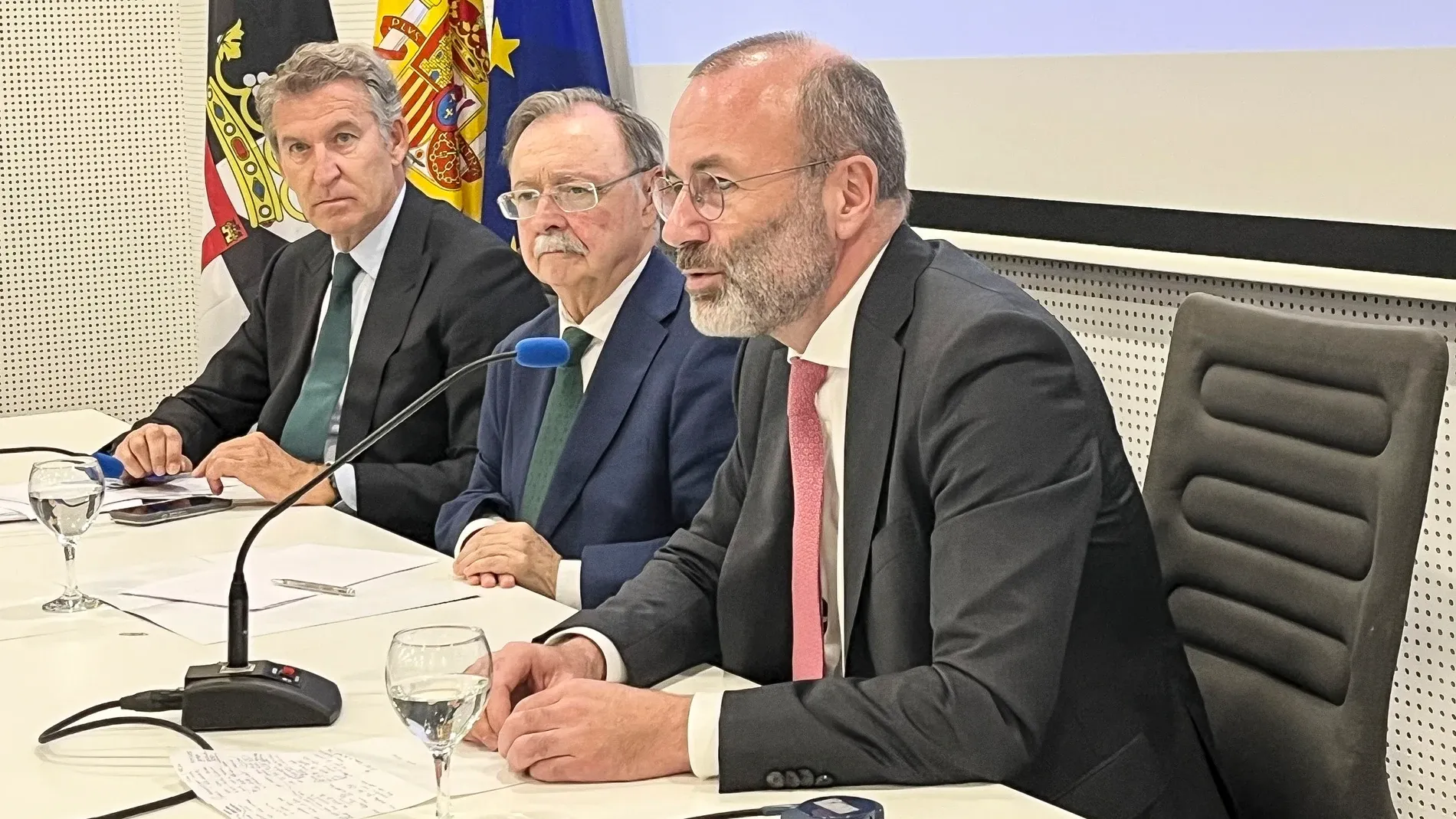
Manfred Weber, the President of the European People's Party (EPP) and a prominent political figure in Brussels, has made his inaugural visit to Ceuta, and his response to the ongoing immigration crisis is nothing short of astonishment. In a press conference held with Alberto Núñez Feijóo, the national leader of Spain's Popular Party (PP), and Juan Jesús Vivas, the president of Ceuta, Weber expressed his disbelief at the situation, emphasizing that had such circumstances occurred in any other European Union member state, the response would have been markedly different. During their tour of areas heavily populated by immigrants following the invasion at the end of July, the trio observed the dire conditions at the Trampolín beach, which remains overrun with illegal settlements despite official efforts to relocate individuals to designated camps at the Port.
The sight was distressing, characterized by makeshift wooden shanties, bamboo huts, and tents, with individuals scattered across the rocky coastline and makeshift markets. Weber's message was unequivocal: the current state of affairs in Trampolín, emblematic of the broader situation in Ceuta, must come to an end with the immediate return of illegal immigrants to Morocco, both adults and minors. Aligning with the rhetoric of Spain's leading PP officials, he highlighted the existence of community mechanisms that facilitate the repatriation of migrants, asserting that political will is the only missing element. "Unlike Sánchez, Europe is taking action," he noted, reflecting a commitment to addressing the crisis effectively.
Calls for Cooperation and Responsibility in Managing the Crisis
Weber drew parallels between the situations faced by various European nations grappling with immigration challenges, citing Poland's actions in response to Belarus, Greece's dealings with Turkey, and Lithuania's interactions with Russia. He affirmed, "Ceuta is Spain, and Spain is Europe. Europe is here in support. When immigration is weaponized, Europe has responded decisively." He urged Sánchez to follow suit in taking responsibility for the crisis at hand. Addressing Morocco's pivotal role in resolving the ongoing issues, Weber conveyed optimism that the Moroccan government would recognize that the resolution of this crisis must be achieved through friendship and partnership. He warned that failure to stabilize borders could lead to significant consequences, including potential economic sanctions, which the EU is currently considering.
Weber's statements have resonated with Feijóo and Vivas, as the national PP leader lamented the stagnation of the situation in Ceuta. On his fourth visit to the region, he expressed his desire to return with news of a return to normalcy and confirmed freedom for the residents of Ceuta, which remains unfulfilled after 54 days of ongoing turmoil. Feijóo expressed gratitude to Weber for his visit, asserting that the presence of leaders on the ground is essential. He criticized the government's approach to the crisis, accusing it of neglect and of attempting to shift blame onto local leadership. As inter-administrative tensions escalate, he denounced the targeting of President Vivas as "miserable," arguing that the government is more focused on expanding the conflict rather than resolving it.
In terms of proposals for addressing the crisis, Feijóo has called for an enhancement of border protections, emphasizing the need for increased economic support to bolster the Tarajal pier. He also advocated for a permanent, visible, and sustained presence of Frontex, the European border control agency, at the border crossing to ensure better management of immigration challenges.
As reported by larazon.es.