Enhancing Juvenile Justice Through Legislative Reforms
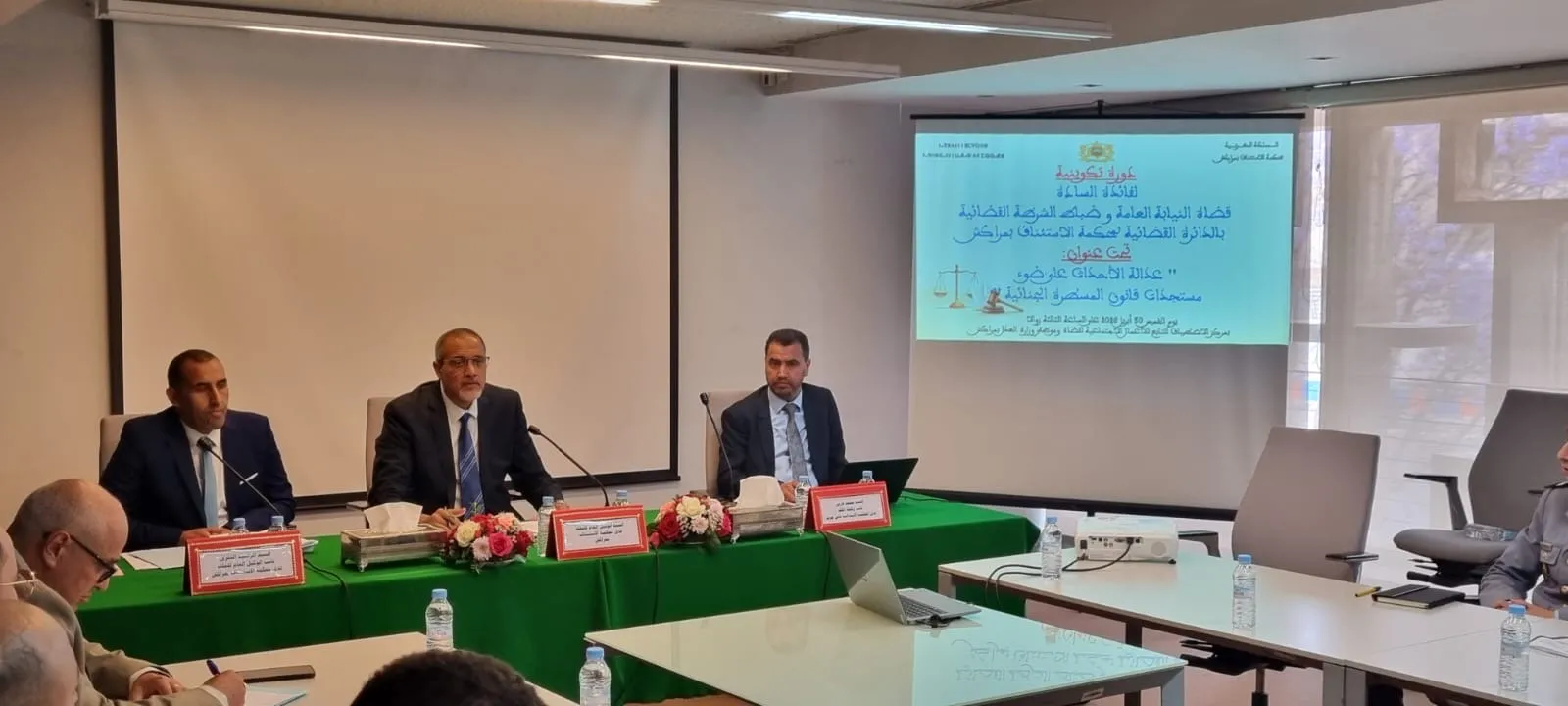
In light of the ongoing legislative reforms in Morocco, the Marrakech Court of Appeal hosted a significant training session on Thursday, April 30, 2026, aimed at public prosecutors and judicial police officers. This session focused on the theme: "Juvenile Justice in the Context of the Amendments Introduced by Law No. 03.23, which Amends and Complements the Code of Criminal Procedure." The event marked a pivotal step in Morocco's intent to modernize its justice system, particularly concerning juvenile offenders.
The opening remarks were delivered by Khalid Kerdoudi, the Attorney General at the Marrakech Court of Appeal. He emphasized that the reform of the justice system, especially in relation to juveniles, is part of a comprehensive vision aimed at enhancing the protection of human rights and establishing the principles of modern justice. Kerdoudi highlighted that Law No. 03.23 adopts an advanced approach centered on the protection of children in conflict with the law, introducing comprehensive legal guarantees that take into account their psychological and social specificities. The primary focus remains on the best interests of the child, advocating for rehabilitation over punitive measures.
Furthermore, he underscored the importance of continuous training for all stakeholders to ensure the proper implementation of these provisions and to reinforce coordination between the judiciary, police authorities, and other involved parties. The training session featured two substantial scientific presentations that enriched the discussions and simplified the legal updates related to juvenile justice.
Key Insights into Law No. 03.23 and Its Implications
In this context, Professor Rachid Naqri, Deputy Attorney General at the Marrakech Court of Appeal, provided a foundational intervention that focused on the practical dimensions of activating the provisions of Law No. 03.23. He emphasized the necessity of coordination among various actors within the juvenile justice system. Naqri pointed out the need to implement legal texts with a protective spirit, ensuring respect for the child's dignity, and avoiding any actions that could harm their social trajectory. He stressed that the success of these reforms depends on the integration of roles among the judiciary, police, and other relevant institutions.
In an extensive and detailed presentation, Professor Mohamed Faris, Deputy Public Prosecutor at the Ben Guerir Court, offered an analytical overview of the updates introduced by Law No. 03.23, focusing on the transformations affecting juvenile justice at various stages. He highlighted several key areas:
- Pre-Trial Guarantees: The legislation has enhanced protections for juveniles starting from the preliminary investigation stage, emphasizing the need for children to remain in their family environment unless retention is absolutely necessary. It mandates notification of guardians, guarantees the right to legal counsel during hearings, ensures confidentiality of investigations, and enhances the role of the public prosecution in safeguarding these rights.
- During Proceedings: The law emphasizes the principle of specialization in juvenile cases, asserting that the public prosecution has an exclusive right to initiate proceedings to protect children from malicious lawsuits. It allows for mediation as an alternative mechanism and necessitates medical examinations in cases of suspected violence, alongside mandatory social investigations to understand the juvenile's environment.
- Post-Judgment Considerations: Legal protection does not conclude with the issuance of a verdict; it extends to reviewing judicial measures and adapting them to the juvenile's evolving circumstances. The role of juvenile judges is crucial in monitoring compliance and establishing post-care mechanisms to ensure reintegration into society.
The training concluded with an interactive discussion that encouraged participation from judges and judicial police officers. Attendees raised practical questions and exchanged views on improving professional practices in this area, particularly regarding challenges related to infrastructure and the lack of specialized human resources. This training underscores Morocco's steady progress toward establishing a modern juvenile justice system founded on protection and rehabilitation rather than punishment. However, the real challenge lies in the practical implementation of these provisions to achieve the ultimate goal: reintegrating juveniles and building a secure future for them within society.
As reported by marrakechpost.com.