Revisiting the Nationality of Moroccan Jewish Descendants
In Morocco, a significant debate has emerged regarding the nationality of descendants of Jews who originally hailed from the Kingdom. A citizen legislative motion, highlighted by several Moroccan media outlets, advocates for the facilitation of Moroccan nationality for the children and grandchildren of Moroccan Jews who emigrated during the 20th century. This initiative not only raises questions about national memory but also examines the nature of the connection with the diaspora and Morocco's position in a broader Arab and regional context, which is heavily influenced by the Palestinian issue and its alliance with Israel.
The legislative motion seeks to address the status of children and grandchildren of Moroccan Jews who left the country in the last century, aiming to acknowledge a national bond that has been fragmented due to exile, administrative choices, and historical events. To be formally considered, such a motion must collect a legal threshold of 20,000 signatures from citizens before it can be forwarded to the House of Representatives.
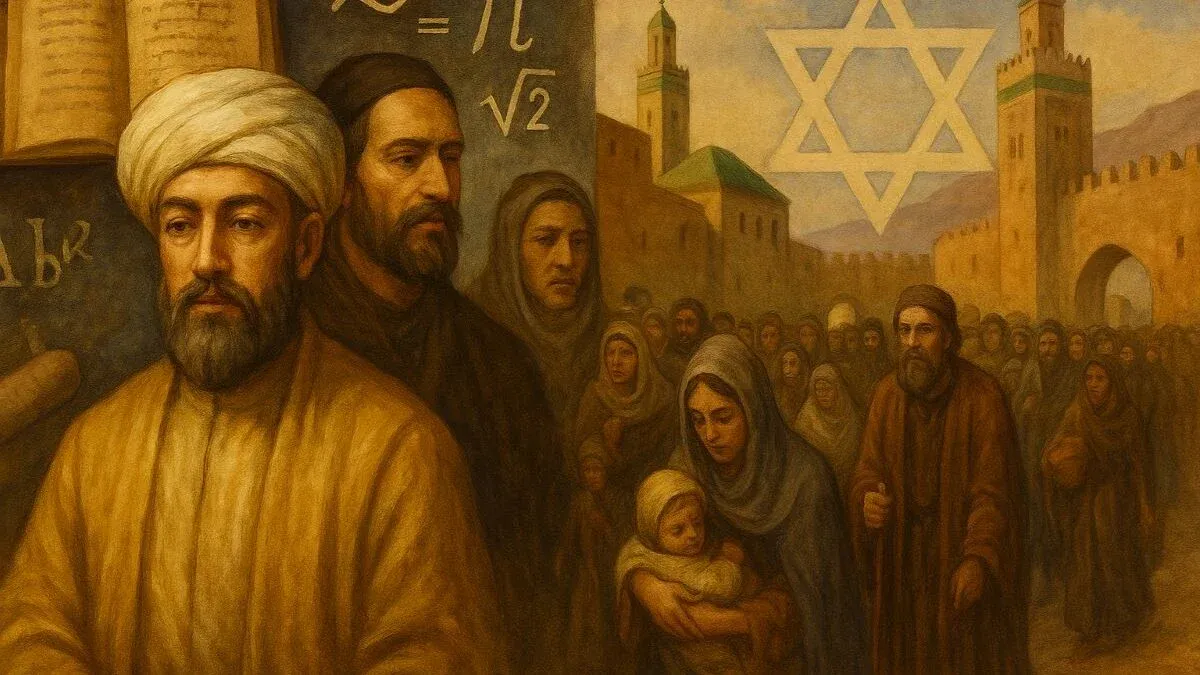
This subject is particularly sensitive as it touches upon a deeply personal history for Morocco. Up until the 1950s and 1960s, the Kingdom was home to one of the largest Jewish communities in the Arab world. The mass departures to countries like Israel, France, Canada, and Latin America have gradually emptied the mellahs (Jewish quarters) while preserving a profound emotional connection to cities such as Casablanca, Fez, Essaouira, Marrakech, Meknes, and Tetouan.
In many families, Moroccan culture has persisted through cuisine, music, accents, and even through objects like keys kept as symbols of a return that is always envisioned. This raises a pivotal question: could Morocco pave the way for the legal return of thousands of descendants of Moroccan Jews to the nationality of their ancestors? What was once a matter confined to familial memory and cultural reunions is now entering the institutional debate.
A Historical Context for Nationality Rights
The proposed citizen motion calls for the granting of Moroccan nationality to the descendants of Jews who left the Kingdom, either through simplified procedures or as a right. Specific articles reference Moroccan Jews who renounced their nationality, along with their children and grandchildren, as the primary potential beneficiaries. The motion is grounded in several important legal frameworks, including the Moroccan Constitution of 2011, the organic law No. 64-14 concerning legislative motions, and provisions related to personal status for Hebrew citizens and the rights of Moroccan Jews.
This initiative is not emerging out of a vacuum. The 2011 Constitution recognizes the "Hebrew influx" as a key component of Moroccan national identity, alongside African, Andalusian, and Mediterranean influences. This acknowledgment has provided a political framework for an ancient reality: Moroccan Judaism is not a foreign body within the country's history but rather one of its foundational layers.
For many, this historical recognition is being echoed today through cultural and heritage initiatives, such as the restoration of synagogues and cemeteries, as well as the enhancement of Sephardic memory sites. Mustapha Saha, for instance, has documented the Moroccan Sephardic heritage, highlighting how Jewish presence remains visible in the architecture and urban landscapes of the Kingdom. An essential reference is the work of Haim Zafrani, who, in "History of Jews in Morocco for the Last 2000 Years," outlines a long-standing continuity of coexistence between Muslims and Jews, prior to the abrupt upheavals of the 20th century.
The current initiative aims not merely to preserve synagogues, cemeteries, or cultural memory but to re-establish civic belonging. Supporters argue that this measure could symbolize a form of symbolic restitution towards a community marginalized by exile and official neglect. Comparisons are often drawn with Spain and Portugal, which, in the 2010s, offered paths to naturalization for descendants of Sephardic Jews expelled in the late 15th century. However, the Moroccan case differs significantly; it is not about rectifying a medieval expulsion but recognizing a national continuity disrupted by the upheavals of the 20th century, including decolonization, the creation of Israel, regional tensions, economic migrations, and identity transformations.
The debate in Morocco is bound to be both political and symbolic. Such a measure could be framed as a gesture of fidelity to the Kingdom's plural history and as a strong signal to the Moroccan Jewish diaspora, which remains deeply attached to its roots. It would reinforce the image of Morocco as a nation capable of embracing its historical diversity, especially in an Arab world where such memories have often been erased or marginalized.
However, the regional context makes this subject volatile. Since the onset of the Gaza conflict, any initiative regarding descendants of Moroccan Jews, particularly those residing in Israel, may provoke contradictory interpretations. For some, Moroccan nationality would not imply a diplomatic alignment but rather a recognition of origin. For others, it might be viewed as an inappropriate political gesture amidst heightened tensions surrounding the Palestinian issue.
The future trajectory of this motion through the parliamentary process remains uncertain. Nonetheless, the mere resurgence of this question is telling. Decades after the exile, Morocco seems to be grappling with a profound inquiry: can one lose a nationality when the memory of it has never faded?
As reported by afrik.com.