Exploring the Tagoudite Formation in Morocco's Central High Atlas
The Tagoudite Formation, located over 600 kilometers from Casablanca, stands as a significant geological unit within the Central High Atlas of Morocco. This elevated region, characterized by peaks exceeding 3,000 meters, is renowned for housing deep marine sediments from the Jurassic period. The extreme climate of the area, featuring snowy winters and scorching summer sun, prevents the growth of dense forests, thereby enhancing its desert-like appearance.
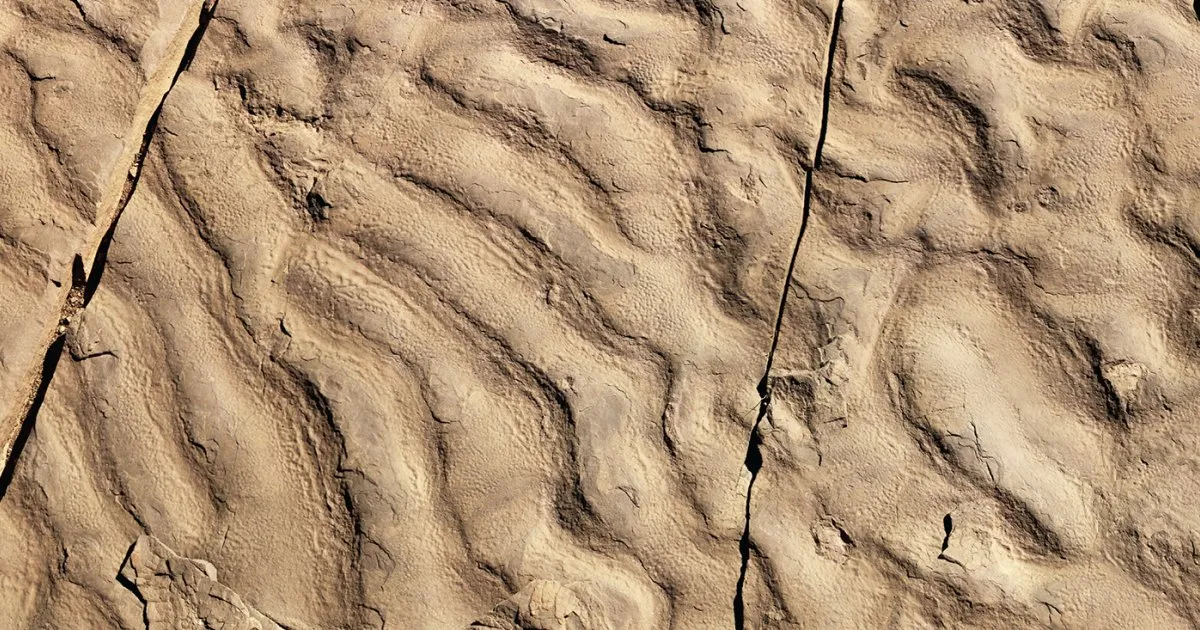
In this unique geological context, a recent study has shed light on the peculiar 'wrinkles' preserved in Jurassic rocks found within the region. Published in the esteemed journal Geology, the research highlights the varying sizes of these 'wrinkled structures,' ranging from millimeters to several centimeters. For years, these formations were thought to result from the activity of photosynthetic organisms in shallow waters. However, the groundbreaking study led by geobiologist Rowan Martindale from the University of Texas revealed that these formations originated at depths of around 200 meters, where sunlight does not penetrate.
Insights into the Formation of Wrinkled Structures
According to the study, "These wrinkled structures should not be found in a deep marine environment. They are consistent with those from shallower deposits; however, given their paleodepth of 200 meters, it is unlikely that they formed due to photoautotrophic communities." This pivotal finding indicates that the structures likely formed approximately 182 million years ago by chemosynthetic organisms that derive their energy from chemical reactions rather than sunlight. These organisms rely heavily on chemical compounds present in the sediment, such as sulfide.
These microorganisms create microbial mats through the organized production of microbial communities that grow and attach to substrates, independent of sunlight. To validate the involvement of microbial organisms, the research team analyzed the rocks using microscopes and chemical analyses. The results revealed concentrations of carbon beneath these surfaces, indicating biological activity. The structures interpreted as wrinkles induced by microorganisms include elongated ridges, rounded crests, and grooves with sharp or flattened ridges.
In conclusion, the study posits that "the wrinkles in turbidites also represent new possibilities for the study of chemosynthetic ecosystems in deep geological time," opening up exciting avenues for further exploration in this fascinating field.
As reported by eldebate.com.