Exploring Sustainable Investment in Africa's Oil Sector
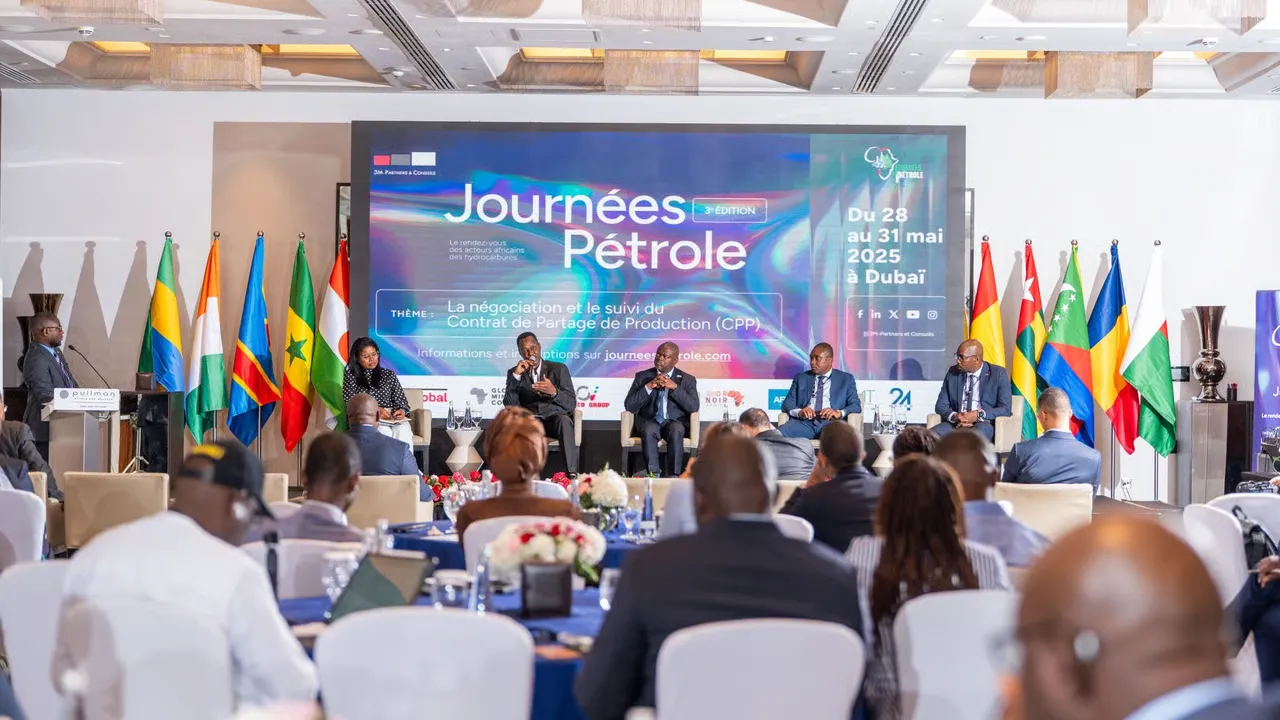
From May 20 to 23, 2026, Casablanca will host the fourth edition of the Oil Days, an institutional pan-African event organized by 3M-Partners & Conseils. This gathering will bring together public decision-makers, investors, operators, experts, and institutions to tackle a pressing issue for the continent: how to convert Africa's oil potential into sustainable investments.
The African paradox is well acknowledged. Despite the continent's wealth of resources, it struggles to attract a proportional share of global capital aimed at their development. According to the African Energy Chamber's report, "The State of African Energy 2026," Africa is projected to produce 11.4 million barrels of oil equivalent per day by 2026 and 13.6 million by 2030, while capturing only about 8% of global exploration and production investments. This indicates that geological potential is no longer sufficient; attractiveness has become a political, institutional, fiscal, and informational construct. This fourth edition of the Oil Days aims to address this critical shift in perspective.
Building Attractiveness: A Precondition for Negotiation
The theme for this year's event, "Building Attractiveness: Strategies and Conditions for the Development of African Hydrocarbons," arises at a pivotal moment. The partial disengagement of major oil companies, intense competition among basins, increased capital selectivity, and heightened governance demands compel African producing countries to reassess their fundamentals.
As summarized by Gacyen Mouely, managing partner at 3M-Partners & Conseils, "The first three editions of the Oil Days established a solid foundation for managing and negotiating oil contracts. This year, we take an additional step: before negotiating a contract, one must first attract the investor. This is the challenge of building attractiveness that we are presenting in Casablanca." The discussions will revolve around six sub-themes: reforms and governance; data and digitalization; fiscal attractiveness and economic profitability; local content and expertise; valuation and outlets for natural gas; and the role of hydrocarbons in the energy transition. This structure aims to facilitate dialogue among various stakeholders who often intersect without meaningful conversation: producing states, investors, operators, experts, institutions, and civil society.
The caliber of partners involved in this edition reflects its ambitious goals. S&P Global, a leading global player in financial and energy markets, will address upstream and downstream activities in Africa, along with the valuation of outlets and natural gas. The International Arbitration Chamber of Paris (CAIP) will discuss dispute resolution between states and operators, a particularly sensitive topic as several African nations face litigation or renegotiations that could adversely affect their investment climate. Meanwhile, Africa Finance Corporation (AFC), a premier multilateral financial institution, will present its investment criteria and insights on the applicable fiscal framework for African oil projects.
Choosing Casablanca as the venue is no coincidence; it embodies the core message of the event. Morocco has successfully built a remarkable multi-sectoral attractiveness without relying on significant oil rents. With political stability, a secure legal framework, world-class infrastructures like the Tanger Med, and a commitment to regional integration through the Morocco-Nigeria Atlantic Pipeline project, the Kingdom stands as a case study for rethinking attractiveness. Hosting the Oil Days in Casablanca around this theme of attractiveness offers African delegations an immersive experience in a model where credibility is not derived from subsurface resources but from diligent efforts in institutions, infrastructure, and strategic vision.
Gacyen Mouely puts it bluntly: "Morocco did not wait to have oil to attract investors. It has built its credibility step by step through its institutions, infrastructure, and vision. This is precisely the message we want to share with our producing states: attractiveness is a political choice before it becomes a geological reality." Since its inception in 2023, this initiative by 3M-Partners & Conseils has quickly distinguished itself in a landscape often dominated by trade shows and investment forums. Its uniqueness lies in its approach: creating an African space for sharing experiences and best practices among administrations, institutions, and industry stakeholders facing common challenges.
With over 1,800 missions completed in Africa since 2009, including more than 800 related to oil cost audits, contract negotiations, and training personnel responsible for hydrocarbons, the Oil Days have a rare grounding in the continent's technical and institutional realities. Since their launch, over ten African countries have sent nearly 250 senior officials from administrations, institutions, and national companies. Each edition has deepened a specific angle concerning production share contracts: controls in 2023, national economic impacts in 2024, negotiation and monitoring in 2025, and in 2026, the focus shifts upstream, addressing not only the contract itself but the conditions that make such a contract feasible.
The Oil Days 2026 primarily target those who are responsible for resources on a daily basis: ministers of oil, economy, finance, or environment, regulators, national hydrocarbon companies, parliamentarians, specialized institutions, and financing partners. In a continent still grappling to capture the full value of its subsurface resources, this type of platform meets a strategic necessity: to better understand what truly attracts investment, what secures it, and ultimately how to transform it into sustainable value. Registrations are ongoing at journeespetrole.com.
As reported by jeuneafrique.com.