The Declining Fertility Trends in Algeria, Morocco, and Tunisia
The Maghreb region, encompassing Algeria, Morocco, and Tunisia, has undergone one of the most profound fertility transitions globally, entering a new phase characterized by persistently low fertility rates. This shift raises important questions regarding the underlying factors propelling this trend and whether these factors differ across the three nations. Recent analyses indicate that while all three countries have experienced significant declines in fertility, the trajectories and implications of these declines vary. In Algeria and Tunisia, a temporary rebound in fertility rates was observed before a subsequent decline, whereas Morocco has consistently witnessed a steady decrease. These trends reflect substantial transformations in societal norms surrounding marriage, family planning, and socioeconomic conditions, including extended education periods and delayed entry into the workforce. The implications are clear: these nations are likely to face sustained low fertility levels, leading to an aging population and, due to low net migration, a deceleration in overall population growth.
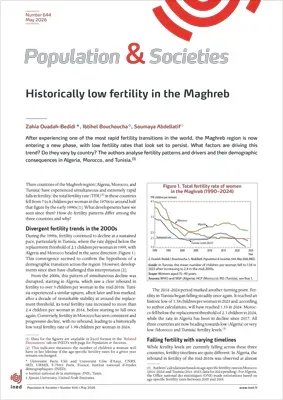
From the 1970s to the early 1990s, the total fertility rate (TFR) in Algeria, Morocco, and Tunisia plummeted from approximately seven to eight children per woman to roughly half that number. Throughout the 1990s, this decline continued robustly, particularly in Tunisia, where the TFR dipped below the replacement threshold of 2.1 children per woman by 1999. Algeria and Morocco followed suit, leading to the hypothesis of a demographic transition in the region. However, the developments in subsequent years have nuanced this interpretation. By the mid-2010s, Algeria experienced a fertility rebound, with rates exceeding three children per woman, while Tunisia saw a more modest increase. In contrast, Morocco's fertility rate consistently fell, reaching a historically low rate of 1.98 children per woman by 2024.
Socioeconomic Factors Influencing Fertility Rates
The period from 2014 to 2024 marked a pivotal turning point in fertility patterns within the Maghreb. Tunisia's fertility rate fell to an unprecedented low of 1.58 children per woman in 2023 and is projected to decline further to 1.53 in 2024. Meanwhile, Morocco's fertility rate dropped below the replacement threshold, and Algeria's has been on a gradual decline since 2017. Notably, despite the overall decline in fertility across these nations, the timeline and age distribution of births exhibit significant variation. In Algeria, the mid-2010s fertility rebound was evident across nearly all age groups, while Morocco's steady decline has been driven by a decrease in births among women aged 30-34, leading to a stable mean age at childbirth. Tunisia, on the other hand, was the first to stabilize under the replacement threshold, followed by a rapid decline that has affected all age groups.
Several factors drive these declining fertility rates, closely tied to marriage, contraception, and changing socio-economic contexts. In Algeria, for instance, the crude marriage rate surged from 5.8‰ to over 10‰ between 2000 and 2014, correlating with a rise in births during the mid-2010s as younger generations reached marriageable age against a backdrop of improved economic conditions. In Tunisia, the mean age of first marriage among women decreased slightly from 29.1 to 28.6 years between 2004 and 2014, before rising to 28.9 years by 2024. This shift in marriage patterns, alongside increasing singlehood among young adults, has contributed to the observed acceleration in fertility decline since the mid-2010s. In Morocco, early marriage does not appear to mitigate the ongoing decline in fertility, highlighting the overriding influence of contraception, which has seen a marked increase, particularly in modern methods.
These demographic trends unfold within a broader socio-economic landscape marked by extended educational pursuits and delayed labor market entry, particularly for women. Across the Maghreb, female education has significantly risen, yet this has not translated into improved labor market integration. High unemployment rates among young graduates, especially among women, and the challenges of balancing work and family life contribute to the postponement of marriage and childbearing. Furthermore, changing family norms reflect a growing emphasis on fewer children, with parents increasingly prioritizing quality of life, education, and well-being for their offspring.
In conclusion, the low fertility rates witnessed in the Maghreb region are indicative of profound demographic and socio-economic shifts. Despite variations in trajectories among Algeria, Morocco, and Tunisia, the overarching trend points toward an enduring period of low fertility, with significant implications for population dynamics and growth. The data derived from national statistics offices affirm the reliability of these findings, underscoring the importance of continued observation and analysis of fertility patterns in this region. As reported by ined.fr.