
AI-Driven Innovations in Military Operations
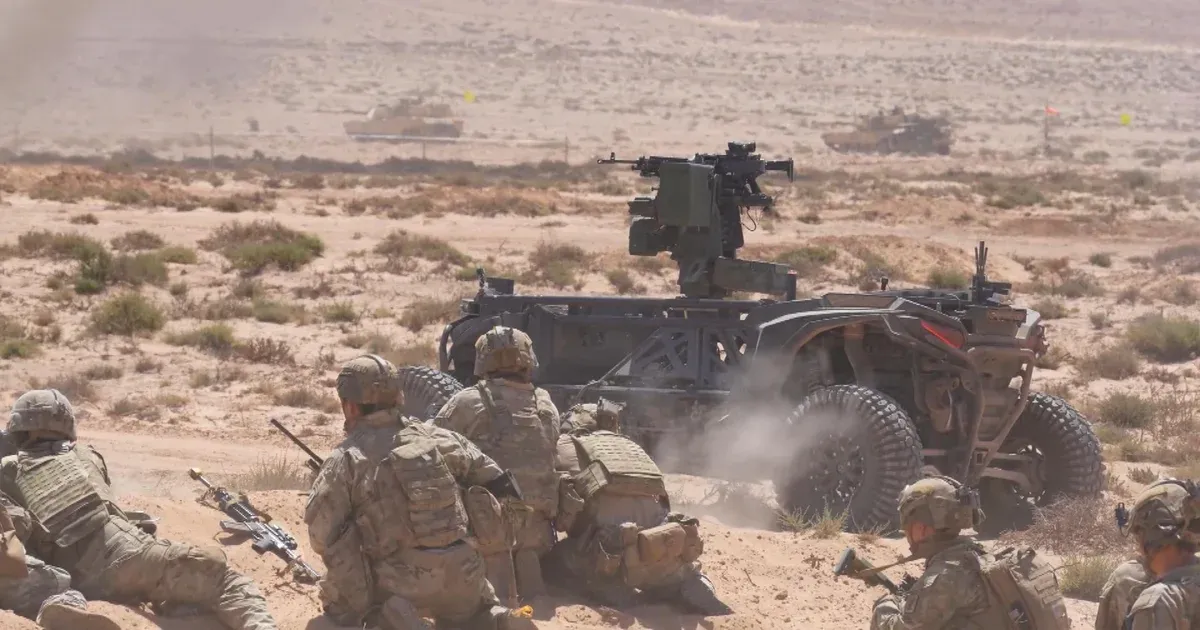
In the expansive and arid landscapes of southern Morocco, where the Sahara Desert meets the Atlantic coast, the tranquility of the environment was recently disrupted by the sounds of explosions and gunfire. This month, the region hosted the African Lion 2026 military exercise, the largest U.S.-led military operation on the continent, which saw participation from over 30 partner nations. This exercise was not solely focused on traditional combat tactics; rather, it was a platform for the U.S. Army to experiment with a plethora of artificial intelligence (AI) systems aimed at modernizing warfare. The implications of this technological integration are profound, as AI increasingly shapes the future of military engagements.
During the exercises, traditional battlefield tactics were practiced alongside the deployment of cutting-edge technology. Notably, a remote-controlled robot equipped with a machine gun traversed the Moroccan desert, while drones took flight carrying explosives, demonstrating the significant role of automation in contemporary military strategies. A critical objective of these technologies is to expedite what is known as the "kill chain" – the sequence of actions required to engage a target. U.S. Army Lt. Col. Ramon Leonguerrero highlighted the effectiveness of an AI-driven platform developed by Palantir, which facilitated rapid decision-making processes, significantly reducing the time needed to approve target engagements from hours to mere minutes.
Ethical Considerations and Future Implications of Autonomous Warfare
Despite the advancements in AI capabilities, concerns regarding the ethical implications of allowing machines to make lethal decisions persist. Leonguerrero acknowledged the existence of autonomous systems capable of executing military actions without human intervention, yet he refrained from disclosing whether such systems have already been utilized in real-world scenarios. This hesitation reflects the broader apprehensions voiced by military personnel regarding the delegation of critical decision-making responsibilities to machines. One soldier candidly expressed his discomfort with the notion of relinquishing such pivotal choices to a computer, underscoring the importance of human judgment in warfare.
Moreover, the Pentagon's Project Maven, an initiative designed to harness AI for military intelligence, plays a crucial role in enhancing operational efficiency. By analyzing vast amounts of battlefield data, Project Maven aids commanders in identifying patterns and prioritizing actionable intelligence. This capability is further augmented by Anthropic's Claude language model, which enables users to interact with complex data in a more intuitive manner. However, the intersection of AI and military operations raises significant moral questions, as highlighted by Defense Secretary Pete Hegseth, who emphasized the need for ethical considerations in the deployment of AI technologies. General Dagvin R.M. Anderson of the U.S. military's Africa Command also acknowledged the rapid advancement of AI capabilities, cautioning against the risks of ignoring these technological developments in an increasingly competitive global landscape.
As the African Lion exercise demonstrated, the integration of AI in military operations is not merely a theoretical concept but a practical reality that could redefine the future of warfare. Private defense contractors, such as Overland AI, showcased their autonomous vehicles, which are designed to undertake dangerous missions traditionally performed by soldiers. These innovations not only aim to minimize human risk but also seek to enhance operational efficiency on the battlefield. While the transition to a more automated military landscape presents challenges, the overarching goal remains clear: to protect lives and ensure that military personnel can execute their duties with greater safety and effectiveness.
As reported by cbsnews.com.


