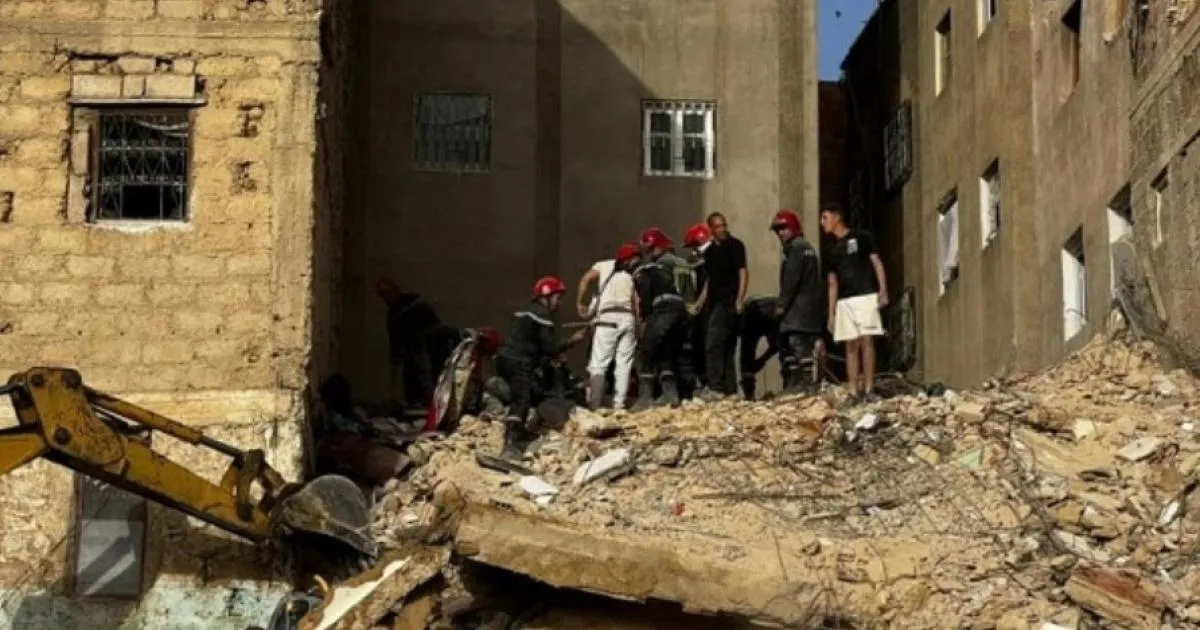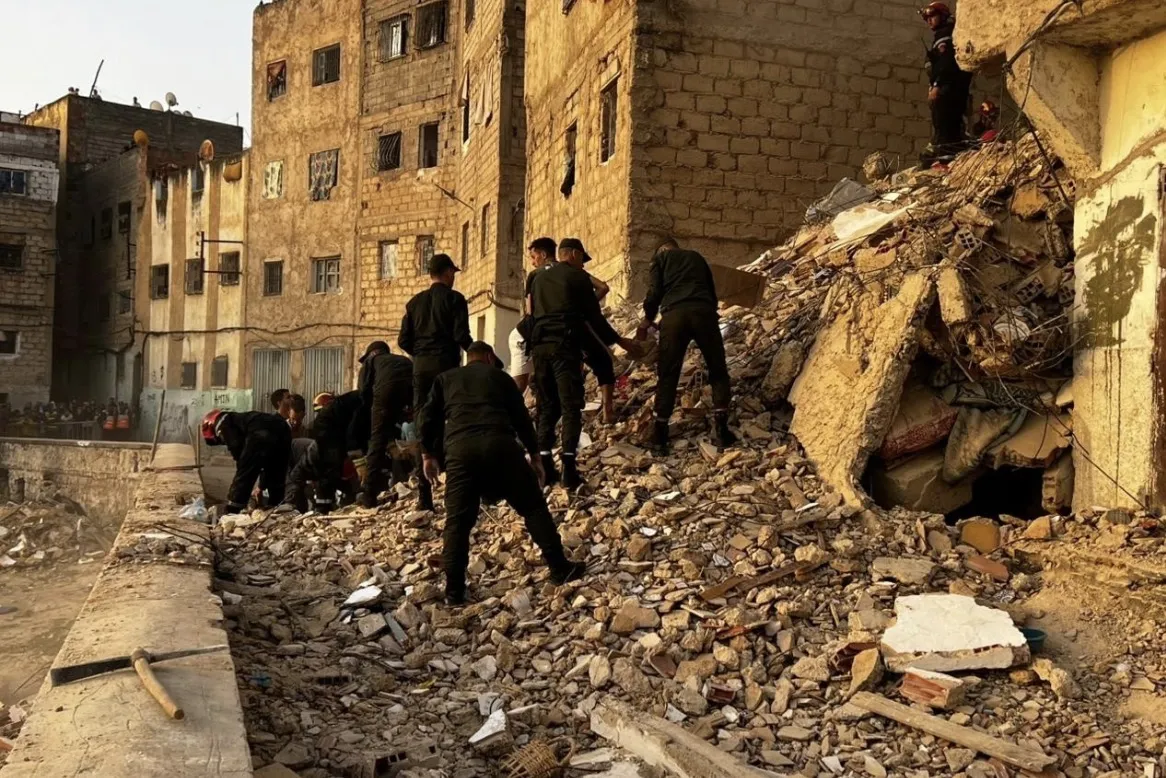
The recent building collapse in Ain Nqbi, Fes, has sparked significant reactions from political, union, civil, and human rights organizations. In a collective expression of sorrow, these entities released statements mourning the loss of fifteen lives, the majority of whom belonged to two families. They also extended wishes for a swift recovery to five individuals who sustained various degrees of injuries and are currently receiving treatment in the hospital.
The Left Federation has placed the blame for this tragedy squarely on the shoulders of the authorities and relevant agencies, asserting that the incident was not merely an accident or a matter of fate. Instead, they argue, it is a direct consequence of accumulated structural deficiencies and the absence of stringent oversight concerning buildings at risk of collapse. The Federation’s statement highlights a failure in urban planning and managerial policies, emphasizing the urgent need for accountability.
In light of these events, there are strong calls for a thorough and comprehensive investigation to ascertain responsibility, from the project owners to all potential individuals involved in administrative corruption or negligence regarding construction violations. The Federation insists that no official should escape accountability and criticizes the lack of proactive monitoring and the dismissal of citizen complaints about cracks and safety hazards.
Local representatives from the Justice and Development Party have urged responsible authorities to ensure housing and social support for all affected and grieving families. They stressed the necessity of urgent intervention and collaborative efforts among all relevant governmental sectors, including the National Agency for Urban Renewal and the rehabilitation of at-risk buildings. Local authorities, elected officials, construction professionals, and civil society must unite to address the root causes of the building collapse phenomenon in Fes, beginning with immediate preventive measures such as updating records of these dangerous buildings and ensuring that authorities enforce eviction notices and implement a robust monitoring system.
The Moroccan Organization for Human Rights has expressed profound sorrow over this tragic incident, which cannot be seen as an isolated event, given the recurrence of residential building collapses in Fes and other cities. They pointed out that this situation reveals serious deficiencies related to construction and buildings at risk of collapse.
Similarly, the National Council for Human Rights has called for an investigation into the tragedy, noting that repeated incidents of building collapses directly undermine the right to adequate housing as defined by international standards. They emphasize the need for a comprehensive national strategy based on proactive measures, regular and stringent monitoring, and the development of observation and prediction mechanisms. Furthermore, they stress the importance of ensuring that the local population adheres to construction standards and regulations while guaranteeing transparency from the relevant authorities to prevent disasters that could threaten lives.
The Moroccan Organization for Human Rights further stated that such incidents raise concerns regarding the adherence to legal and technical standards during building permit approvals and the oversight of buildings that fail to meet safety and protection criteria, which directly impacts the right to life and physical safety as fundamental human rights.
The collapse of the building in Ain Nqbi has resulted in the loss of fifteen lives, including four children aged between two and five years. Among the deceased, five individuals belonged to the same family, with one young woman still receiving treatment in a hospital, while another five fatalities were from a second family, marking them as the most affected by this tragedy with a staggering loss of ten victims.
As reported by aljarida24.ma.