A Historic Step Towards the 2030 World Cup
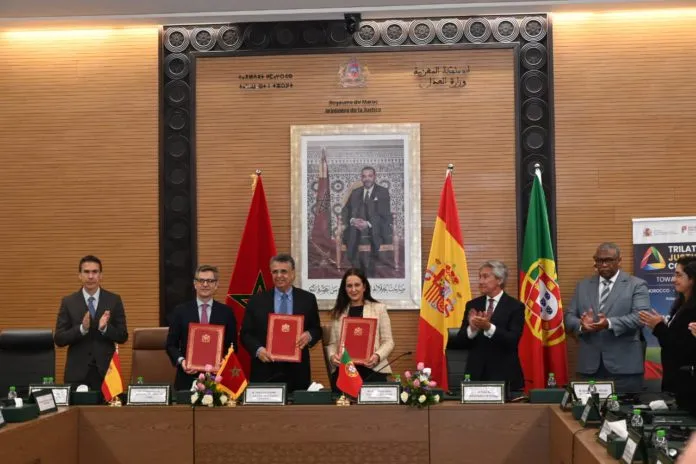
As the countdown to the 2030 World Cup begins, the collaborative efforts among Morocco, Spain, and Portugal have reached a significant milestone. On April 10, 2026, leaders from these three nations convened in Rabat to formalize their partnership by signing a memorandum of understanding and a three-year action plan that spans from 2026 to 2030. This groundbreaking agreement signifies more than just a sports event; it represents a comprehensive legal framework aimed at ensuring the smooth orchestration of the first intercontinental World Cup in history.
Strengthening Legal Cooperation for Global Impact
The driving force behind this unprecedented collaboration includes notable figures such as Abdellatif Ouahbi from Morocco, Félix Bolaños García from Spain, and Rita Alarcão Júdice from Portugal. Their collective vision has transformed the organization of the World Cup into a 'legal laboratory' that bridges the legal systems of Africa and Europe. This partnership is essential for synchronizing judicial systems to manage the complexities and influx of visitors expected during the event. The primary goal is to establish a robust framework that not only protects the rights of millions of fans and economic stakeholders but also ensures a secure legal environment throughout the tournament.
Central to this initiative is the commitment to combat cross-border cybercrime and develop a 'legal governance' model that suits large gatherings. By focusing on the digitization of justice and the exchange of best practices, Rabat, Madrid, and Lisbon are proactively addressing potential disputes before they arise. This strategic alliance goes beyond mere event preparation; it fosters a lasting relationship built on mutual trust and legal cooperation.
As highlighted by Abdellatif Ouahbi, this partnership does not merely set the stage for a World Cup; it lays the foundations for a shared judicial space, transforming the Mediterranean region into a vital legal bridge between two continents. By enhancing judicial cooperation mechanisms and promoting alternative dispute resolution methods, these countries are creating a stable and attractive business environment that will benefit all parties involved.
As reported by article19.ma.