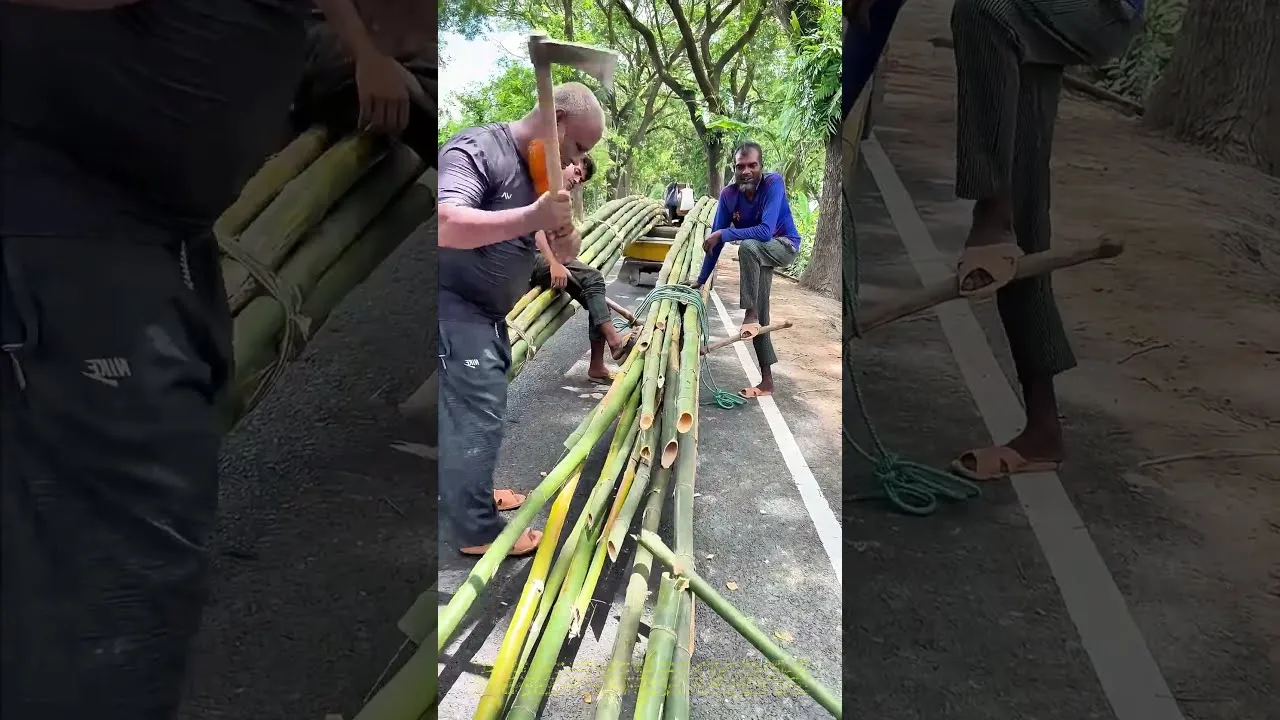
The Art of Bamboo Cutting: Unveiling the Secrets of Ancient Craftsmen
In the lush landscapes of South Asia, artisans have long recognized the unique properties of bamboo, a plant that transcends mere utility to embody a natural engineering marvel. The strength and flexibility of bamboo make it a favored material for various applications, from construction to crafts. However, the art of bamboo cutting is not simply about severing stalks; it requires precision and technique to ensure that each piece is cut at the correct angle, typically around 45 degrees. This specific angle is crucial as it helps distribute stress effectively, preventing breakage during use.
The process begins with selecting the right bamboo stalks. Experienced craftsmen choose straight, thick-skinned stalks with solid cores, ensuring they are less prone to breakage during transport or shaping. Equipped with a specialized axe weighing approximately 1.5 kilograms, the artisan employs a single-handed grip while stabilizing the stalk with their foot. This method relies heavily on the artisan's skill rather than any digital measuring tools, emphasizing the importance of experience and practical knowledge.
After the cutting, the next step involves arranging the pieces in parallel stacks, which are then securely tied with cotton ropes around their midsection. This technique prevents slippage during transportation, making it easier to carry either by hand or with a cart. Before loading, each piece undergoes a final inspection where the artisan gently taps it to listen for a consistent sound. A uniform sound indicates that the pieces are of equal thickness and free from cracks.
Many may wonder why modern machinery is not utilized for this process. The answer lies in bamboo's unique structure; its outer skin consists of delicate cellulose fibers. When cut at high speeds using power saws, these fibers can fray and weaken the material. In contrast, the manual technique with an axe allows for a slow, deliberate cut that permits the fibers to adjust naturally, preserving the integrity of the bamboo.
This craft is not merely a profession for these artisans; it is a cultural heritage passed down through generations. In villages across southern India and Sri Lanka, bamboo prepared in this traditional manner is indispensable in constructing homes. Elders teach the youth that 'good bamboo is not bought; it is made,' signifying that quality begins at the moment of cutting. In traditional building, bamboo is used for roofs, walls, and floors, its water-resistant properties making it ideal for rainy climates. Additionally, bamboo is shaped into various items, including utensils, tools, and musical instruments like the Indian flute.
Furthermore, bamboo's rapid growth, sometimes up to 90 centimeters in a single day, and its ability to absorb significant amounts of carbon make it a sustainable alternative to timber. For those looking to experience the art of bamboo cutting firsthand, there are some tips to keep in mind. Choose the right axe, avoiding overly heavy tools, as precision is more important than brute strength. Always position one foot in front of you to stabilize the stalk while cutting, reducing the risk of injury. It is also advisable to cut bamboo early in the morning when it is more pliable and less likely to break. Finally, opt for cotton ropes for securing the pieces, as plastic ones can damage the fibers.
In an age dominated by machinery, the handcrafting of bamboo illustrates the profound connection between humans and materials. Bamboo is not just a plant; it is a collaborator in building life—cut, tied, constructed, and reshaped through skilled hands. Perhaps this is the secret to the enduring nature of traditional crafts: they rely not on technology but on human intelligence that transforms chaos into order, turning raw pieces into homes. "Bamboo does not just get cut; it responds to the strokes, much like a person responds to experiences."
As reported by youtube.com.