Sub-Saharan Migrants Essential for Moroccan Agriculture
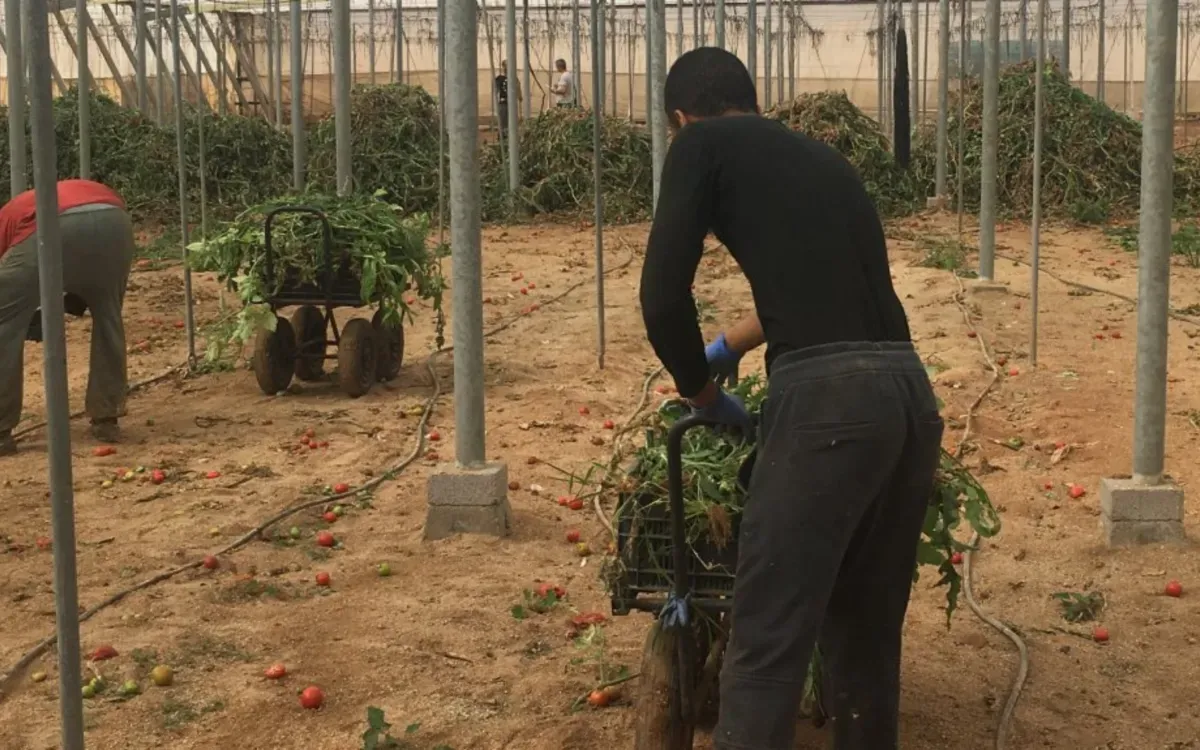
As Morocco increasingly becomes a destination for migrants, the influx of sub-Saharan workers is proving crucial, particularly in the agricultural sector. With a noticeable shortage of local laborers, many of these migrants are deferring their plans to travel to Europe, opting instead to work in the fields of Morocco. The Souss-Massa region, located south of Agadir, serves as a prime example of this trend, with the Chtouka plain showcasing a remarkable 24,000 hectares of greenhouses that produce over 80% of Morocco's fruit and vegetable exports. In the past year alone, these agricultural exports have generated a staggering $4.5 billion, prompting farmers to actively recruit workers from West Africa to sustain this agricultural boom.
These foreign workers are filling the gaps left by Moroccan laborers who are increasingly migrating to urban centers in search of jobs in construction or the service industry, driven away by drought and economic challenges. This trend is expected to accelerate, especially with the projected $20 billion in investments for the upcoming 2030 World Cup. Since the year 2000, the agriculture sector has witnessed a loss of 1.7 million jobs, with only a quarter of Moroccans now employed in this field compared to half two decades ago. Local workers, who remain, demand higher wages—up to 500 dirhams per day based on productivity—while migrants earn significantly less, around 100 dirhams. A poignant example is Abdulfattah Aliou, a 23-year-old from Togo, who was brought back to southern Morocco after attempting to reach Spain and stated, "Working is better than begging on the streets."
Impact on Rural Demographics and Agricultural Sustainability
The reliance on sub-Saharan labor has significant implications for the demographics of rural areas, particularly in the municipality of Ait Amira, where the population has quadrupled to 113,000 over the past thirty years. While some migrants continue to live outdoors in hopes of reaching Europe, others have established themselves in Morocco. Alioun Dialou from Senegal, who has been working in these agricultural fields since 2008, has even enrolled his daughter in school, where she now speaks Moroccan Arabic and Amazigh. This growing community of migrants has become integral to the agricultural landscape of Morocco, and their contribution is essential for the survival of many export-oriented farms. Abdelaziz El Maanaoui, a leader of a local agricultural association, has stated that without sub-Saharan labor, many farms would have likely shut down or been forced to reduce their production. Rachid Benali, head of the national confederation, underscores the broader issue of labor shortages, warning that Morocco no longer enjoys the advantage of a cheap labor force.
Despite exceptional olive production exceeding two million tons for the 2025-2026 season, the Moroccan olive oil sector faces a paradox; while abundant supply has lowered prices to around 70 dirhams per liter, a severe shortage of labor and rising harvesting costs pose serious threats to profitability and production capacity. Moreover, contrary to speculation, Morocco has not halted its tomato exports to Europe, though certain decisions have targeted the African market. Even with rising prices in local markets, industry professionals deny any complete cessation of operations.
As reported by bladi.net.