Moroccan-Gulf Relations: A New Era of Cooperation
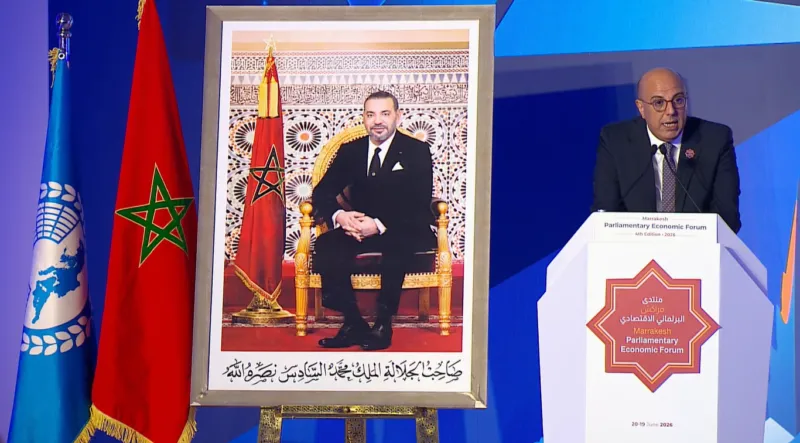
During a high-level opening session of the fourth Marrakech Parliamentary Economic Forum for the Euro-Mediterranean and Gulf regions, held under royal patronage on Friday, Mohammed Ould Al-Rachid, the President of the House of Councillors and the President of the African Association of Senate Councils, emphasized that the Moroccan-Gulf partnership has transcended the realm of traditional bilateral relations, evolving into a catalyst for cross-regional cooperation founded on political trust and mutual interests. Al-Rachid articulated that Morocco is playing a strategic role as a vital link between diverse regions, acting as an integrated area where interests converge and opportunities for shared value creation multiply.
On the Euro-Mediterranean front, Al-Rachid highlighted that Morocco has established an advanced strategic partnership with the European Union, which began with a free trade agreement in 1996 and was reinforced by the advanced status granted in 2008. This partnership further evolved into a Euro-Moroccan initiative for mutual prosperity launched in 2019, facilitating an increasing integration of the Moroccan economy into regional value chains. He underscored the importance of this collaboration in bolstering economic ties and enhancing the region's collective development.
African Cooperation and Development Initiatives
In the African context, Al-Rachid noted that African cooperation has become a space for mutual empowerment, stability, and shared prosperity. This is reflected in various royal initiatives, such as the Atlantic Initiative and the Nigeria-Morocco gas pipeline project, along with efforts to adapt African agriculture, showcasing Morocco's commitment to transforming the continent's potential into a real driver of shared development. He stressed that the agenda for this session mirrors the maturity of the forum's journey and the expansive horizons it now envisions. The uniqueness of this gathering is anchored in four major pillars that reflect its growth and broadened scope: leadership, openness, impact-making, and institutionalization.
Al-Rachid also remarked on the legislative measures aimed at ensuring financial discipline, akin to the "golden rule" in Morocco's organic finance law, which serves to build a protective barrier against the cycle of debt. Furthermore, he pointed out that ratifying free trade agreements not only opens markets but also sets the stage for knowledge and technology transfer. He highlighted the importance of establishing legal frameworks that balance sustainable exploitation of marine resources with biodiversity protection, thereby safeguarding future sources of growth and employment. Additionally, he emphasized the need to regulate the surge of artificial intelligence and the digital revolution, ensuring they become levers for development rather than sources of disparity and vulnerability.
Al-Rachid affirmed that the House of Councillors in Morocco is committed to coordinating efforts and initiating legislative and practical actions to implement this inclusive vision on the ground. This commitment derives its advocacy and operational strength from the council's unique constitutional status, which creatively blends territorial and economic dimensions, providing it with high flexibility to align laws with market transformations and keep pace with contemporary development dynamics.
As reported by alyaoum24.com.