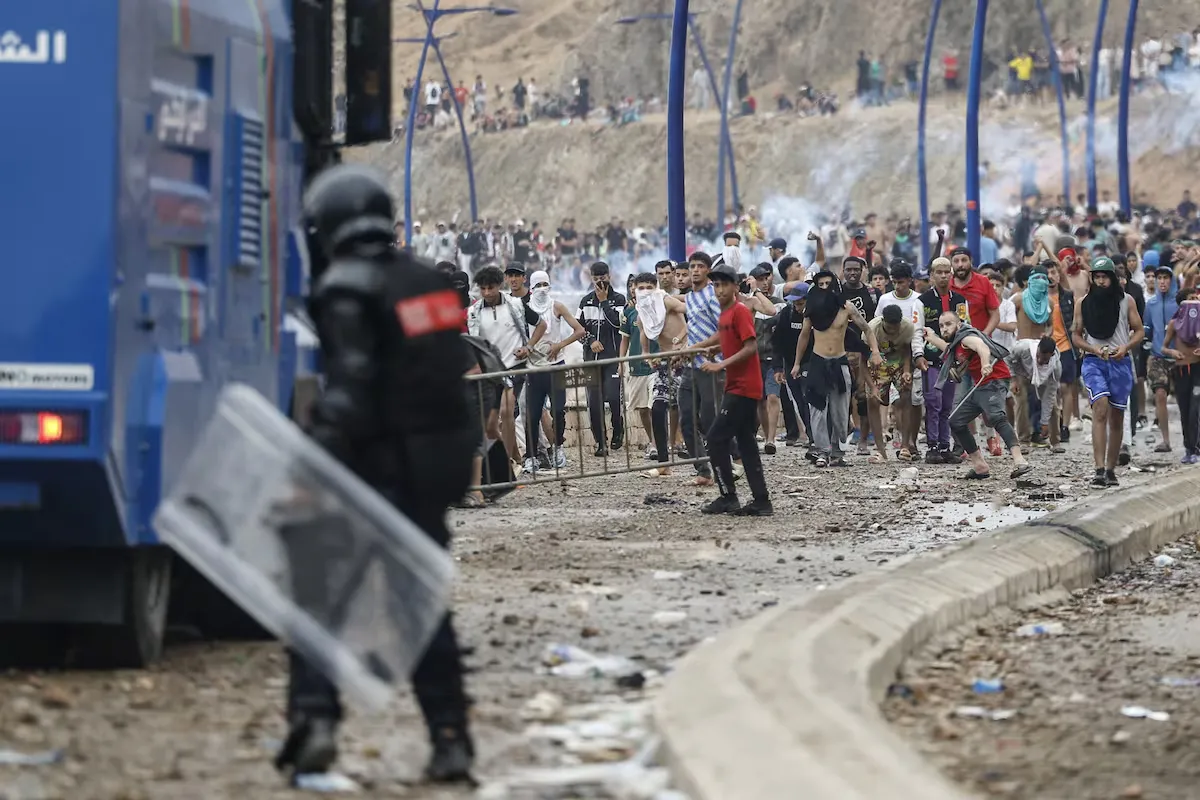
In a significant development, the Spanish Ministry of the Interior has reported the voluntary return of over 37,000 migrants to Morocco, following the unprecedented arrival of nearly 50,000 individuals who crossed into the Spanish enclave of Ceuta within a mere 24 hours. This surge marks one of the largest waves of migration experienced by the enclave, prompting a state of alert across the European Union and triggering a range of political reactions. These responses have varied, encompassing calls for increased border surveillance, support for Spain, and demands for exceptional measures to safeguard the Schengen area.
European Commission Demands Action Against Migrant Smuggling
On Friday, Ursula von der Leyen, President of the European Commission, condemned the influx of tens of thousands of migrants from Morocco into Ceuta, labeling the images emerging from this situation as "unacceptable." Von der Leyen emphasized the urgent need to halt dangerous crossings and dismantle smuggling networks, stating that deportation procedures must be expedited in accordance with existing legal frameworks. This situation has raised significant concerns among EU officials, reflecting the ongoing challenges faced by member states in managing migration effectively.
Italy Proposes Suspension of Spain's Schengen Membership
Italy has taken one of the most stringent stances in response to the crisis, with Prime Minister Giorgia Meloni advocating for the suspension of Spain's Schengen membership. Meloni argued that the migrant influx underscores a failure to secure the EU's external borders. Her comments followed similar sentiments expressed by Italian Foreign Minister Antonio Tajani, who suggested that Spain should be excluded from the Schengen zone, asserting that uncontrolled and irregular migration poses a threat to national security. Tajani criticized the Spanish government's decision to grant citizenship to over 500,000 undocumented migrants, claiming it incentivized human trafficking.
Finland and Denmark have expressed support for Italy's position, agreeing that the recent events highlight a failure to protect the EU's external borders and advocating for stricter European measures to combat irregular migration. Finnish Interior Minister Mari Rantanen stated that Spain has completely failed to secure the Schengen area's external borders from intrusions, indicating the urgency for a reassessment of its membership in the Schengen agreement.
In contrast, British Prime Minister Andy Burnham has voiced concern over the large number of migrants arriving in Ceuta, assuring that his government is in communication with Spanish authorities to understand the implications of the situation and to provide necessary support. Furthermore, German Chancellor Friedrich Merz has called for the immediate repatriation of undocumented migrants to Morocco, insisting that Spain must regain control of the situation in Ceuta promptly. He remarked on the importance of protecting the EU’s external borders in the fight against irregular migration.
French President Emmanuel Macron has directed his interior minister to enhance border inspections with Spain in light of the recent migrant crisis. He has also stated that France stands ready to support Spanish authorities as needed, including through the European Border and Coast Guard Agency, Frontex. These developments underline the tensions and complexities surrounding immigration policy within the EU, highlighting the need for collaborative efforts to address the challenges posed by mass migration.
In summary, the recent surge of migrants from Morocco into Ceuta has sparked a multifaceted response from European nations, revealing deep divisions regarding migration management and border security. As discussions continue, the outcomes may significantly influence the future of the Schengen agreement and the EU's approach to migration.
As reported by france24.com.