South Africa's Diplomatic Maneuvers and Support for the Polisario Front
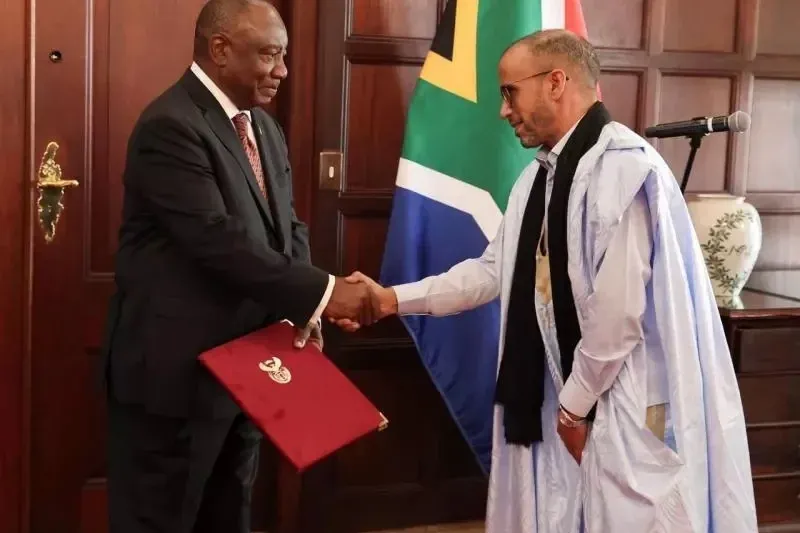
In a significant diplomatic move that highlights its unwavering support for the separatist Polisario Front, South African President Cyril Ramaphosa recently welcomed the new representative of the group, Abba Elmad Abdullah, who presented his credentials as the successor to Mohamed Yeslem Beissat. This gesture underscores Pretoria's sustained political backing for the Polisario Front, reinforcing South Africa's traditional stance on the Western Sahara conflict, which aligns with Algeria's support for separatism. The South African government appears intent on maintaining the Polisario's presence in international circles, particularly within the United Nations and the African Union, despite a global trend that leans toward diminishing recognition of the so-called 'Sahrawi Republic.'
Amidst a shifting geopolitical landscape, Morocco has been successful in garnering increased support for its territorial claims in Western Sahara, particularly through the proposal of autonomy, which has seen a notable withdrawal of recognition from several nations regarding the separatist entity. This diplomatic advancement is complemented by the establishment of a growing number of consulates in Morocco's southern provinces, further solidifying its international standing and influence.
Analysis of the Impact of South Africa's Position
Sheikh Boussaid, a public law researcher specializing in the Moroccan Sahara conflict, articulated that South Africa's reception of the new Polisario representative is a politically charged action that indicates the country's continued support for the separatist narrative, especially as the Polisario faces increasing diplomatic isolation. Boussaid pointed out that this action is part of a traditional approach by the ruling African National Congress (ANC), known for its opposition to Morocco's territorial integrity, despite some internal dissent represented by former leaders like Jacob Zuma, who have expressed support for Morocco's stance.
The ongoing tension between Rabat and Pretoria stems from a fundamental divergence in perspectives on the Western Sahara issue. South Africa's efforts to secure a diplomatic foothold for the Polisario within the continent occur at a time when many African nations are shifting their positions to favor Morocco, thereby complicating Pretoria's strategy. Recent developments, such as Kenya's endorsement of Morocco's autonomy initiative, signify a qualitative shift in the attitudes of African nations, particularly within the Anglo-Saxon sphere.
Boussaid explained that Moroccan diplomacy has evolved to adopt a proactive approach, characterized by diversifying partnerships and enhancing its presence within the heart of Africa, aiming to penetrate traditional bastions that were once aligned with the Polisario. The successes achieved by Morocco in reclaiming recognition from various African nations and expanding its consular network in the southern regions reflect a gradual shift in the balance of power in favor of Morocco. This changing dynamic enhances the credibility of Morocco's autonomy proposal, which is increasingly backed by influential international powers and resonates with a growing number of African countries that recognize its seriousness and realism.
Furthermore, Boussaid emphasized that South Africa's continued support for the Polisario will not alter the overarching trajectory of the conflict, given the momentum driven by Morocco, which consolidates its advantages both regionally and internationally, signaling a new phase characterized by the realignment of alliances within Africa.
Mohamed Fadel Boukaddara, the head of the Political and Strategic Studies Center for the "Saharawis for Peace" movement, reiterated that the political and diplomatic momentum surrounding the Moroccan Sahara issue, particularly with the increasing international endorsements of the autonomy proposal, contrasts sharply with the outdated stances of some countries that cling to discredited approaches. He pointed out that the Moroccan proposal has gained significant traction since its introduction in 2007, serving as a middle ground that addresses the interests of all parties involved while many nations have receded from recognizing the so-called 'republic.'
Boukaddara criticized the legal paradox of promoting a separatist entity before completing the self-determination process, raising questions about the motivations behind this contradiction, especially from nations like South Africa and Algeria, which oppose the appeal of the autonomy project despite its realism and credibility. He noted that South Africa's actions reflect an attempt to maintain its leadership position on the continent amid Morocco's growing influence, particularly in soft power and economic engagement in sub-Saharan Africa. This competitive dynamic has taken on geopolitical dimensions linked to energy, infrastructure, and security cooperation.
In conclusion, Boukaddara asserted that supporting opponents of Morocco's territorial integrity is part of an effort to stymie the economic and diplomatic momentum that Morocco has been cultivating, especially given its strategic geographic position as a gateway to Africa and a preferred partner for Europe. However, he emphasized that this approach will not alter the emerging realities that are reshaping regional and international balances. Ultimately, the international community, supported by major powers, will compel nations like South Africa to adapt to ongoing transformations, as the Moroccan autonomy initiative evolves from a national choice to a proposal gaining increasing international legitimacy, enhancing its viability as a definitive solution to the protracted dispute.
As reported by hespress.com.