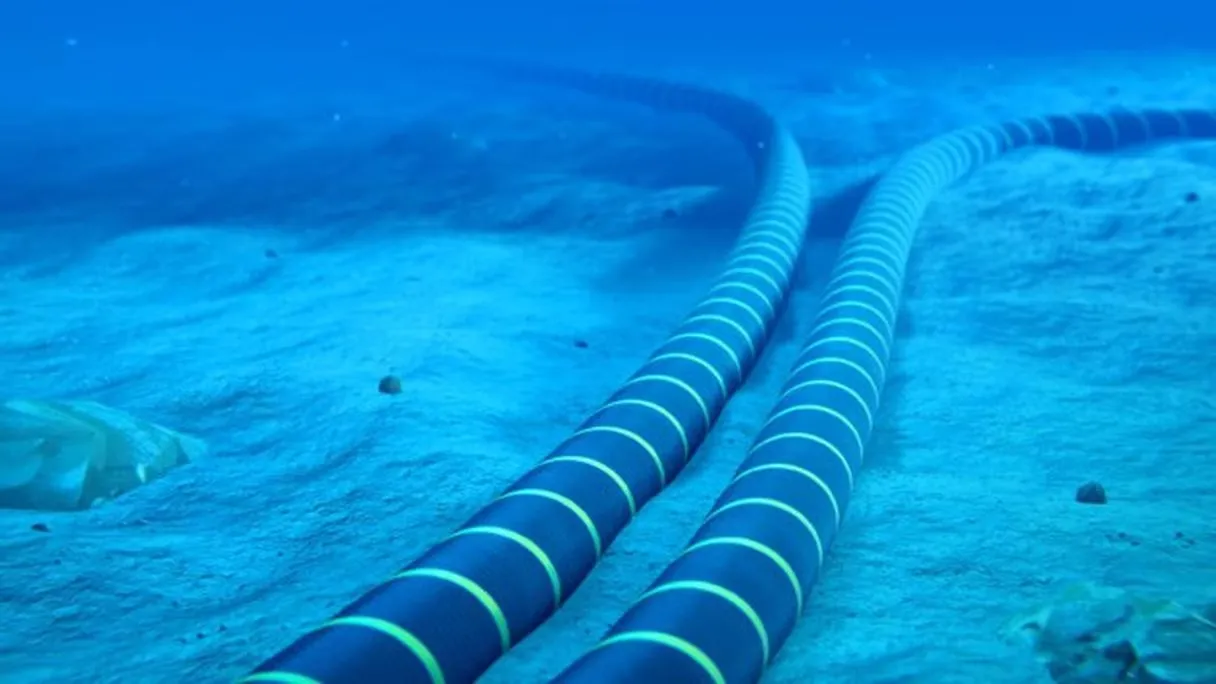
The Sila Atlantik project, touted as a potential strategic energy corridor between Morocco and Germany, is currently facing significant delays due to disagreements over governance, guarantees, and operational frameworks between Rabat and Berlin, according to sources familiar with the matter. This ambitious intercontinental submarine cable initiative aims to transport renewable energy from Morocco to Germany via two high-voltage submarine cables, which have the capacity to supply up to 5% of Germany's annual electricity demand, making it a crucial component for Europe's leading economy.
Stretching approximately 4,800 kilometers, these cables are expected to be powered by nearly 15 gigawatts of renewable solar and wind energy installations located in Morocco. The total estimated cost for this infrastructure project stands at around $30 billion, as reported by the project's developers. However, according to both Moroccan and German sources cited by Reuters, the Moroccan authorities are insisting on a formal intergovernmental agreement ratified by Berlin to secure long-term state support.
Additionally, Morocco is advocating for a two-way electricity flow through the interconnection, rather than a one-way export option to Germany. This proposal has been described as 'technically feasible but economically more expensive' by one of the German sources. Another point of contention arises from the Moroccan authorities' commitment to allocate approximately 150,000 hectares of land in the Guelmim-Oued Noun region for the Xlinks project, a similar initiative aimed at connecting Morocco to the United Kingdom, which was abandoned last year. However, this land allocation has yet to be validated for the Sila Atlantik project, according to a regional official who spoke to Reuters.
Cable and Interconnections
In response to inquiries from the British press, the German company Sila Atlantik, established specifically for this venture following the failure of Xlinks, did not directly address questions regarding these ongoing discussions. Instead, they merely indicated that the project is 'progressing according to its technical, commercial, regulatory, and financial roadmap' and continues to 'assess the technical and regulatory options that will best support its long-term development.'
Furthermore, the Moroccan Ministry of Energy, also contacted by Reuters, stated via email that 'regional integration is a key pillar of Morocco's energy transition strategy,' emphasizing the importance of projects aimed at strengthening electrical interconnections with other European partners.
As reported by h24info.ma.