A Major Leap Forward in Engineering
The ambitious undersea tunnel project connecting Morocco and Spain has gained substantial momentum following the approval of new technical studies by the Spanish government. This advancement marks a critical step towards realizing this unprecedented engineering challenge. As reported by h24info.ma.
Recent reports from Okdiario indicate that the Spanish government has allocated additional funding to validate the technical feasibility of this strategic infrastructure, which is expected to enhance diplomatic ties between Rabat and Madrid. In mid-March 2026, the Spanish executive approved a transfer of €1.73 million intended to finance the technical studies. This amount contributes to an escalating budgetary trend; since 2022, the SECEGSA (State Society for the Management of the Gibraltar Strait) has seen its funding increase dramatically from symbolic amounts of about €50,000 annually to a cumulative total exceeding €9.6 million.
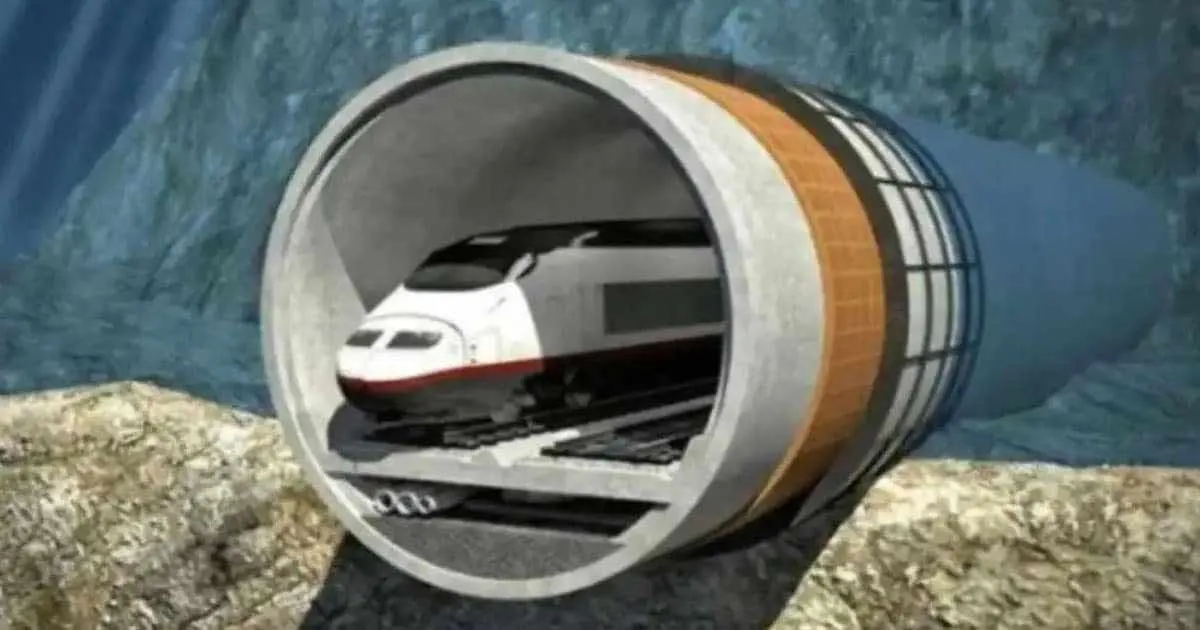
The project envisions a tunnel approximately 65 kilometers long, with nearly 40 kilometers situated within Spanish territory, connecting Tangier to the area near Vejer de la Frontera. This monumental structure will consist of two railway tubes and a service gallery, with a depth reaching 500 meters. The transit time across the strait is projected to be reduced to just 30 minutes, with estimated costs of around €8.5 billion from the Spanish side based on available technical figures. One of the most challenging aspects, the passage through the "Camarinal Sill," has been studied by the German firm Herrenknecht, which concluded that drilling is technically feasible despite the geological complexities of the strait.
Administrative Milestones: Spain Takes the Lead
According to Vozpópuli, the Spanish government has announced a call for tenders to secure liability insurance for the president of SECEGSA, General José Luis Goberna, and the board members, which include representatives from both Spain and Morocco. This insurance policy, slated to take effect on September 30, 2026, will coincide with Madrid's plans to finalize the updated preliminary design of the tunnel and progress on the design of the future reconnaissance gallery.
The coverage will address risks associated with management errors, omissions, or negligence, as well as legal defense costs, administrative investigations, and judicial proceedings. It will also provide protection against penalties or accounting liabilities resulting from public audits, with a maximum insured amount of €1.64 million. A noteworthy aspect of the contract is its four-year retroactivity, which will cover decisions made since the project was revitalized following the political rapprochement between Spain and Morocco.
In a collaborative effort, the Spanish Minister of Transport, Óscar Puente, and his Moroccan counterpart, Karim Zidane, have signed a memorandum of understanding to initiate a three-year investigation phase focused on the seismic and geodynamic characteristics of the strait. A marine research campaign led by CSIC is scheduled for the first half of 2026, aiming to establish a 3D geological model of the seabed. Madrid anticipates having an updated version of the preliminary design and advancing the reconnaissance gallery's design by mid-2026. Should the findings prove favorable, the project for this gallery might be put out to tender as early as 2027, with current technical studies suggesting that the entire tunnel could take about a decade to complete.
Beyond the technical challenges, the political agenda is now influenced by a symbolic horizon: the joint hosting of the 2030 FIFA World Cup by Morocco, Spain, and Portugal. While experts agree that the tunnel is unlikely to be operational for the tournament, the event serves as a unique catalyst. For both Rabat and Madrid, the accelerated studies in 2026 represent a powerful demonstration of their strategic partnership's strength and a shared commitment to transforming the Strait into a physical bridge between two continents.