Electoral Promises and the Need for Connectivity
As the date for upcoming legislative elections approaches, the issue of the highway in the Drâa-Tafilalet region has once again taken center stage in public discourse. Local residents and civil society organizations are amplifying their demands for improved connectivity, echoing calls to end the isolation of provinces like Ouarzazate, Errachidia, Tinghir, Zagora, and Midelt. This time, however, the urgency is heightened by the impending political stakes, and the promises made in the past remain unfulfilled and merely ink on paper.
The phrase “enough with the marginalization” resonates through local gatherings, markets, and community meetings. Citizens believe that the absence of a highway linking their region to other parts of the country has cost them decades of developmental delays. Investors have withdrawn, tourists have taken alternate routes, and critically ill patients have suffered the consequences, enduring long journeys in ambulances on perilous roads. With elections on the horizon, there is a renewed sense of hope among the populace.
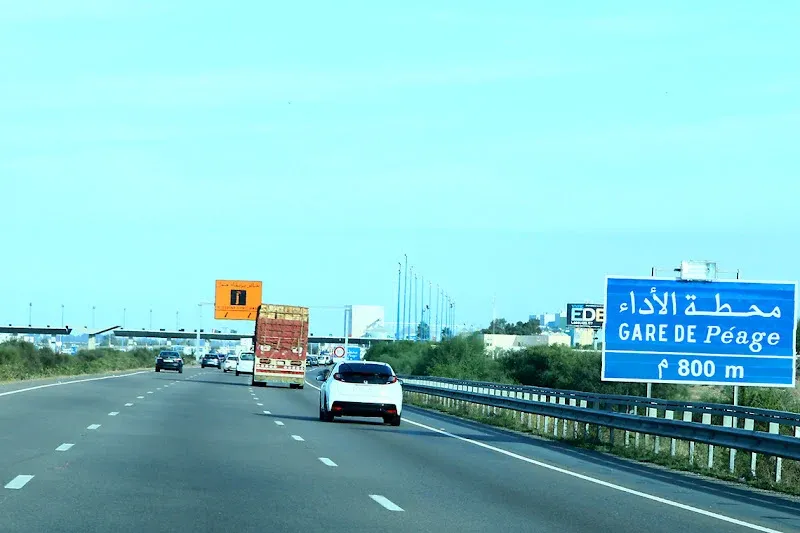
The Drâa-Tafilalet region, known as the gateway to Morocco's eastern desert and a repository of tourism, energy, and agricultural potential, remains outside the national highway network. The alarming statistics of traffic accidents along the Tichka mountain pass and the approaches to Tinghir, Midelt, Errachidia, Ouarzazate, and Zagora cause annual distress. Local associations are sounding the alarm, and elected representatives unanimously agree that a highway is not a luxury but a fundamental requirement for equitable development.
Challenges of Transportation and the Call for Action
Covering an extensive area of over 88,000 square kilometers, the region encompasses five vital provinces rich in global tourist attractions, such as the Todgha and Dades gorges and the film studios in Ouarzazate, as well as major solar energy projects and the oases of Errachidia and Zagora. Despite these assets, traveling via national roads 9, 10, or 13 remains fraught with danger, especially in winter months. Local taxi drivers express frustration, stating that it takes them approximately four hours to reach Marrakech under the best circumstances. This delay severely impacts healthcare services, as emergencies are transported to Marrakech or Fez under challenging conditions. Both students and traders grapple with the long distances and high transportation costs, exacerbating the regional disparities between Drâa-Tafilalet and other areas of Morocco.
Development associations in the region have launched successive advocacy campaigns under the banner “The Highway is a Right, Not a Demand.” Community activist Mohamed Hamidi from Errachidia notes that while every electoral program speaks of addressing isolation, the projects often vanish after the elections. He emphasizes that the local population is now more aware and will not accept empty promises, ready to hold candidates accountable in the ballot box. Local coalitions are preparing to submit demands to political parties before the official campaign begins.
A source from the Ministry of Equipment and Water, who preferred to remain anonymous, clarified that constructing a highway from Marrakech to Ouarzazate and then to Errachidia is technically feasible but requires political will and substantial funding. They noted that the mountainous section through Tichka is the most challenging and costly, yet alternatives exist through tunnels or new routes. While the costs are indeed high, the long-term price of isolation is even greater.
Several heads of local councils in the Drâa-Tafilalet region have informed Hespress that elected bodies have repeatedly contacted the Ministry of Equipment and Water regarding the absence of even a single meter of highway in the area, without receiving any response. They acknowledge the project's high costs but suggest starting with a segment of the highway from Midelt to Errachidia and gradually expanding it. “The residents do not ask for the impossible; they seek a serious beginning,” remarks a council president affiliated with the Istiqlal Party, which oversees the Ministry of Equipment and Water.
Tourism professionals in Ouarzazate, Zagora, Tinghir, and Errachidia believe that the highway would double the number of visitors to the region. In this context, Abdel Samad Mouhanni, a hotel manager in Errachidia, explains that foreign tourists tend to avoid the lengthy, winding roads of Tichka to reach Merzouga or the Todgha gorges. He adds that a safe and quick road translates into more overnight stays and direct and indirect job opportunities, affirming that investing in the highway is an investment in job creation, a sentiment shared by producers of dates and agricultural products.
Moreover, human rights activist Mouha Agbal from Ouarzazate highlighted that the local population compares their situation with regions that have benefited from highways over the last two decades, such as the Fez-Oujda and Agadir-Marrakech routes. He questions, “Why does Drâa-Tafilalet remain an exception?” This sense of injustice fuels the current political discourse and positions the highway issue as a significant electoral leverage.
As political movements gear up for the elections, the promises of a highway have resurfaced in some candidates' speeches. The local population is vigilant, demanding a clear timeline and budget allocation, not just slogans. Community activist Jamal Selwani insists, “We want a signed commitment before the Moroccan people, not mere election rhetoric.” Furthermore, the demand for the highway in Drâa-Tafilalet has transcended local aspirations, evolving into a matter of equitable development, as stated by several young people in the region. They assert that the upcoming elections are a true test of political actors' seriousness in addressing the region's priorities, with citizens eagerly awaiting tangible actions as the political clock ticks. They ponder whether 2026 will mark the beginning of construction or yet another year of postponement. The ball is now in the court of decision-makers.
As reported by hespress.com.