Transforming Traditional Craftsmanship in Morocco
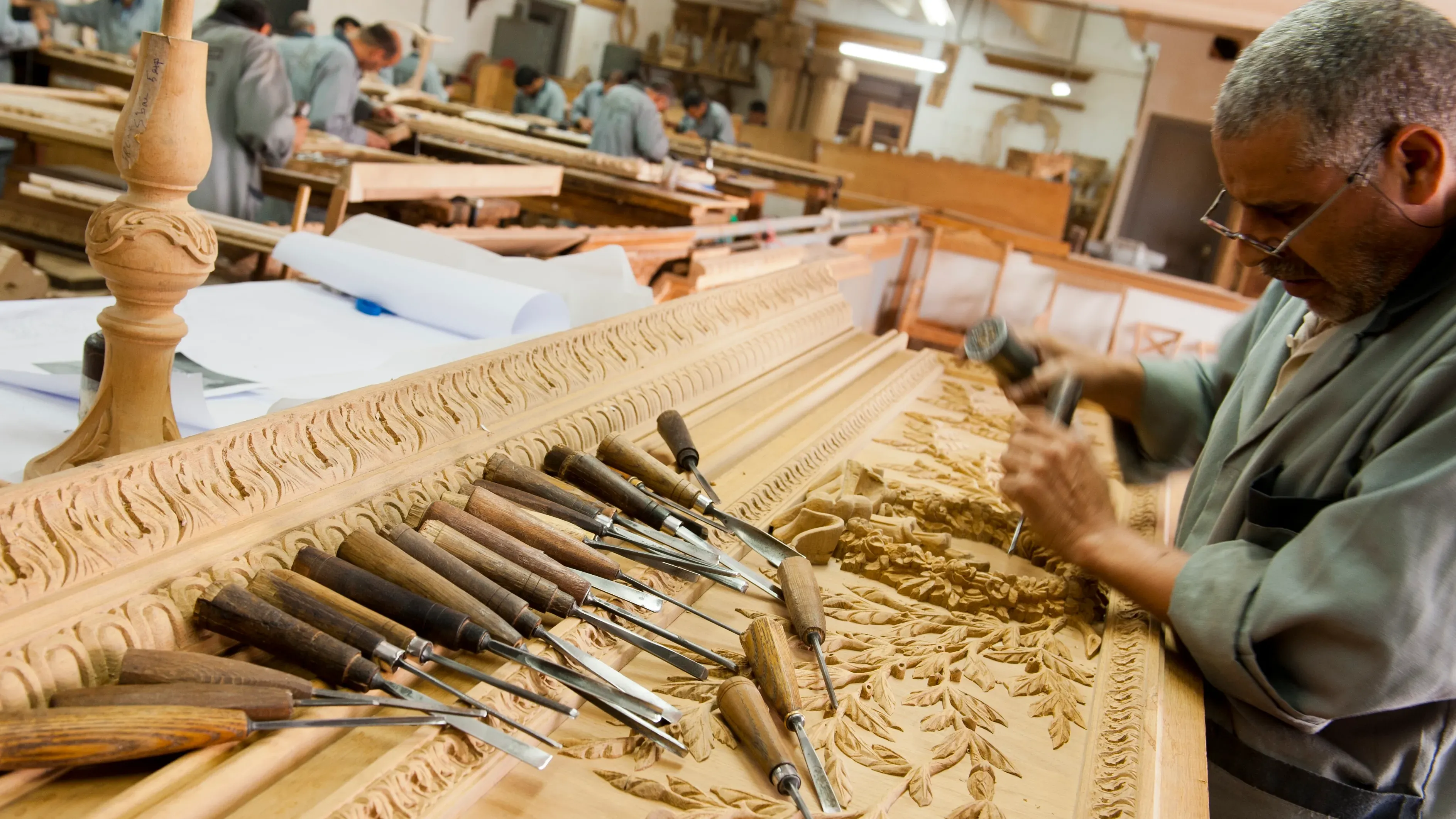
At the heart of Casablanca, a dynamic workshop led by Philippe Fluchaire is making monumental strides in preserving and enhancing the rich tapestry of Moroccan craftsmanship. Within this bustling hub, artisans work diligently, their focus unwavering despite the cacophony of machinery and the rhythmic sound of hammers. Here, the air is filled with the scent of polished wood and the sight of masterful hands creating intricate designs on wooden doors, showcasing traditional geometric patterns that are synonymous with Moroccan art. Elsewhere, skilled craftsmen apply lacquer in gentle strokes, giving rise to stunning Art Deco panels that catch and reflect light, turning ordinary wood into extraordinary works of art. Additionally, the sound of sewing machines can be heard as artisans meticulously stitch leather covers and craft elaborately embroidered curtains, further highlighting the fusion of tradition and innovation.
Philippe Fluchaire’s reputation as a designer is not just a local phenomenon; he has been entrusted with creating opulent interiors for prestigious establishments, including La Mamounia in Marrakech, The Oberoi Marrakech, and the Royal Mansour in Casablanca. His impressive portfolio also includes projects for royalty and heads of state, demonstrating his profound impact on the luxury design landscape. Fluchaire attributes his passion for design to his upbringing in Tunisia, where his family has been involved in cabinetmaking and decoration for generations. This rich heritage has instilled in him a deep appreciation for traditional woodworking, which he combines with modern techniques to bring his visions to life.
Craftsmanship Meets Innovation
Fluchaire’s journey into the world of design was not immediate; he initially made his mark as a European champion in American boxing before fully embracing his artistic roots. A transformative trip to Morocco opened doors that led him to take on his first project in the country, igniting a career that began modestly in a garage with just one other craftsman. Fast forward to today, and Fluchaire has expanded his operations to encompass three factories in Casablanca, employing around four hundred and fifty skilled artisans. The synergy among various departments is a cornerstone of the business, where detailed decorative plans are seamlessly transformed into technical blueprints through the integration of advanced Computer Numerical Control (CNC) machining. This innovative approach allows artisans to breathe life into meticulous designs, translating intricate ideas into tangible masterpieces.
Training and skill development are paramount within Fluchaire’s workshops. Each artisan undergoes a rigorous three-year training program that emphasizes precision and the preservation of traditional techniques. Mohammed Benbouchaib, one of the first artisans to join the program in 2002, reflects on his transformative experience, highlighting the opportunity to work with rare materials and learn advanced techniques such as silver thread inlays and mother-of-pearl detailing. Today, he plays an essential role in mentoring young apprentices, ensuring the continuation of these invaluable skills for future generations.
As Fluchaire’s team looks to the horizon, their ambitions extend beyond Morocco. Plans are underway to establish a permanent office in the United States and production facilities in Tunisia and China, with a vision to share the exquisite heritage of Moroccan craftsmanship on a global scale. Anouar Bouabdallaoui, Special Advisor to the Philippe Fluchaire Group, encapsulates this mission, stating that their work is about more than just business—it’s about securing a legacy that honors the soul of Moroccan craft in some of the world’s most prestigious projects. The future of Moroccan craftsmanship shines brightly, with Fluchaire leading the charge to ensure its endurance and evolution.
As reported by admiddleeast.com.