In a significant gathering held in Fez, Morocco, political leaders, scholars, and civil society experts from around the globe convened at the 'Dignity 2026' summit to emphasize the urgent need for a reassessment of global governance mechanisms. The summit underlined the critical importance of placing human dignity at the heart of public policies and international relations. Participants asserted that sustainable peace cannot be achieved without mutual respect, justice, and understanding among nations. This event, which commenced last Saturday, included thematic sessions and interactive meetings aimed at producing the 'Fez Appeal,' a roadmap designed to establish cultural diplomacy, dialogue among civilizations, and human dignity as fundamental pillars in preventing conflicts, fostering collaborative development, and enhancing international cooperation.
The summit, organized by the Global Association for Culture and Heritage in partnership with the Institute of Cultural Diplomacy and the King Juan Carlos International Center, aimed to initiate a new dynamic where culture, heritage, and human dignity are seen as essential elements for bolstering international cooperation and peace. The theme 'Dialogue of Civilizations at the Heart of Human Dignity' created a platform for exchanging perspectives on how to promote shared human values in an increasingly multipolar world facing profound transformations and escalating challenges, particularly in climate issues, technology, and geopolitics. Former Secretary-General of the Arab League and former Egyptian Foreign Minister Amr Moussa highlighted the pivotal role of soft power and cultural initiatives in establishing international relations grounded in peace and coexistence. He stressed that achieving human dignity remains at the core of global efforts, aiming to put an end to wars, assaults, and violations against civilians. Moussa noted that strengthening cultural ties and soft policies is a crucial entry point for fostering peace and cooperation among peoples.
Furthermore, Moussa warned about the troubling direction some international relationships have taken, indicating that the disregard for international law poses a significant threat to global stability. He called for a return to the principles enshrined in international agreements and conferences aimed at protecting human dignity, emphasizing the importance of cultural and legal dimensions in constructing a more just and humane international order. Khaled Ait Taleb, the Governor of the Fez-Meknes region, noted that the selection of Fez as the host city for the 'Dignity 2026' summit was no coincidence, given its esteemed reputation as a center of knowledge and scholarship, embodying values of peace, spirituality, and tolerance among diverse cultures and religions. He expressed that the challenge extends beyond merely protecting heritage to linking it with sustainable development, transforming the challenges of preserving heritage into genuine economic opportunities that provide dignified livelihoods for local communities and enhance their social standing.
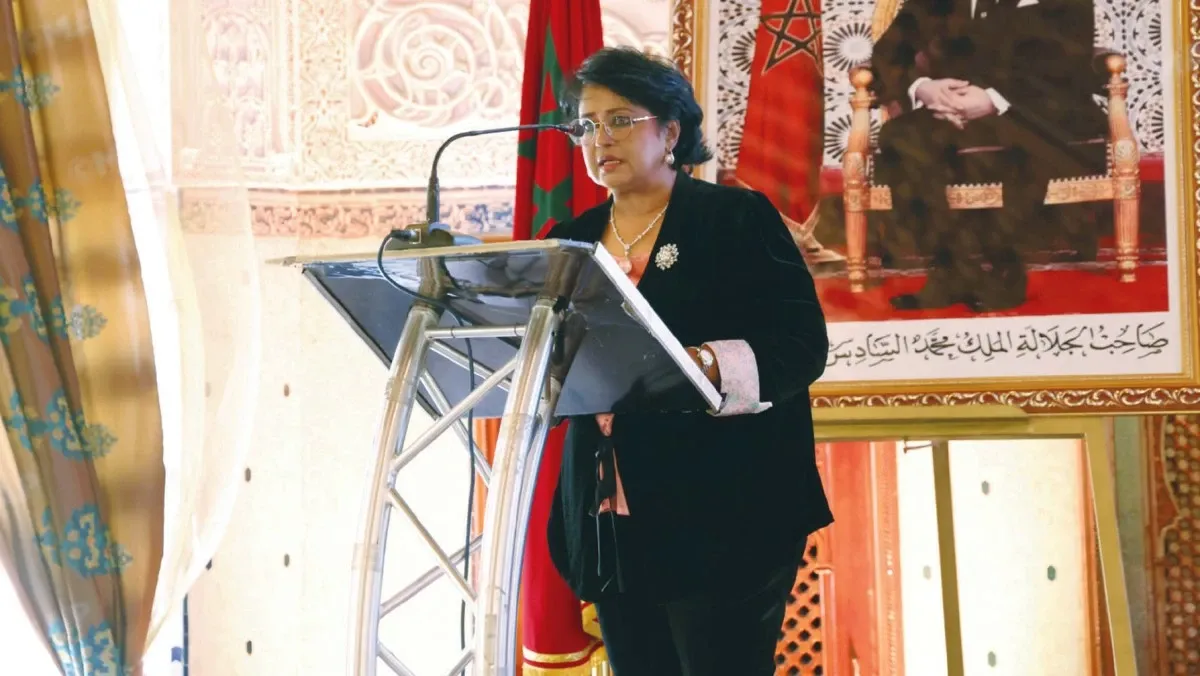
During the summit, prominent figures called for the establishment of a new humanistic approach prioritizing human dignity, dialogue, and collective responsibility, particularly in the face of rising conflicts and hate speech. Amina Gharib, former President of Mauritius, cautioned against the concerning trends in contemporary discourse, exacerbated by social media and modern digital platforms, stating that every physical war is preceded by a war of words that are never neutral, capable of igniting conflicts or fostering reconciliation. She emphasized that combating hate speech is a shared responsibility, falling upon governments, religious leaders, educators, and media, underscoring that education remains the fundamental tool for transforming words into bridges rather than barriers, and for promoting a culture of respect and coexistence.
As the discussions progressed, Ismail Serageldin, co-chair of the King Juan Carlos International Center and former Vice President of the World Bank, stressed the importance of dialogue among civilizations in building a shared future, asserting that human diversity is a treasure rather than a source of division. He pointed out that Fez, through the historical legacy of Al-Qarawiyyin University, exemplifies the potential of heritage to serve as a bridge for dialogue, knowledge transfer, and cultural proximity. He called for a profound review of development and governance models to safeguard global human dignity, rejecting the notion that might makes right, and denouncing the persistent unacceptable moral inequalities and the increasing deterioration of ecological balances. The event aimed to create a space for reflection and exchange of ideas on how to enhance universal values in a multipolar world facing profound transformations and escalating challenges, specifically regarding climate, technology, and geopolitics. The 'Dignity 2026' summit concluded with the Fez Declaration on Human Dignity and Universal Humanism, marking the transition from discussion to action, establishing a roadmap that positions heritage and human dignity as central themes in global diplomacy, international cooperation, and peacebuilding.
As reported by alseyassah.com.