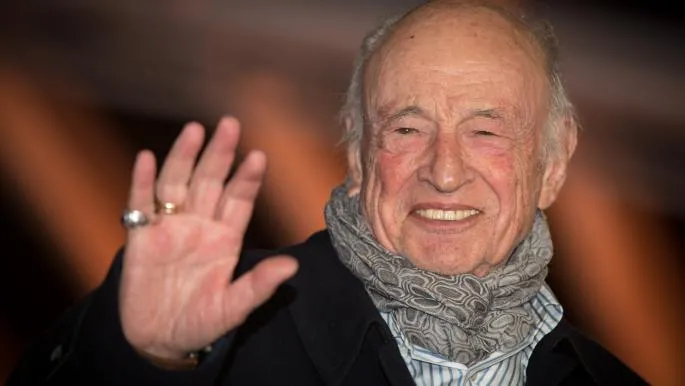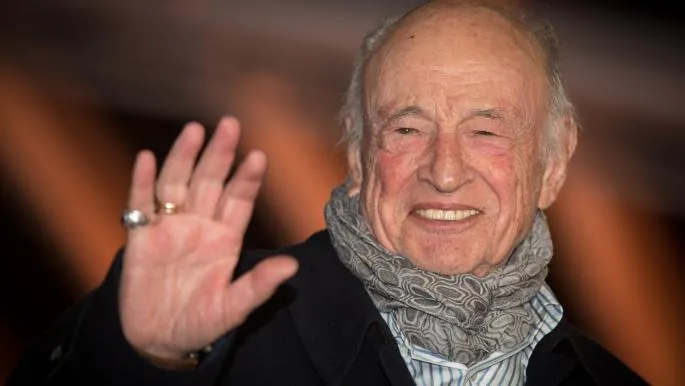
The recent passing of Edgar Morin at the age of 104 marks the loss of one of the most influential thinkers of the twentieth and early twenty-first centuries. Morin was not merely a distinguished French philosopher and sociologist; he was a living witness to a century filled with political, intellectual, and humanitarian transformations. His life was a remarkable journey that intertwined personal experiences with profound intellectual pursuits, making his very existence a laboratory for his grand ideas about complexity, identity, and our shared human destiny.
Born Edgar Nahum in Paris in 1921 to a Sephardic Jewish family with roots in the Greek city of Thessaloniki, Morin's life was tied to the concept of human fragility from the very start. His birth came after medical warnings to his mother regarding the dangers of pregnancy due to serious health issues. However, the most impactful event of his childhood was the death of his mother, Luna, from a heart attack in 1931 when he was just ten years old. Morin later described this trauma as an "internal Hiroshima," considering it a formative turning point in his intellectual and emotional development. From that moment onward, the question of life and death became a constant presence in his thoughts.
During his early school years, this sorrowful child found solace in reading, cinema, and music. He voraciously consumed novels and spent countless hours in Parisian cinemas, discovering the worlds of imagination, mythology, and human drama. Classical music, particularly Beethoven's works, deeply influenced him, representing an expression of the world’s birth and the struggle of human will. These early cultural experiences shaped him into a "cultural glutton," a trait that accompanied him throughout his life and led him to reject the boundaries between high culture and popular culture.
In the 1930s, Morin was drawn to philosophy, particularly Hegelian thought, which viewed contradiction as the essence of life and history. He later found a framework in Marxism to understand the social and political struggles engulfing Europe at that time. As Nazism rose and World War II erupted, his intellectual interests transitioned into practical commitments. In 1942, he joined the French Resistance against the Nazi occupation, adopting the pseudonym "Morin," which remained a part of his identity even after the war.
The years of resistance were crucial in shaping his character. He lived on the run across various cities in France, constantly at risk of arrest or death, while losing friends and comrades to torture and assassination. Morin recounted an incident he considered one of the most mysterious moments of his life. When asked about faith, he expressed that he did not consider himself a believer in the traditional religious sense, yet he could not find a rational explanation for an experience during his resistance years. One day, as he approached his safe house, he felt an unseen hand pull him back into the street, prompting him to leave the area. Soon after, he learned that the Gestapo was waiting inside to apprehend him. Morin viewed this incident as a personal enigma without a definitive explanation; he neither attributed it to a religious miracle nor reduced it to mere coincidence. This experience reflected his intellectual stance on acknowledging the limits of human knowledge and the existence of areas of human experience that resist complete understanding. Yet, this experience left him not only with a memory of fear but also with a profound sense of human solidarity and shared destiny. He later said that resistance granted him "life" rather than just a "profession," as it allowed him to experience the true meaning of commitment and responsibility.
After the war, he was disillusioned by the political landscape and the practices of the French Communist Party, which he had joined during the resistance years. As his skepticism towards Stalinism grew, he gradually distanced himself from the party until he was expelled in 1951. He later regarded this expulsion as a moment of intellectual liberation, deciding from that point on not to subject reality to any preconceived ideology and refusing to sacrifice his freedom of thought for any ideology, no matter how appealing.
However, Morin’s greatest achievement lay in the development of the concept of "complex thought," which became the hallmark of his philosophy. He believed that the modern world could not be understood through simplistic or reductionist explanations, as reality consists of a complex network of interrelated relationships among individuals and society, order and chaos, nature and culture, and the local and global. He thus called for a new approach to thinking that connects various fields of knowledge rather than separating them.
This project was embodied in his monumental work "Method," which took nearly thirty years to complete from 1977 to 2004. In this work, he developed three fundamental principles: the dialogical principle that brings together opposites without negating either; the holographic principle, which asserts that the whole is present in the part and the part is present in the whole; and the organizational recursion principle, which emphasizes that outcomes return to influence their causes. Through these principles, he sought to construct a new worldview based on the recognition of complexity rather than fleeing from it.
Alongside his intellectual endeavors, Morin remained engaged with the pressing issues of his time. He was one of the first thinkers to recognize environmental challenges, warning since the 1970s of the risks threatening the planet's biosphere. He also addressed globalization and the future of human civilization, advocating for the development of a new global consciousness that considers the Earth a shared home for humanity. In his book "Earth-Homeland," he called for transcending narrow national divisions and thinking about our shared human fate. Morin smiled at everyone, not out of hypocrisy, but as a human gesture inviting them to shed their rigid stances and biases, no matter how entrenched, and to engage in self-criticism and question sacred beliefs for the sake of humanity and the planet.
His commitment was not merely moral; it manifested in his positions on contemporary political issues. He advocated for the rights of oppressed peoples and rejected all forms of racism and fanaticism. He did not hesitate to criticize Israeli policies towards Palestinians sharply, stating, "It is hard to imagine that a nation of refugees, descended from the most persecuted people in human history, who endured the worst humiliations and contempt, could transform, in two generations, into a controlling and self-assured people, and except for a small admirable minority, into a contemptuous people who find relief in insult." He argued that a people's suffering in the past does not grant them moral immunity to perpetuate injustice in the present.
Edgar Morin did not remain silent during the peak of Islamophobia and the intellectual McCarthyism rampant among certain French political and media figures who sought to understand social phenomena calmly and scientifically, branding them as leftist Islamists. He willingly embraced this latter classification, urging the need to rise above the exclusion of those who stand in solidarity with the marginalized, emphasizing that if they resorted to extremism, it would be futile to counter with extremism.
I have also come to know another aspect of his personality that is as significant as his intellectual output: his human humility. Many described him as a thinker seeking understanding rather than victory, and dialogue rather than dominance. He believed that ethics should precede ideology, and that the value of a human being transcends all narrow affiliations. He often wrote to me seeking my opinion on analyses or inquiries. When I sent him a translation of Abdel Rahman al-Kawakibi’s work into French, he wrote back apologizing for the delay in discovering it.
In his later years, he continued to write, reflect, and engage in intellectual work without interruption. Recently, he summarized what he perceived as a worsening decline by stating, "We must no longer think about a better society, but about how to avoid the worst. What kind of world will we leave for our children? And what kind of children will we leave for this world?"
Edgar Morin has passed away, but his intellectual legacy remains vibrant. He left behind dozens of books and ideas that have inspired generations of researchers and thinkers worldwide. Most importantly, he left a rare model of an intellectual who combined knowledge and commitment, critique and hope, reason and heart. He witnessed a century of wars, revolutions, and crises, yet he remained, until his last days, a believer in the possibility of building a more humane world. Thus, his departure signifies not just the end of an individual's intellectual journey but the conclusion of an era embodied in one extraordinary man, encapsulating the complexity and richness of the human experience.
As reported by alaraby.co.uk.