
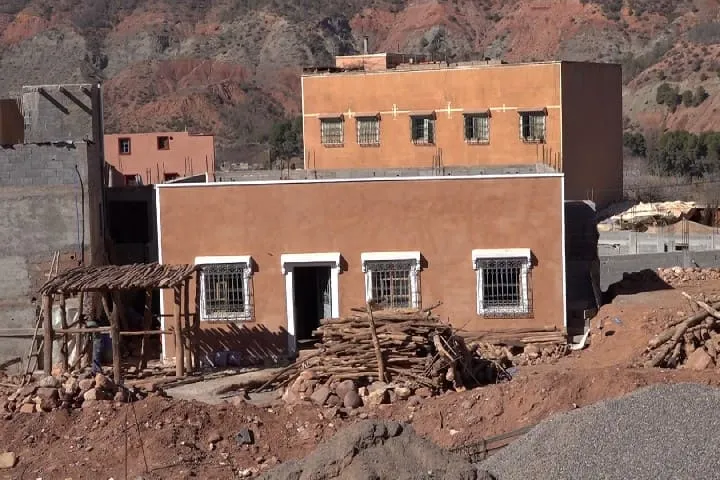
Marrakech witnessed a significant press conference on June 10, 2026, dedicated to showcasing the achievements of the European Institute for Cooperation and Development (IECD Maroc) in the Al Haouz region. This event comes nearly three years after the devastating earthquake that struck the area in September 2023, causing substantial human and material losses and adversely affecting the economic and social conditions of thousands of families.
The meeting was part of ongoing recovery and reconstruction efforts involving numerous national and international institutions. During the conference, the IECD presented a comprehensive overview of various initiatives launched to support the affected population, with a strong emphasis on assisting vulnerable groups, promoting local entrepreneurship, and enhancing sustainable territorial development.
IECD officials emphasized that their interventions began immediately following the earthquake, transitioning from emergency humanitarian aid to the implementation of developmental programs aimed at revitalizing the local economy. These programs are designed to help residents restore their sources of income and strengthen their resilience against future crises.
At the heart of this strategy were the projects "AMEAL - A Better Future for Entrepreneurship and Local Learning" and "Towards a New Start," which aimed to support local entrepreneurs, enhance the skills of youth and women, and back income-generating economic initiatives. This approach is crucial for achieving economic and social independence for beneficiaries.
During the conference, Aurelie Glenson, the Operations Director at IECD Maroc, highlighted that the organization has been active in Morocco since 2017, focusing on empowering both women and men from vulnerable groups to develop their skills and enhance their entrepreneurial capabilities. She explained that the institute's mission is to contribute to building a more just and equitable society, where all citizens can benefit from Morocco's economic dynamism.
Glenson expressed pride in the results achieved through the AMEAL project, implemented in partnership with CARE Maroc and supported by the French Development Agency and the French Foundation. She noted that three years of fieldwork in Al Haouz have yielded positive results, reflecting the commitment of various local stakeholders to the development and recovery process.
Nabil Jarif, the Executive Director of IECD Maroc, explained that the project was a response to the needs of a region that was already facing developmental challenges prior to the earthquake, which were exacerbated by the natural disaster. He emphasized the importance of combating regional and social disparities and striving for comprehensive development that benefits everyone without exception.
Jarif pointed out that the AMEAL project serves as a practical model for local developmental intervention, contributing to enhancing training opportunities, entrepreneurship, and economic integration for the local population. He reiterated that adopting participatory developmental approaches remains one of the key strategies for strengthening the resilience of local communities and achieving sustainable development in vulnerable areas.
One executive involved in the project highlighted the positive impact of initiatives aimed at women, noting that the project has facilitated the creation of women's cooperatives, improved access to markets, and provided childcare services in dedicated centers. This has allowed many women to engage in income-generating economic activities and improve their families' conditions.
The speaker asserted that investing in women's empowerment directly influences local development, as women are a fundamental pillar of family and community stability. She called for strengthening partnerships and alliances capable of bringing local development issues to decision-making levels to ensure the sustainability of these initiatives.
In a related context, Ashraf Sarhani, responsible for entrepreneurship projects at IECD Maroc, explained that the organization began its interventions in the weeks following the earthquake by providing initial aid before transitioning to programs designed to revive the affected economic and social activities. He added that the various projects were developed in close coordination with local stakeholders and the community, following a participatory approach that responds to the real needs of beneficiaries. These interventions have directly supported nearly a thousand individuals, aiming to restart their economic projects and improve their living conditions, with a focus on achieving sustainability and leaving a lasting developmental impact in the region.
The conference also served as a platform for exchanging views among various stakeholders, including public institutions, development partners, and civil society organizations, regarding the challenges and opportunities associated with the reconstruction process in Al Haouz. Participants shared live testimonials from beneficiaries of the implemented projects, recounting success stories and inspiring experiences in overcoming the disaster's effects.
The meeting concluded with a reaffirmation of the importance of continued collective mobilization to support the development trajectory in Al Haouz and the need to enhance coordination among various partners to ensure the sustainability of completed projects and expand their impact, thereby laying the foundations for a more inclusive and sustainable economic and social development for the local population.
As reported by alalam.ma.


