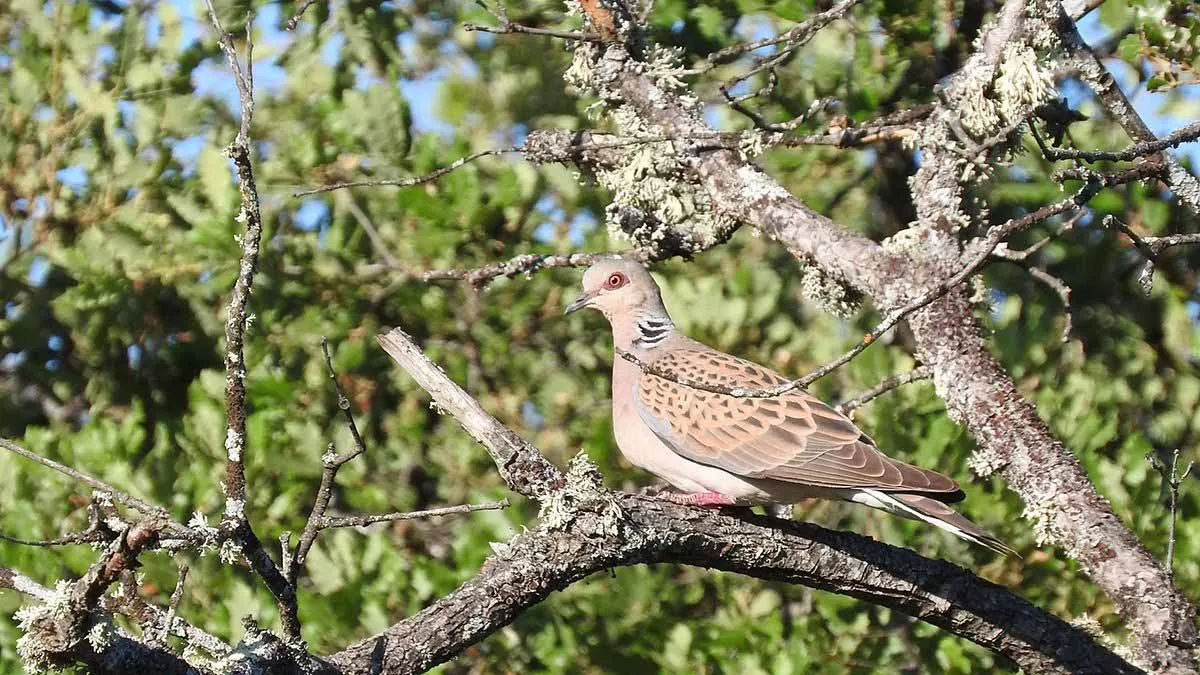
For over a century, ornithologists have classified the populations of the European Turtle Dove in the western Mediterranean into two distinct subspecies. The nominal subspecies _Streptopelia turtur turtur_ was thought to inhabit most of continental Europe and the Canary Islands, while _S. t. arenicola_ was believed to occupy northern Africa and certain island enclaves like the Balearic Islands. The latter was characterized as a desert-adapted form, smaller and paler in comparison. However, this classification was based almost exclusively on fragmentary morphological observations from the 19th and early 20th centuries, lacking modern molecular support.
In light of this uncertainty, a team of scientists led by the Centre de Ciència i Tecnologia Forestal de Catalunya (CTFC), including members from the Wildlife Ecology and Management Research Group of the Institute of Game Resources Research (IREC – CSIC, UCLM, JCCM), along with various institutions from Spain and Morocco, sought to critically examine this "border". They captured over 900 doves during the breeding season across regions including Castilla-La Mancha, Catalonia, the Canary Islands, Menorca, Ibiza, and Morocco, analyzing both body measurements and mitochondrial DNA. Their findings have recently been published in the esteemed journal _Bird Conservation International_.
Genetic and Morphological Evidence Fails to Distinguish Subspecies
The morphometric analysis of 647 adult individuals, which measured wing, tail, and tarsus lengths, revealed no statistically significant differences between the two supposed subspecies. Principal component analyses and discriminant analyses demonstrated nearly complete overlap between the groups, debunking the historical belief that North African doves are smaller than their European counterparts. Similarly, genetic analysis aligned with these findings. After sequencing three mitochondrial genes in 117 individuals and comparing the results with sequences from European populations in France, the UK, and Bulgaria, the researchers found no genetic structure that corresponded with the differences between the two subspecies. In fact, the genetic variation within the subspecies _S. t. turtur_ was greater than that observed between the two purported subspecies. The haplotype network exhibited a star topology with no association to the geographical origin of the samples, indicating a broad genetic connection between populations on either side of the Strait of Gibraltar.
The Implications for Conservation Efforts
The absence of evident genetic boundaries, despite the populations being separated by the sea, suggests that occasional exchanges of individuals between breeding populations could be the most plausible explanation. Although the majority of doves return annually to the same breeding areas, a small proportion may breed in different locations from where they were born or in previous seasons, potentially facilitated by migratory stopovers in other breeding regions. This exchange, albeit minimal, maintains genetic flow between populations. In fact, just a few individuals per generation are sufficient to prevent genetic differentiation. Thus, the Mediterranean has not acted as an effective barrier long enough to encourage the emergence of distinct subspecies.
The European Turtle Dove is currently a globally threatened species, with populations declining by 83% from 1980 to 2023, primarily due to habitat loss and unsustainable hunting levels. Adaptive management plans driven by the European Commission focus on migratory routes, considering the total population as a management unit. While this management plan is effective only in EU Member States, it has long been recognized that hunting pressure in Morocco, which falls outside the Commission's jurisdiction, could impact the breeding populations in Europe. The results of this study reinforce this perspective: the extensive genetic exchange detected between doves in Spain and Morocco, along with the absence of morphological or genetic differences justifying the existence of two subspecies, supports the notion that both belong to a single interconnected biological population.
If the doves in Morocco are part of the same genetic unit as those breeding in Spain, a significant breeding population in Morocco could serve as a demographic reservoir for the conservation of the species, potentially strengthening other connected populations through genetic flow. The authors advocate for a review of the subspecific status of the turtle dove based on more comprehensive genomic data and emphasize the urgent need to expand conservation strategies beyond European borders, coordinating efforts with North African countries.
This case highlights the importance of updated taxonomy in conservation biology. The authors indicate that incorporating molecular evidence can help prevent conservation strategies from treating populations that, from a biological standpoint, are part of the same continuum as independent units. Therefore, integrating genetic information can contribute to defining conservation units that better reflect the actual biological structure of populations.
As reported by club-caza.com.